

What if the home that feels like a rare opportunity is one you’re not quite ready to buy? A first purchase is exciting, but market pressure can make it tempting to focus on the deposit and move quickly. The common first home buyer mistakes to avoid often start earlier, with an unrealistic budget, missed property checks or contract details left until the last minute.
If you’re unsure how much you can comfortably spend or what to check before making an offer, you’re not alone. A clear plan can help you compare homes, identify what needs checking and make decisions with greater confidence.
This guide covers how to set a realistic budget, assess a property and identify questions to resolve before committing. It also explains when to seek independent finance, legal and building advice. For buyers in Bendigo and Central Victoria, local property knowledge can add useful context, while qualified professionals can help with specialist checks.
Key Takeaways
- Learn which common first home buyer mistakes to avoid by looking beyond your deposit and testing repayments against everyday costs and a financial buffer.
- Use a clear due diligence sequence: inspect the home, consider its location and suitability, then have a conveyancer review the documents before you decide.
- Before committing, check your must-haves, acceptable compromises, future costs and unanswered questions, rather than letting market pressure set the pace.
- Know when to seek independent finance, legal and building advice, and how local knowledge can help put a property in Bendigo and Central Victoria in context.
Common first-home buyer mistakes start with an unrealistic budget
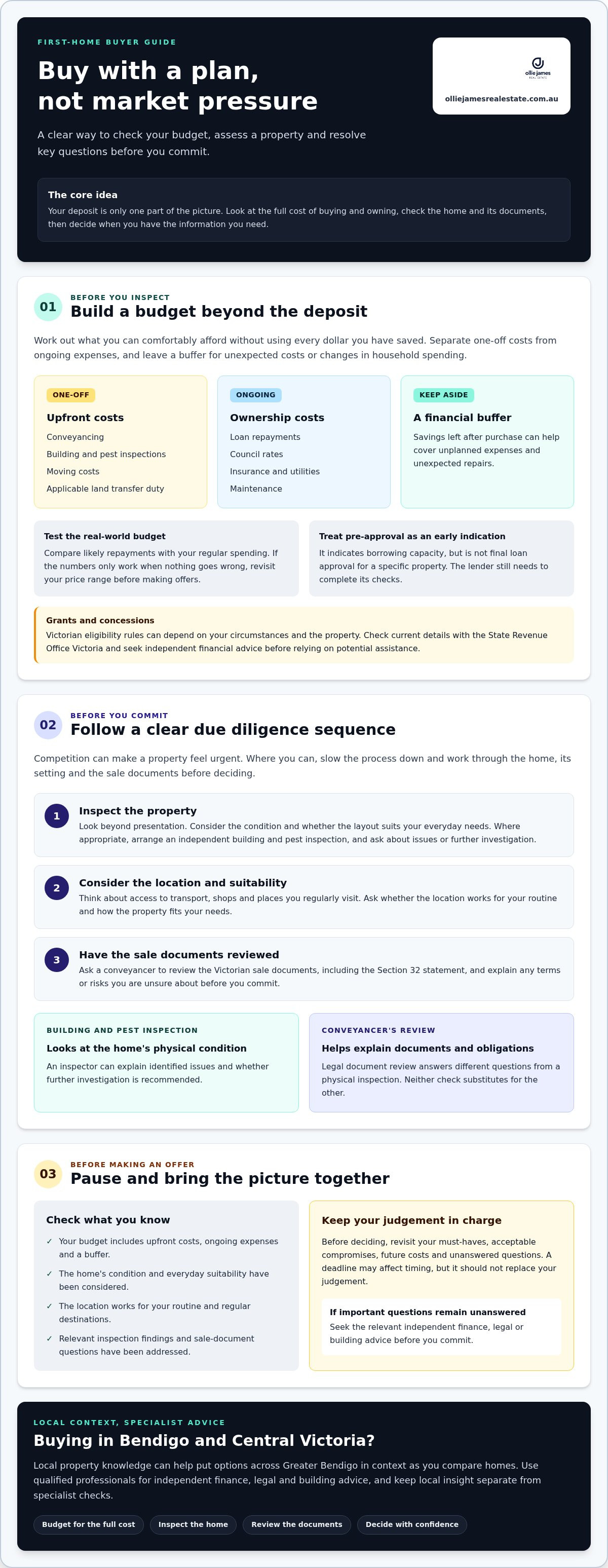
One of the common first home buyer mistakes to avoid is treating the deposit as the whole budget. Buying also brings upfront costs, and ownership adds regular expenses after settlement. Before inspecting homes, work out what you can comfortably afford without using every dollar you’ve saved.
Separate one-off costs from ongoing expenses. Allow for conveyancing, building and pest inspections, moving costs and any applicable land transfer duty. Then estimate loan repayments, council rates, insurance, utilities and maintenance. To get familiar with the basics, read this guide to understanding mortgage loans, and ask a finance professional how loan terms and repayments apply to your circumstances.
For a quick overview of common buyer pitfalls, watch this video:
What should a first-home budget include beyond the deposit?
Make a simple budget that separates one-off costs from ongoing commitments. Compare likely repayments with your regular spending, and leave a buffer for unexpected repairs or changes in household expenses. If the figures only work when nothing goes wrong, revisit your price range before you start making offers.
- Upfront: conveyancing, inspections, moving costs and applicable duty.
- Ongoing: repayments, rates, insurance, utilities and maintenance.
- Buffer: savings left over after purchase for unplanned expenses.
Victorian concessions and grants have eligibility rules that can depend on your circumstances and the property. Check current details with the State Revenue Office Victoria, and seek independent financial advice before relying on potential assistance.
Pre-approval is an early indication of borrowing capacity, not final loan approval for a specific property. A lender still needs to complete its checks before confirming a loan. Keep your budget grounded in what you can manage, not just the amount initially indicated.
Avoid property and contract mistakes with careful checks in Greater Bendigo
Excitement and competition can make a home feel like it needs an immediate yes. Slow the process down where you can: inspect the property, consider its setting, have the documents reviewed by a conveyancer, then decide. This sequence helps you assess both the home and the obligations that come with buying it.
Look beyond presentation. Check the property’s condition and whether its layout suits your everyday needs. Think about access to transport, shops and other places you regularly visit, and whether the location works for your routine. For local context as you compare options, explore this Bendigo homes search guide and read about Bendigo market trends.
Which checks should you complete before making an offer?
Consider arranging an independent building and pest inspection where appropriate to the property and your circumstances. Ask the inspector to explain any issues they identify and whether further investigation is recommended. Separately, ask a conveyancer to review the Victorian sale documents, including the Section 32 statement, and explain any terms or risks you’re unsure about before you commit.
An inspection examines the property’s physical condition; a conveyancer’s review helps you understand the sale documents and legal obligations. These checks answer different questions, so one should not be treated as a substitute for the other.
These are practical steps among the common first home buyer mistakes to avoid, especially when a deadline or competitive conditions make it tempting to skip a check. A local conversation can help you compare what you’re seeing across Greater Bendigo, without replacing independent building or legal advice. You can explore Bendigo property information as one starting point.
Make a considered first-home decision before you commit
A competitive market can make it feel as though you need to decide straight away. A deadline may affect your timing, but it shouldn’t replace your judgement. Before making an offer, bring together what you know about your budget, the inspection findings and advice from the relevant professionals. If important questions remain unanswered, find out whether they can be resolved before you commit.
A short checklist can help you separate a genuine fit from the fear of missing out:
- Does the property meet your essential needs?
- Which compromises are you comfortable making?
- Have you considered future ownership costs?
- What questions still need an answer, and who is qualified to answer them?
This pause can help you avoid common first home buyer mistakes, rather than letting pressure make the decision for you. You don’t need a perfect home, but you should understand what you’re choosing and why it suits your circumstances.
How can local guidance help first-home buyers in Bendigo?
Compare suburbs and property types against your usual commute, access to services and lifestyle priorities. Local knowledge can add useful regional context as you assess different parts of Greater Bendigo, but it isn’t a substitute for independent advice from a conveyancer or finance professional. Ollie James Real Estate is an independent, family-owned agency with over 17 years of local industry experience, offering local property insight rather than buyer advocacy.
As you compare options in Bendigo, Kangaroo Flat, Junortoun, Epsom, Eaglehawk, Strathfieldsaye, Strathdale, Kennington, Golden Square, California Gully, Maiden Gully and Marong, consider which locations best match your priorities. If you’d like to discuss your search, you can explore local property guidance.
Take your next step with a clear plan
The common first home buyer mistakes to avoid often come from moving ahead without checking the full picture. Set a budget that accounts for more than the deposit, make time for property and contract checks, and base your decision on your needs and independent professional advice, not pressure alone.
Buying your first home can feel like a lot to manage. A steady, informed approach can help you make choices you feel comfortable with, even in a competitive market. Local insight can help you compare Bendigo properties and neighbourhoods, while finance and legal questions should go to qualified professionals.
Ollie James Real Estate is an independent, family-owned Bendigo agency with over 17 years of local industry experience. If you’re comparing homes in the region and want local context, visit Ollie James Real Estate to discuss your search.
Frequently Asked Questions
What is the biggest mistake first-home buyers make?
The biggest mistake is setting a budget around the deposit or maximum borrowing figure, rather than the full purchase costs and repayments you can comfortably manage. The common first home buyer mistakes to avoid often include overlooking conveyancing, inspections, moving expenses, applicable duty and ongoing costs such as rates, insurance and maintenance. Keep a buffer and test repayments against your usual spending before setting a price range.
Can I make an offer before my home loan is formally approved?
You may be able to make an offer before formal loan approval, but consider the financial risk first. Pre-approval is not a final loan offer for a specific property, and the lender may still need to assess your circumstances and the property. Talk to your finance professional and conveyancer about your position and the contract terms before making a commitment.
What should I check before buying a house in Victoria?
Review the property’s condition and suitability, consider an independent building and pest inspection, and ask a conveyancer to review the contract and Section 32 statement. Check transport, services and likely ownership costs, and confirm any first-home concession or grant eligibility with the State Revenue Office Victoria. Locally, compare your needs across Bendigo, Kangaroo Flat, Junortoun, Epsom, Eaglehawk, Strathfieldsaye, Strathdale, Kennington, Golden Square, California Gully, Maiden Gully and Marong.
Should first-home buyers in Bendigo get a building inspection?
An independent building inspection is worth considering before you commit, particularly if you’re unsure about the home’s condition or have noticed potential issues. A pest inspection may also be appropriate, depending on the property. An inspector can identify concerns that aren’t obvious during a viewing and advise whether further investigation is needed. Inspections provide useful information, but they don’t replace legal or finance advice.


