

A BAL rating is a building-design measure, not a warning about current fire danger. For a bushfire attack level (BAL) rating in Bendigo, the assessment follows AS 3959:2018 and ranges from BAL-LOW to BAL-FZ, with each level reflecting a different degree of potential bushfire exposure. The rating helps determine the construction measures a proposed home needs.
It’s understandable to want a clear picture before committing to a block or choosing a home design. This guide explains what each BAL category means, how vegetation, distance and land slope can affect a rating, and which construction details may need to respond to it.
A BAL rating describes potential exposure at a proposed building location; it does not precisely predict what a bushfire will do. Understanding that distinction can make planning a new home in Bendigo more informed and manageable.
Key Takeaways
- Understand how the BAL scale distinguishes lower bushfire exposure from the most severe categories.
- See how nearby vegetation, its distance from the proposed home and the land’s slope can shape an assessment.
- Learn why a rating applies to the proposed building location, not necessarily the entire property.
- Find out how bushfire requirements can influence a new home’s materials, windows, roof details and outdoor areas.
What Is a Bushfire Attack Level (BAL) Rating, and Does It Affect Your New Home Design?
A BAL rating estimates potential bushfire exposure at a proposed building location. In Bendigo, it can influence permit requirements and the construction details needed for a new home.
BAL Assessments and Building Permits in Victoria
A BAL assessment considers bushfire exposure and can inform building permit requirements for a proposed home. In Victoria, use VicPlan to view whether land is mapped as a Bushfire Prone Area or covered by the Bushfire Management Overlay. A building surveyor may require a BAL report for a permit. In Greater Bendigo’s overlay, the Victorian Government sets specific bushfire protection measures in Clause 53.02 of the Greater Bendigo Planning Scheme.
Bushfire-Resistant Construction Requirements
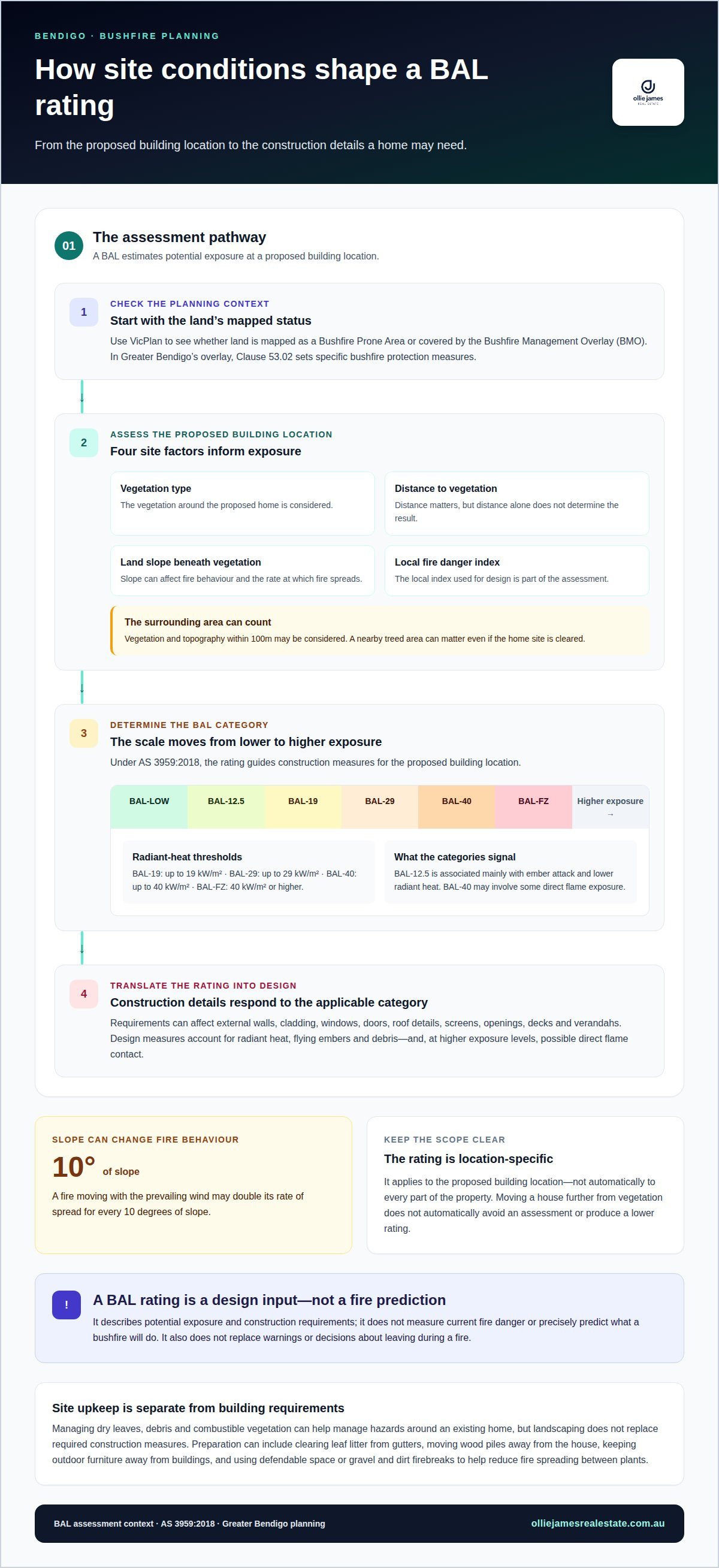
AS 3959:2018 sets construction requirements according to the applicable BAL category. Ratings range from BAL-LOW through BAL-12.5, BAL-19, BAL-29 and BAL-40 to BAL-FZ, the Flame Zone. In a Bushfire Prone Area, new buildings must meet the relevant bushfire construction standard, with requirements depending on the rating. Measures can affect external walls, cladding, windows, doors, roof details, screens, openings, decks and verandahs. The design accounts for radiant heat, flying embers, debris and, at higher levels, possible direct flame contact.
Checking a Bendigo Property’s BAL Rating
To check a Bendigo property, view its mapping in VicPlan, then establish the rating for the proposed building location. A qualified bushfire practitioner can prepare an assessment where one is needed; a building surveyor may require a formal report for a permit. Assessment timing depends on site complexity, available plans and whether planning information is also needed. For planning advice, Greater Bendigo’s Bushfire Management Overlay requirements include the measures in Clause 53.02. Local risks include nearby vegetation, slope and potential ember exposure.
Factors that affect a property's Bushfire Attack Level
A BAL assessment weighs the vegetation type, its distance from the proposed building location, land slope beneath vegetation and the local fire danger index used for design. Vegetation and topography within 100m may be considered, so a nearby treed area can matter even when the home site itself is cleared. The result relates to the proposed building location, not automatically to every part of the property.
Distance alone doesn’t determine the outcome. A house moved further from vegetation doesn’t automatically avoid an assessment or receive a lower rating. Slope also affects fire behaviour: a fire moving with the prevailing wind may double its rate of spread for every 10 degrees of slope. In a Bushfire Management Overlay, planning controls can add requirements beyond construction under the Australian Standard.
Preparation helps manage hazards around an existing home, but landscaping does not replace required construction measures. Clear leaf litter from gutters, move wood piles away from the house, and keep outdoor furniture away from buildings before bushfire season. In the garden, manage dry leaves, debris and combustible vegetation. Defendable space and gravel or dirt firebreaks can help reduce fire spreading between plants. Sealing windows and doors can also reduce ember entry.
A BAL rating describes exposure and construction requirements, not a property’s market value or an insurance quote. For a purchase or sale, consider the rating alongside the home’s design, documented construction and ongoing garden upkeep. A property value update can provide local market context alongside those bushfire-related property details.
Meaning and purpose of a Bushfire Attack Level rating
A BAL rating is a relative estimate of potential bushfire exposure at a proposed building location, not a precise measurement or prediction. In Bendigo, a bushfire attack level (BAL) rating helps translate site hazards into construction measures under AS 3959. Those hazards include radiant heat and ember attack, with possible direct flame contact at higher exposure levels. The rating guides design decisions, not assessments of current danger during bushfire season.
The scale runs from BAL-LOW to BAL-FZ, with increasing exposure across its categories. BAL-12.5 is associated mainly with ember attack and lower radiant heat. BAL-19 represents up to 19 kilowatts per metre squared of radiant heat, while BAL-29 reaches up to 29. BAL-40 reaches up to 40 kilowatts per metre squared and may involve some direct flame exposure. BAL-FZ applies at 40 kilowatts per metre squared or higher.
These categories give designers a consistent basis for selecting construction measures; they don’t suggest every bushfire will affect a home in the same way. For example, a BAL-12.5 rating still recognises ember risk, even though its radiant-heat exposure is lower than BAL-29. A BAL rating for a proposed home in Bendigo also doesn’t replace warnings or decisions about leaving during a fire. It describes the building’s design context, while conditions during an actual event can change.
Treat the rating as a design input, not a complete measure of personal safety or the likelihood of a fire. Use the applicable category to understand which construction requirements may shape the proposed home, and consider bushfire planning separately. This keeps building compliance, site exposure and decisions during a fire danger period distinct.
Ollie James Real Estate
Ollie James Real Estate can help you consider property decisions alongside the BAL and planning information available for a site. If you’re weighing up land or a home in Bendigo, the agency’s residential property and land sales provide a local real estate pathway. Property management can support owners responsible for rental properties.
A BAL rating and overlay requirements are important context, but they do not replace technical building or planning advice. Keep those details in view as you assess whether a property suits your plans, and consider how its location and requirements may affect its future use.
If you’d like to discuss a property decision, contact Ollie James Real Estate.
Make your next property decision with clarity
Make the bushfire attack level (BAL) rating in Bendigo part of your early planning, before committing to a block or settling on a design. Considering site and planning information while options are still open can help you assess how a property fits your intended use and avoid leaving bushfire considerations until later.
Property decisions can feel complicated when planning controls, building requirements and personal priorities overlap. Keep the property’s bushfire context alongside the questions that matter most to you, whether you’re buying, selling or managing a home or land.
For support with your Bendigo property decisions, contact Ollie James Real Estate. A clearer understanding of the property can help you move forward with confidence.
Frequently Asked Questions
What Are the Different BAL Ratings?
The categories are BAL-LOW, BAL-12.5, BAL-19, BAL-29, BAL-40 and BAL-FZ. They describe increasing levels of potential bushfire exposure, from low risk through to the Flame Zone. For example, ember attack is a key concern at lower ratings, while higher categories can involve greater radiant heat and possible flame contact. These are building-design categories, not warnings of current fire danger.
Does Every New Home Need a BAL Assessment?
Not every new home follows the same assessment pathway. In a Victorian Bushfire Prone Area, new buildings are subject to building permit requirements and the applicable bushfire construction standard; a BAL assessment is typically part of that process. In Greater Bendigo’s Bushfire Management Overlay, applications meeting the measures in Schedules 1 or 2 can use a Bushfire Management Plan without an individual BAL assessment.
How is a BAL determined?
A BAL is determined by assessing the proposed building site’s bushfire exposure. Under the Australian Standard method, the assessment considers vegetation type, its distance from the building location, slope beneath vegetation and the local fire danger index used for design. Vegetation and topography within 100m may be relevant. The rating therefore reflects the chosen building location and surrounding conditions, rather than simply the property’s street address.
Is North Bendigo in a bushfire prone area?
North Bendigo includes land mapped within the Bushfire Management Overlay: 33.9% of the suburb’s land is within that overlay. The Overlay and Bushfire Prone Area mapping are distinct designations, so the overlay figure alone doesn’t establish whether a particular lot is in a Bushfire Prone Area. VicPlan displays both layers, allowing the mapped status to be viewed against a specific property boundary.
What BAL rating applies to properties in North Bendigo?
There isn’t one BAL rating for all North Bendigo properties. The applicable rating depends on the proposed home’s location and its site conditions. In Greater Bendigo’s Bushfire Management Overlay, Schedule 1 specifies BAL-12.5 for a new dwelling, while Schedule 2 specifies BAL-29. Those designated ratings apply under the relevant schedule, not automatically to every property in the suburb.


