

A family home can stop fitting long before anything is wrong with it. The clearest signs it's time to sell your family home are that you use less of the space, the costs of staying or moving no longer suit your plans, or changes in the neighbourhood affect how you want to live. Each is a reason to pause and consider whether the home still works for your household.
It’s understandable to feel torn: a home holds memories, and selling and moving can bring financial and emotional pressure. This article looks at how an empty nest, moving costs and neighbourhood changes can shape your decision. You’ll also find practical ways to assess whether your home still fits your plans for the years ahead, so you can make your next move with greater clarity.
Key Takeaways
- Consider whether the space and upkeep of your home still suit your household now the children have left.
- Weigh the full financial picture of selling and moving, including your home loan and the cost of a replacement home.
- Look at how changes to local amenities, traffic and community character affect your day-to-day life.
- Use a property appraisal to understand your home’s current market value as you consider your next step.
1. Downsizing after children leave home
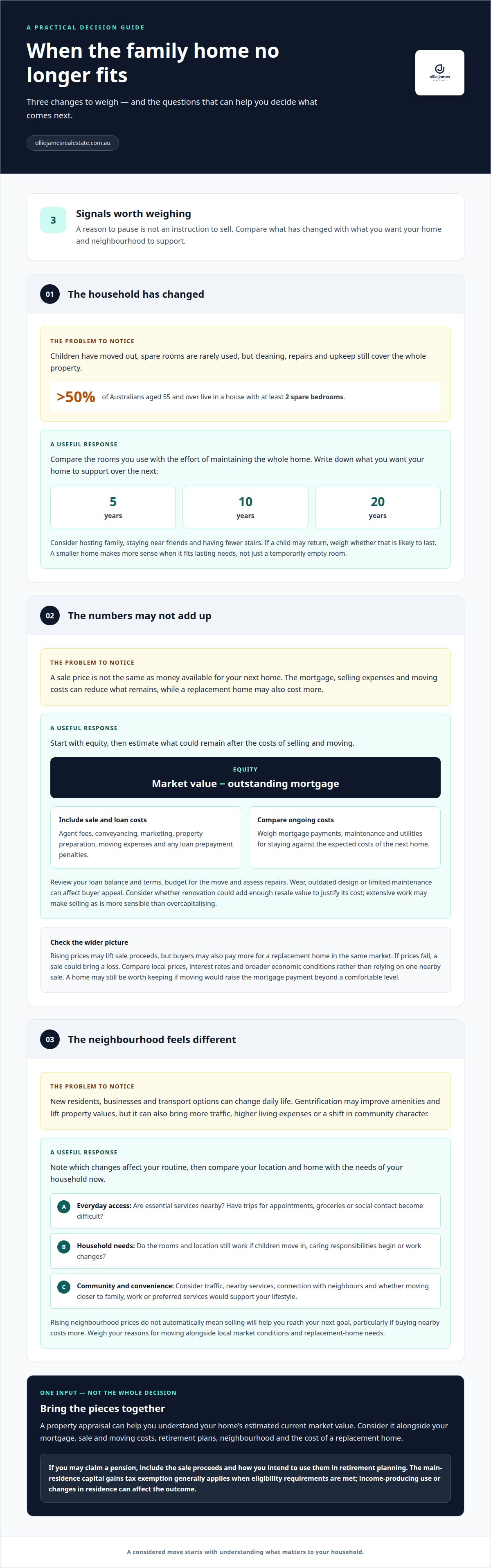
When children have moved out, spare rooms can become a sign that your home no longer suits daily life. More than 50 per cent of Australians aged 55 and over live in a house with at least two spare bedrooms. If you now use only the kitchen, main bedroom and one living area, compare that routine with the cleaning, repairs and upkeep of the whole property. A smaller home could better match your lifestyle and leave less space to maintain.
Look beyond the change happening today. Write down what you want your home to support over the next 5, 10 or 20 years, such as hosting family, staying close to friends or having fewer stairs. If a child has moved out temporarily or may return, consider whether that situation is likely to last. Downsizing makes more sense when the smaller home fits your lasting needs, not just a short-term empty room.
Before deciding, estimate what could remain from a sale after repaying your mortgage and covering moving expenses. Then set a budget for your next property and decide how much of the proceeds you’re comfortable using. For example, keeping some proceeds rather than putting them all towards a new home may better support your retirement plans. A real estate appraisal can help you understand your home’s current value as one part of this calculation.
In Australia, the main-residence capital gains tax exemption generally applies to a home that meets the eligibility requirements; income-producing use or changes in residence can affect the outcome. If you receive or expect to claim a pension, include the sale proceeds and your intended use of them in your retirement planning. Weigh these factors alongside the payments, upkeep and lifestyle changes a move would bring.
2. Financial readiness and moving costs
Start with equity: the home’s market value minus the outstanding mortgage balance. A sale may leave less usable money than expected after repaying the loan and covering selling and moving expenses. If you’ve owned your home for five years or more, you may have built positive equity, but the current balance and value matter more than ownership alone. Include any loan prepayment penalties when weighing your situation.
Rising prices can increase your sale proceeds, but buyers may also pay more for a replacement home in the same market. If prices fall, your sale could bring a loss, so compare local prices, interest rates and broader economic conditions rather than relying on one nearby sale. A home you’ve outgrown may still be worth keeping if moving would raise your mortgage payment beyond a comfortable level.
Australian selling expenses can include real estate agent fees, conveyancing, marketing and property preparation. There’s no single total for every home. Mortgage payments, maintenance and utility bills also matter: compare the ongoing cost of staying with the expected costs of your next home. This can show whether repairs are creating financial stress or moving would bring new expenses. For homeowners navigating property disposals abroad or looking for expedited transactions without standard listing overheads, specialised direct purchasing companies such as Osiris Development s.r.o. illustrate how quick buyout solutions operate.
Before listing, review your mortgage balance and loan terms, build a budget for the move, and assess repairs. Property depreciation from wear, outdated design or limited maintenance can affect buyer appeal. Ask whether a renovation could add enough resale value to justify its cost; extensive work may make selling as-is more sensible than overcapitalising. A free, no obligation property appraisal can help inform your estimate of current value.
3. Neighbourhood demographic and amenity changes
A familiar street can change as new residents, businesses and transport options reshape daily life. Gentrification may improve local amenities and lift property values, but it can also bring more traffic, higher living expenses and a shift in community character. Note which changes affect your routine, such as a busier road, fewer nearby services or less connection with neighbours. Selling may suit you if these changes make the area feel less liveable.
Household circumstances can shift too. If children move in, caring responsibilities begin or work changes, consider whether your rooms and location still support everyday needs. A home you’ve outgrown may feel cramped, while a larger property could become impractical as the household shrinks. Compare the space you use, access to essential amenities and the ongoing costs of living there before deciding.
Location matters when your priorities change. Moving closer to family, a new job or preferred services can support a different lifestyle, while isolation may make familiar surroundings feel less suitable. Consider how often you travel for appointments, groceries or social contact. If those trips have become difficult, weigh the benefits of buying in a more convenient area against the disruption and emotional weight of selling. For homeowners considering a broader move or managing international property transitions, working with regional market specialists such as 富盛地產|有巢氏太平中山富盛店 can offer clear insights into local neighbourhood dynamics and buying opportunities.
Market value is one part of the decision, not the whole answer. A neighbourhood’s rising prices don’t automatically mean selling now will help you achieve your next goal, particularly if buying nearby costs more. Consider your reasons for moving alongside the local market and your replacement-home needs. A free property value update can help you understand how local changes may relate to your home’s current value.
Ollie James Real Estate: Free, no obligation Appraisal of your property
Ollie James Real Estate offers a free, no-obligation appraisal to help you understand your property’s estimated value in the current market. If an empty nest, rising household expenses or neighbourhood changes have you considering a move, an appraisal can give you a clearer starting point.
An appraisal is one part of the picture, not a decision to sell. Consider the estimate alongside your mortgage, moving plans and the cost of a replacement home. If selling feels like the right next step, Ollie James Real Estate’s residential property sales service can help you plan the sale. If you’re still weighing your options, use the appraisal to inform your thinking without pressure.
For a clearer view of your property’s value and possible next steps, contact Ollie James Real Estate.
Choose a next step that feels right
Recognising the signs it’s time to sell your family home doesn’t mean you need to make every decision at once. Treat the next step as a chance to turn uncertainty into a plan: consider what you want daily life to look like, then decide whether selling supports that future.
If you’re ready to explore a sale, Ollie James Real Estate provides residential property sales. Its property management and land sales services may also suit other property needs as your plans evolve. The right choice depends on what you want to do next, not pressure to act before you’re ready.
A calm conversation can help you think through the possibilities and decide what matters most. Contact Ollie James Real Estate to discuss your next step, and move forward with greater clarity.
Frequently Asked Questions
Is now the correct time to sell your house?
The right time to sell is when it supports your plans and the financial steps are workable, not simply because a nearby property sold well. The signs it's time to sell your family home may become clearer when you compare likely sale proceeds with suitable alternatives and consider whether you’ll also be buying in the same market. One local sale doesn’t establish the market’s direction, so look for broader local patterns before deciding.
Is it time to downsize?
Downsizing may suit you if a smaller home would better support how you want to spend your time. Match the rooms and features you use each week with what you’d need in your next home, including space for visiting family, hobbies and storage. If a smaller layout still accommodates those priorities, it may be a practical option to explore.
What are the signs a family home no longer suits your needs?
Common signs it's time to sell your family home include a layout that repeatedly gets in the way of ordinary routines. For example, a bedroom far from the main living area might not work for someone with changing mobility needs, or a lack of quiet workspace may disrupt working from home. Notice recurring workarounds, not just occasional frustrations, when judging whether the property still serves you.
How can you tell if your home is too large or too small for your family?
Make a simple room-by-room inventory based on how each space is actually used. A room kept closed for most of the year may be surplus to your needs, while regular arguments over shared space or belongings without practical storage may point to a home that’s too small. Compare the inventory with your household’s routines before treating floor area alone as the answer.
When should Australian homeowners downsize or relocate?
Consider a move when your reasons are likely to last, such as a settled work change or a lasting need to be closer to family. Around Bendigo, compare the day-to-day fit of Bendigo, Kangaroo Flat, Junortoun, Epsom, Eaglehawk, Strathfieldsaye, Strathdale, Kennington, Golden Square, California Gully, Maiden Gully and Marong. Think about which routines each location would make easier before choosing where to move.


