

A routine rental inspection isn’t a test of whether a renter keeps a showroom home. For anyone using a routine rental inspection checklist in Victoria, the key point is that landlords can inspect to check the property’s condition, but must give at least 7 days’ written notice. An inspection can’t take place during the first 3 months of a rental agreement, and after that, it can happen no more than once every 6 months.
It’s understandable to want clear boundaries around access to your home and to know what will be checked. This article explains routine inspections, the areas and issues they may cover, and how gas, electrical and smoke alarm safety checks fit into rental property care. You’ll also find a practical overview of what to expect.
Key Takeaways
- Use the inspection to identify property condition and maintenance concerns, rather than treating it as a test of your personal belongings.
- Understand how routine inspections differ from safety checks, including the required timing for smoke alarm, gas and electrical checks.
- Know what to expect around privacy: routine inspections generally don’t involve opening wardrobes or handling renters’ belongings.
- Raise maintenance issues during the inspection and keep a written record of any follow-up.
What is a Routine Rental Inspection?
A routine rental inspection lets a landlord assess a property’s condition and note maintenance concerns. Victoria’s Residential Tenancies Act 1997 governs these inspections, according to Victorian Legislation. A routine rental inspection checklist Victoria landlords use can help organise observations without treating the visit as a test of the renter’s housekeeping.
Inspection notice requirements
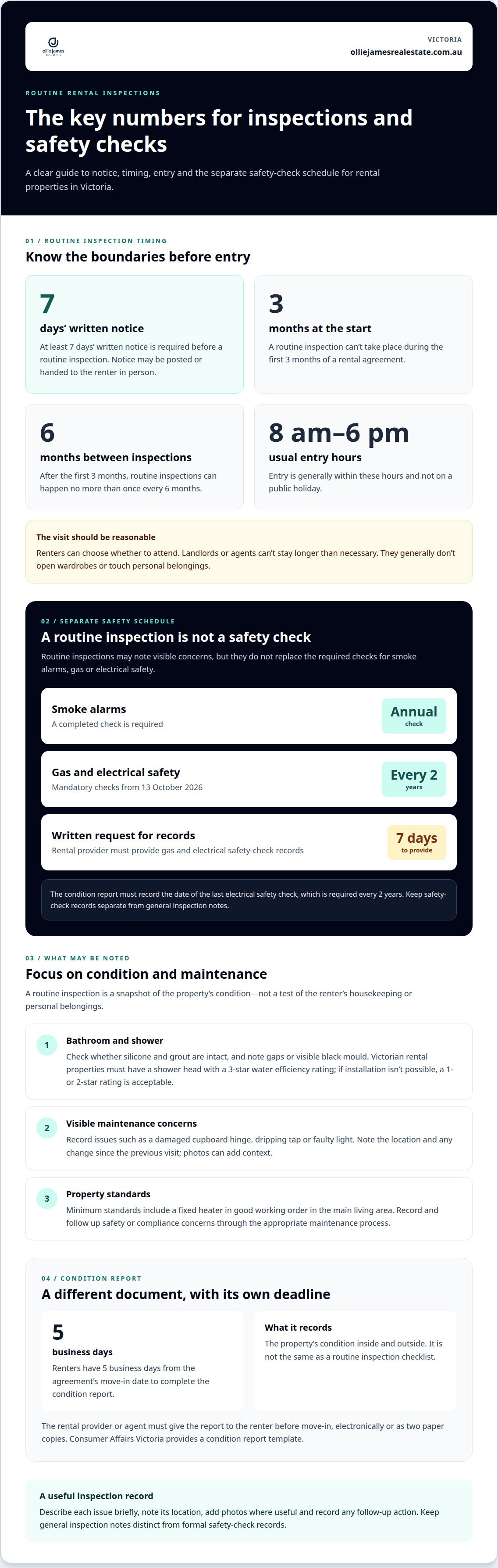
A landlord must give at least 7 days’ written notice before a routine inspection. Notice may be posted or handed to the renter in person. Inspections can’t happen during the first 3 months of a rental agreement; after that, they’re limited to once every 6 months. Entry is generally between 8 am and 6 pm, not on a public holiday. A checklist for a routine rental inspection in Victoria can help a property manager record the coming visit and its findings.
Bathroom and shower requirements
Bathroom checks may note whether silicone and grout are intact, and whether there are gaps or visible black mould. A routine inspection can also identify maintenance concerns around the shower. Victorian rental properties must have a shower head with a 3-star water efficiency rating. If installing one isn’t possible, a 1- or 2-star rating is acceptable.
Tenant attendance and entry rights
Renters can choose whether to attend. Inspections must be reasonable, and landlords or agents can’t stay longer than necessary. They generally don’t open wardrobes or touch personal belongings. A renter may refuse a general inspection if one occurred within the previous 6 months, or if notice or legal entry conditions aren’t met. If the renter is absent, entry may proceed when those conditions are satisfied.
Official checklists and templates
Consumer Affairs Victoria provides Victorian rental guidance and a condition report template. That report records the property’s condition inside and outside; it isn’t the same as a routine inspection checklist. The rental provider or agent must give it to the renter before move-in, electronically or as two paper copies. Renters have 5 business days from the agreement’s move-in date to complete it.
Gas, electrical and smoke alarm safety checks
Safety checks are separate from routine inspections: they address specific risks in a rental home. Victorian rental laws also set minimum standards that properties must meet when advertised or offered for rent, and before a renter moves in.
Keep safety-check records separate from a general review of the property’s condition. In Victoria:
- Smoke alarms require a completed annual check.
- Mandatory gas and electrical safety checks are required every two years from 13 October 2026.
- The condition report must record the date of the last electrical safety check, which is required every 2 years.
These dates help landlords track compliance across a tenancy. A routine inspection may identify a visible concern, but it doesn’t replace the required safety checks. If a renter makes a written request for gas and electrical safety-check records, the rental provider has 7 days to provide them. Keeping the records together makes it easier to respond clearly if a safety concern becomes a dispute.
Minimum standards also cover the property’s broader condition. For example, a rental property must have a fixed heater in good working order in its main living area. Record and follow up safety or compliance concerns through the appropriate maintenance process, rather than treating them as cosmetic inspection notes.
For landlords preparing a tenancy, tenant selection and vetting is part of setting up the rental relationship clearly; safety checks remain a separate responsibility throughout the tenancy.
Purpose of routine rental inspections
A routine inspection gives the rental provider a snapshot of a home’s condition during a tenancy. It can help identify maintenance needs early, document observations and support clear communication with renters. For example, noting a damaged cupboard hinge gives both parties a specific issue to discuss, rather than a vague concern about upkeep.
A routine rental inspection checklist Victoria landlords can use helps organise observations into a useful maintenance record. Describe each issue briefly, noting its location and any change since the previous visit. Photos can add context, and a follow-up note can record the action taken.
Inspections also give renters an opportunity to raise concerns, such as a dripping tap or faulty light. The rental provider can assess the repair and arrange suitable follow-up. Keeping inspection notes separate from safety-check records helps distinguish a visible issue from a formal safety check.
Used consistently, a routine rental inspection checklist Victoria property owners refer to can support more considered decisions about maintaining a home. If your longer-term plans include selling an investment, explore residential property sales as one possible next step.
Ollie James Real Estate: Tenant Selection and Vetting
Ollie James Real Estate offers Tenant Selection and Vetting for landlords preparing to rent out a property. Selecting a tenant is an early step; routine inspections later help monitor the property’s condition and identify maintenance needs. For ongoing rental responsibilities, Ollie James Real Estate also offers Property Management.
Whether you’re preparing a property for rent or considering who will manage it, the right next step depends on what support you need. Contact Ollie James Real Estate to discuss your property needs.
Plan your next property step with confidence
A routine rental inspection checklist in Victoria can turn observations into a clear plan for your property. Decide what needs attention now, what to monitor and whether your longer-term plans have changed. Connecting these decisions can make the next steps easier to manage.
For ongoing oversight, Ollie James Real Estate offers Property Management. If you’re considering a sale or land, the agency also offers Residential Property Sales and Land Sales. Choose the support that suits your property goals and take the next step when you’re ready.
Contact Ollie James Real Estate to discuss your next step and move forward with greater clarity.
Frequently Asked Questions
How often do they need to happen?
Routine inspections can occur after the rental agreement’s first 3 months, with no more than one inspection in each following 6-month period. For a practical example, record the date of each inspection and use it to plan the next eligible visit. This helps avoid scheduling too soon and gives renters a clearer record of access.
What are property managers and owners looking for?
An inspection assesses the property’s condition and notes issues that may need maintenance. It is not a judgment of whether a renter’s home looks like a showroom. Examples include a window that won’t close properly, a new wall crack or water damage near a sink. Notes and photos can describe a concern clearly and help track changes over time.
What are the rules for routine rental inspections in Victoria, Australia?
Victoria’s rules limit when a routine inspection can take place, how often it can occur, and how entry must be handled. Renters may refuse entry if notice or other legal conditions aren’t met, or if a general inspection took place within the previous 6 months. For landlords in Bendigo, Kangaroo Flat, Junortoun, Epsom, Eaglehawk, Strathfieldsaye, Strathdale, Kennington, Golden Square, California Gully, Maiden Gully and Marong, keeping dated inspection records can help clarify the history of access.
How much notice must a landlord give before a routine inspection in Victoria?
A landlord must give at least 7 days’ written notice before a routine inspection. The notice can be sent by post or handed to the renter in person. Keep a copy and note when it was served, so the planned entry date and notice period are clear if questions arise. A text message alone isn’t one of the stated delivery methods.
How often can a rental provider conduct routine inspections in Victoria?
A rental provider can conduct a routine inspection no more than once every 6 months after the first 3 months of the rental agreement. The limit applies to general inspections, so a recently completed inspection affects when the next one can occur. Keeping a dated record helps distinguish routine visits from other entry reasons, which may have separate notice requirements.


