

A final inspection isn’t a second building inspection. It checks whether the property remains in the condition required by the contract. Here in Victoria, including across Bendigo and nearby local areas, it’s generally arranged in the days leading up to settlement, though your contract sets the exact access rights and timing. A practical final inspection before settlement checklist helps you focus on changes, agreed repairs and items included in the sale.
With settlement approaching, it’s natural to want reassurance that the home you’re about to own is as expected. This inspection is your last chance to identify changes before handover, so it’s important to understand what it can and can’t establish.
Here, you’ll learn when to arrange the inspection, how access works in Victoria and what to check, from fixtures and agreed inclusions to signs of damage. You’ll also see how a pre-settlement inspection differs from a building inspection completed earlier in the buying process with Ollie James Real Estate.
Key Takeaways
- Read the sale contract to understand your inspection rights and any conditions that affect access.
- Use the inspection to check agreed repairs, contract inclusions and changes in the property’s condition.
- Keep the final inspection focused on handover condition; it isn’t a substitute for a building and pest inspection.
- If you spot an issue, record what you found and raise it promptly through the appropriate settlement process.
When should you do a pre-settlement inspection?
Arrange the inspection close to settlement, leaving time to raise concerns and discuss next steps. Across Australia, buyers are advised to inspect 3 to 7 days beforehand. Consumer Protection says a Western Australian property’s condition at settlement should match its condition when the buyer inspected it, unless the contract specifies otherwise.
Bring the sale contract and written records of agreed repairs or special conditions. Use a final inspection before settlement checklist to review inclusions, completed work and any conditions the seller agreed to meet. For example, confirm that a listed appliance is still there and agreed repairs are complete. This visit isn’t an opportunity to request repairs for damage that was already present at the first inspection.
- Compare contract inclusions with items still at the property.
- Look for new damage, such as broken glass, fresh marks or water leaks.
- Bring a pen and camera or smartphone to record concerns clearly.
A practical final inspection before settlement checklist also helps distinguish new damage from pre-existing defects. If the property is in worse condition than at contract exchange, you can ask the vendor to make repairs. Who pays depends on the contract and any agreed resolution, so discuss the circumstances with your solicitor or conveyancer.
Finding a problem doesn’t automatically mean settlement can be delayed or money withheld. In WA, an issue found at the final inspection generally may not entitle the buyer to delay settlement. Get settlement advice before taking action. Your conveyancer can clarify which documents are exchanged and how keys are handed over under your settlement arrangements.
Timing and access for a WA pre-settlement inspection
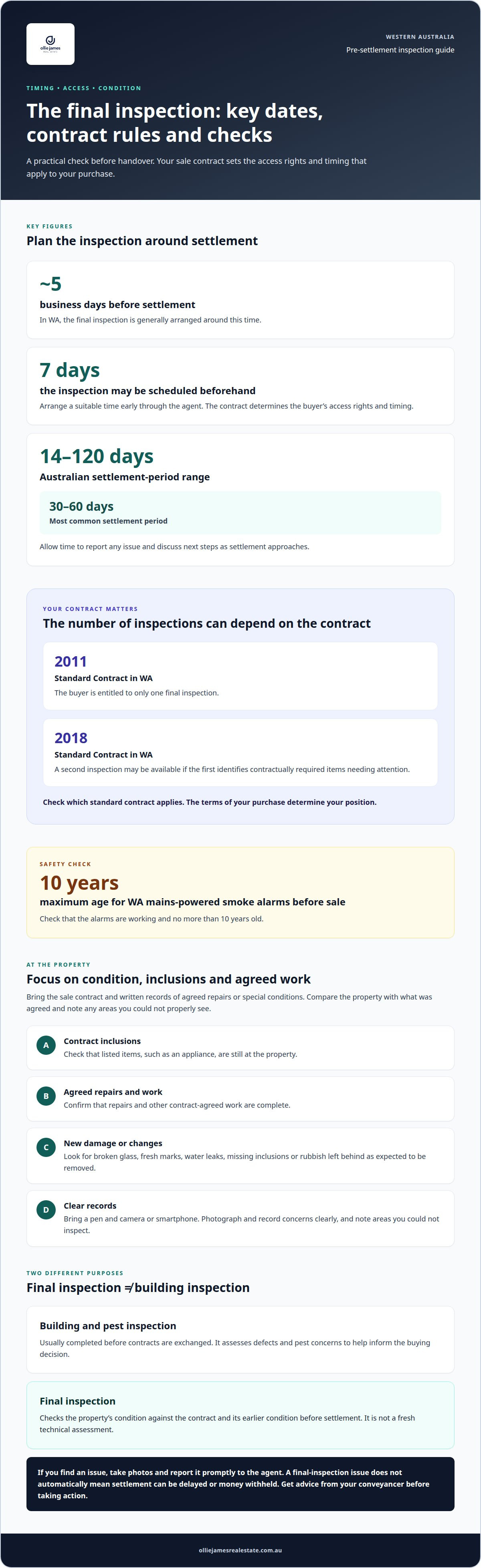
In Western Australia, the final inspection is generally arranged around five business days before settlement. It can be scheduled up to seven days beforehand, but the sale contract sets the buyer’s access rights and timing. Arrange a suitable time early through the agent, so access fits the contract and settlement schedule.
Settlement periods for Australian property purchases range from 14 to 120 days, with 30 to 60 days most common. That window affects planning: if settlement is approaching, allow time to report an issue and discuss next steps. The inspection is a practical check before handover, not a reason to assume settlement can be moved.
Check which standard contract applies. Under the 2011 standard Contract in WA, the buyer is entitled to only one final inspection. Under the 2018 standard Contract, a second inspection may be available if the first identifies contractually required items needing attention. The terms applying to your purchase determine the position.
The property may still be occupied, particularly when the vendor is completing a simultaneous settlement and moving out. Don’t expect every room or cupboard to be clear; note areas you couldn’t properly see and arrange access within the contract’s inspection window. Check whether agreed items remain, and whether belongings or rubbish have been removed as expected. WA mains-powered smoke alarms must be working and no more than 10 years old before sale.
If you’re buying in WA, local property guidance can help you understand the steps around a purchase.
Difference between a final inspection and a building inspection
A building and pest inspection is usually completed before contracts are exchanged. It assesses the property for defects and pest concerns, helping inform the buyer’s decision before committing to the purchase. A final inspection serves a different purpose: it checks the property’s condition against the contract and its earlier condition before settlement. It isn’t a fresh technical assessment.
That distinction matters. A final walk-through may reveal a new leak, damage, a missing inclusion or rubbish left behind, but it doesn’t replace a qualified inspection for structural or timber pest concerns. If you notice an issue, take photos and report it promptly to the agent. Your conveyancer can advise on contract-related next steps.
For a new build, focus on the property’s condition and any items or repairs agreed under the contract. Don’t treat the final visit as a substitute for a building inspection. In an apartment, check the areas you can access and the inclusions specified for the lot. For an investment property, the same contract-based check applies, although a tenant or remaining belongings may limit access.
Arrange access in line with the contract and note any areas you couldn’t inspect. The key takeaway: a building inspection looks for problems, while the final inspection checks for changes and agreed requirements before handover.
If you’re planning a purchase, discuss your property buying plans and the support that fits your next step.
Ollie James Real Estate
Ollie James Real Estate can support you through your property journey, from considering a purchase to managing a property after settlement. If you’re weighing up an investment, its investment property pre-purchase assessment can help inform your decision before you commit. For questions about inspection findings, refer to the sale contract and take contractual concerns to your conveyancer, who can advise on your settlement options.
Whether you’re buying, selling or planning your next property step, practical local guidance can help you understand what to consider and where to focus. For a conversation about your property plans, contact Ollie James Real Estate.
Plan your next property move with confidence
Your inspection can help inform what comes next, from planning your move to prioritising maintenance or considering how the property will work as an investment. Keep your final inspection before settlement checklist with your purchase records, so your observations are easy to refer to after handover. As your plans develop, you may also be weighing up a future sale, rental management or another property purchase.
Ollie James Real Estate offers Residential Property Sales, Land Sales and Property Management to support different property goals. If you’d like to discuss your next step, contact Ollie James Real Estate. Take the process one decision at a time, with clear information to guide you.
Frequently Asked Questions
Does the property have to be professionally cleaned before settlement?
In Western Australia, professional cleaning is required only if the contract sets that standard. Ordinary dust or marks may not establish a breach if the sale terms don’t require professional cleaning. If cleanliness is an agreed condition, refer to the specific wording and document any concern clearly. This helps distinguish a contractual issue from a preference for a cleaner handover.
Should the seller be present at the inspection?
The seller doesn’t need to attend as your inspection witness; you can go with someone such as the real estate agent. In WA, the home may still be occupied or the seller may be moving out, so access to some areas could be limited. Arrange entry beforehand and note any rooms or spaces you couldn’t properly view.
What happens if agreed repairs are unfinished?
Record any agreed work that remains incomplete, taking photos where useful, then raise the issue promptly with the agent. The agent can contact the seller and settlement agent to discuss an outcome. Depending on the circumstances, the seller may complete repairs before settlement or agree to a settlement credit, leaving you responsible for the work afterwards.
What happens if there's a problem?
Report the issue promptly and keep a clear record, including photos and the problem’s location. The agent can raise it with the seller and settlement agent. A newly damaged item, an incomplete agreed repair and a pre-existing defect may involve different contract considerations, so share the relevant facts with your conveyancer before agreeing to a resolution.
What if you find something wrong?
Focus on what changed or what the contract required, rather than treating the visit as a new building assessment. Record the concern and contact the agent promptly. Ask your conveyancer about the contract implications before making decisions about settlement. If you’re planning a move around Bendigo, Kangaroo Flat, Junortoun, Epsom, Eaglehawk, Strathfieldsaye, Strathdale, Kennington, Golden Square, California Gully, Maiden Gully or Marong, local market knowledge can help inform your next step.


