

A no-pets rule isn’t an automatic reason to refuse. Whether a landlord can refuse a pet in Victoria in 2026 depends on whether VCAT considers the refusal reasonable; a rental provider must apply to VCAT and tell the renter within 14 days of receiving the pet request form.
It’s understandable to want a clear answer before asking to bring a pet into your home. Victoria’s rental pet rules began on 2 March 2020, and they give renters a formal request process while allowing refusals to be considered on their circumstances.
This guide explains when Victoria’s pet rules took effect, what renters need to do and when VCAT may consider a rental provider’s refusal reasonable. It also covers what happens if the provider does not respond within the required timeframe.
Key Takeaways
- Use Victoria’s official Pet Request Form for each new pet, and keep a record of when the rental provider receives it.
- VCAT considers whether a refusal is reasonable in the circumstances; property features, such as whether a boundary can contain a large dog, may be relevant.
- Check how local council requirements and any Owners Corporation rules may affect keeping a pet at the property.
- Remember that renters remain responsible for pet-related damage or nuisance, while an assistance dog is not considered a pet for rental purposes.
When will the new pet laws take effect?
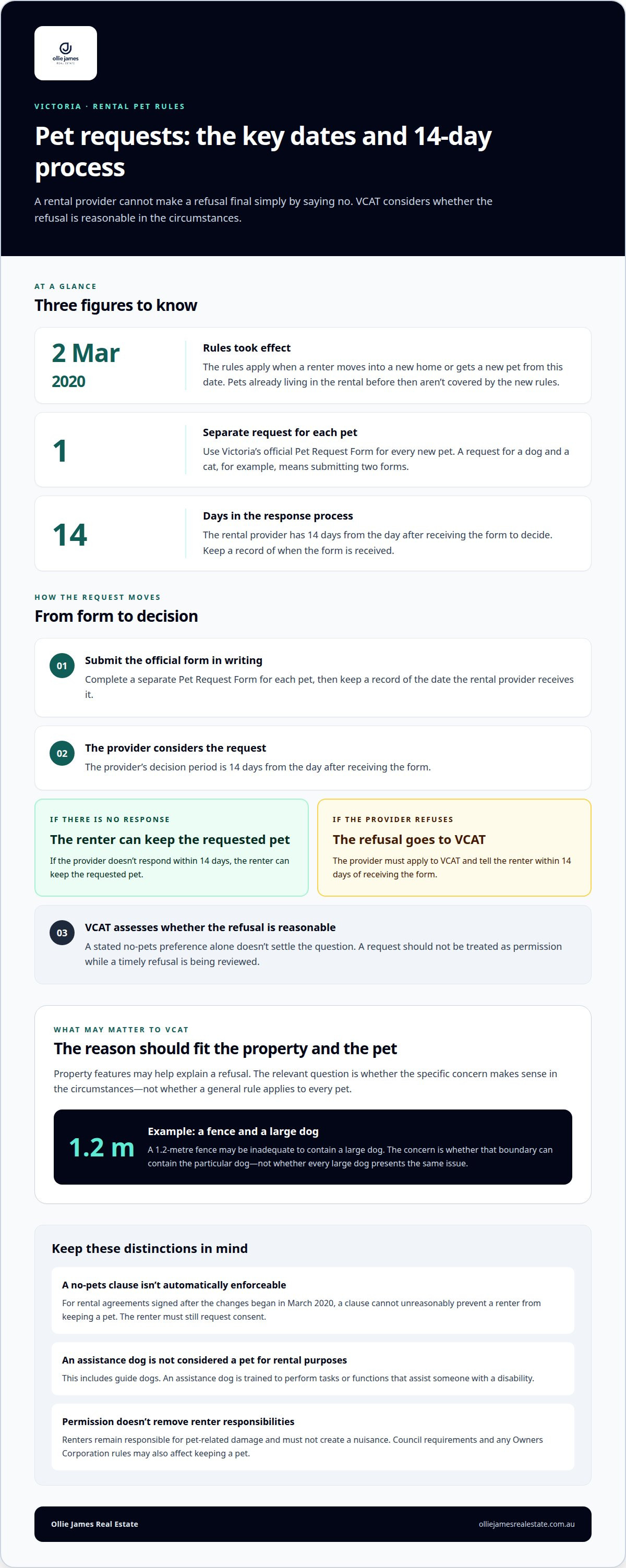
Victoria’s rental pet rules took effect on Monday 2 March 2020. They apply when a renter moves into a new home or gets a new pet from that date. Pets already living in the rental before 2 March 2020 aren’t covered by the new rules. The Residential Tenancies Act 1997 covers pets in sections 71A-71E.
Renters must request permission in writing using the official pet request form. A separate form is needed for each pet. For example, someone seeking to keep a dog and a cat submits two requests. The rental provider has 14 days from the day after receiving a form to decide.
If the rental provider refuses, they must apply to VCAT and tell the renter within 14 days of receiving the form. If they don’t respond within 14 days, the renter can keep the requested pet. VCAT reviews the application and decides whether the refusal is reasonable. A request should not be treated as permission while a timely refusal is being reviewed.
Keeping a pet without required permission can lead to a breach process, rather than an automatic fine stated in these rules. If the renter doesn’t fix a pet-related breach within 14 days, the rental provider can issue a second breach notice or seek a VCAT compliance order. If a VCAT order excludes the pet, the renter has 14 days to comply, according to Consumer Affairs Victoria.
An assistance dog isn’t considered a pet for rental purposes. Under the Equal Opportunity Act 2010, an assistance dog is trained to perform tasks or functions that assist someone with a disability. Guide dogs fall within this assistance-dog distinction.
If a request is refused, renters can seek advice about their options and the review process. Start by submitting the official pet request form, then follow the VCAT process if consent is refused.
What do the new pet laws mean for renters?
Permission to keep a pet does not remove council requirements or renter responsibilities. Owners Corporation rules, local council laws and the rental agreement can each affect whether and how you can keep a pet.
Owners corporation and council rules
An Owners Corporation sets rules for shared areas in some residential buildings, while councils regulate local pet matters. These are separate from the rental provider’s response to a pet request. Council laws may cover registration, microchipping, confinement and dogs classified as menacing, dangerous or restricted breed.
For example, a renter with a dog in an apartment may need to consider both shared-property rules and council requirements. Rules about using common areas or confining a dog can affect how the pet is kept. Check the relevant requirements before bringing an animal home.
Renter responsibilities for pets
Renters remain responsible for damage their pets cause and must not damage the property or create a nuisance. These obligations arise under the Residential Tenancies Act 1997 and rental agreements. A dog that repeatedly disturbs neighbours, for example, may raise a nuisance issue even if permission was granted.
Cleaning up after a pet and addressing damage promptly can help prevent avoidable disputes. Permission to keep an animal does not remove these responsibilities. If a concern arises, consider whether it involves property damage, disruption to neighbours or both.
Pet rent, bonds and fees
A rental provider cannot require an additional pet bond. This does not remove a renter’s responsibility for damage if an animal harms the property. A pet request does not automatically create a separate bond.
For a proposed rent change or other charge, review the tenancy agreement and the specific reason given. The pet rules do not allow a pet bond simply because it is labelled a fee. Keep written records of requests and responses so the terms are clear.
When a landlord can refuse a pet
Under the Residential Tenancies Act 1997, a rental provider cannot unreasonably refuse a renter’s pet request. A landlord cannot make a refusal final simply by saying no; they must apply to VCAT for an order refusing consent. The central issue is whether VCAT considers the particular refusal reasonable, not whether the property has a general no-pets preference.
The property’s physical features may help explain a refusal. For example, a 1.2-metre fence may be inadequate to contain a large dog at a Victorian rental property. The concern is whether that boundary can contain the particular dog, rather than whether every large dog presents the same issue. Details about the pet and the property help put the reason in context.
A no-pets clause also isn’t automatically enforceable. For rental agreements signed after the changes began in March 2020, a clause cannot unreasonably prevent a renter from keeping a pet. A blanket restriction alone doesn’t settle whether refusal is reasonable. The renter must still request consent, and a landlord seeking to refuse must apply to VCAT.
For renters asking whether a landlord can refuse a pet in Victoria in 2026, the practical distinction is between a stated preference and a supported reason VCAT can assess. A property-specific concern, such as whether a fence can contain a dog, gives VCAT something concrete to consider. The decision rests on the request and the circumstances presented, not on a no-pets rule by itself.
Ollie James Real Estate: Land Sales
Ollie James Real Estate offers Land Sales for people considering a move or planning a future home. If keeping a pet is shaping your housing decision, buying land is one option to explore alongside established residential properties. The right choice depends on your plans, preferred location and the type of home you want to create.
For rental providers, Ollie James Real Estate’s Property Management service can help with the day-to-day management of a residential rental and its tenancy arrangements. For renters, understanding the pet request process can clarify what to discuss before choosing a home. Clear information makes it easier to decide on your next step.
If you’re considering land or residential property, contact Ollie James Real Estate to discuss your plans.
Make your next property decision with confidence
If you’re weighing whether a landlord can refuse a pet in Victoria in 2026, consider how your housing plans and your pet’s needs fit together before making your next move. A rental, a home purchase and a land purchase each involve different decisions, so being clear about what matters most can help you choose a suitable path.
Ollie James Real Estate offers Residential Property Sales, Property Management and Land Sales to support people at different stages of their property journey. Whether you’re planning a move, managing a rental or exploring land, a conversation can help you consider the options that fit your circumstances.
Contact Ollie James Real Estate to discuss your property plans and take the next step with greater clarity.
Frequently Asked Questions
What constitutes “reasonable refusal” at VCAT?
VCAT considers the circumstances behind the particular refusal, rather than treating a no-pets preference as decisive. A property feature may matter: for example, a 1.2-metre fence may not contain a large dog. The relevant question is how the pet and the rental property interact. A concern about one animal or boundary doesn’t automatically establish that another request should be refused.
What about renters who already have pets?
The changed pet rules don’t apply to a pet already kept in the rented home before 2 March 2020. That distinction is about the animal already living there, not a blanket exemption for later pets. If a renter gets another pet after that date, they need to make a separate request for that animal using the official form.
What are the rules about keeping a pet at my property?
For a new pet, renters need written permission from the rental provider using the official pet request form, with a separate form for each animal. Local council requirements may also apply, including registration and microchipping. For example, renters in Bendigo, Kangaroo Flat or Epsom should consider relevant council requirements alongside their tenancy arrangements.
Can a landlord refuse a pet request in Victoria, Australia in 2026?
Yes, but a landlord can’t unreasonably refuse consent and must obtain a VCAT order to refuse the request. For example, a property-specific concern about containing a large dog may be considered; a general no-pets preference alone isn’t the same as an order. Rental agreements signed after the changes began in March 2020 can’t enforce an unreasonable no-pets restriction.
What are Victoria’s 2026 rental laws and rules for requesting a pet?
Victoria’s pet rules were already in effect in 2026; they began on 2 March 2020. A renter submits the official form for each new pet. The rental provider has 14 days from the day after receiving the request to decide. If refusing, they must apply to VCAT and notify the renter within 14 days of receiving the form.


