

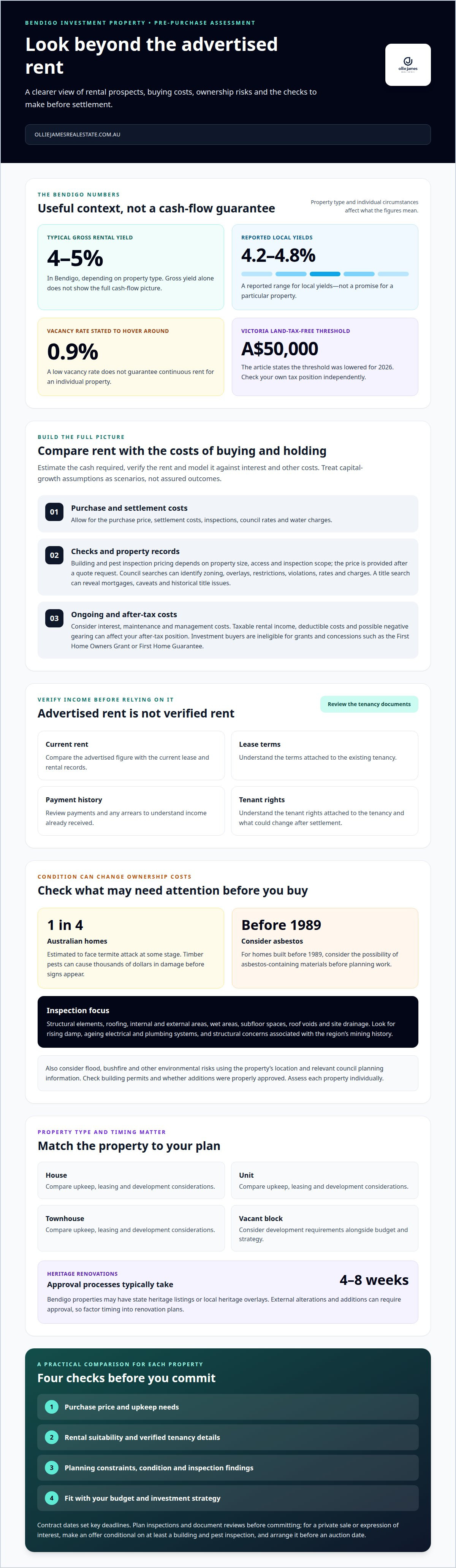
A property's advertised rent doesn't tell you whether it will work as an investment. An investment property pre-purchase assessment in Bendigo weighs the likely rental income against purchase costs, while considering the property's type, condition and potential structural issues. Gross rental yields in Bendigo are typically 4-5%, depending on property type, but yield alone doesn't show the full cash-flow picture.
It’s understandable to feel pressure when a purchase involves substantial money and a tight timeframe. An investment property pre-purchase assessment in Bendigo can help clarify what the property and its costs mean before you commit. This guide covers purchase and holding costs, rental income, property types, and the importance of checking condition and potential defects.
Key Takeaways
- Assess rental income alongside purchase and holding costs to understand the property's cash-flow demands, not just its advertised yield.
- Compare property types and locations against your budget and investment priorities before settling on a purchase.
- Look closely at structural condition and maintenance needs, as issues such as damp, ageing services or pest damage can affect ownership costs.
- An investment property pre-purchase assessment can help you weigh a Bendigo property’s costs, rental prospects and condition before making a decision.
Bendigo property purchase costs and rental cash flow
Estimate the full cost of buying and holding the property, then compare it with realistic rent. Bendigo rental yields and vacancy figures offer context, but neither determines cash flow on its own.
Property purchase cost assessment
Allow for the purchase price, settlement costs, inspections, council rates and water charges when estimating the cash required. Building and pest inspection pricing depends on property size, access and inspection scope; the price is provided after a quote request. Council planning and compliance searches can help identify zoning, overlays, planning restrictions, violations, rates and charges. A title search can reveal mortgages, caveats and historical title issues.
Rental income and tenancy review
Before buying, compare the advertised rent with the current lease and rental records. Review the rent, lease terms, payment history and any arrears, and understand the tenant rights attached to the tenancy. This helps establish what income is already secured and what could change after settlement. Don’t treat an advertised figure as verified income until you’ve checked the tenancy documents.
Yield, vacancy and capital growth
Bendigo gross rental yields are typically 4-5%, depending on property type; reported local yields range from 4.2% to 4.8%. Vacancy is stated to hover around 0.9%, but a low vacancy rate doesn’t guarantee continuous rent for a particular property. Model rent against interest and other costs; treat capital growth assumptions as scenarios, not assured outcomes.
Due diligence and tax considerations
According to sro.vic.gov.au, Victoria’s land-tax-free threshold was lowered to A$50,000 for 2026. Taxable rental income, deductible management and maintenance costs, and possible negative gearing can affect your after-tax position. Investment buyers are ineligible for grants and concessions such as the First Home Owners Grant or First Home Guarantee. Review title, council records and tenancy documents before settlement, and seek independent financial or accounting advice.
Property types and investment strategy
Start with your investment goal, then match the property type to your budget. A house, unit, townhouse or vacant block each brings different upkeep, leasing and development considerations. Compare likely income, ongoing responsibilities and growth potential to decide which option suits your Australian investment plans.
Location matters as much as the building. Compare Bendigo neighbourhoods and nearby regional areas for access, layout, condition and suitability for the tenants you hope to attract. A growing area alone does not make a property a sound investment. Check whether its features support your strategy and anticipated holding costs.
For older homes, include heritage status in a thorough assessment. Bendigo properties can have state heritage listings or local heritage overlays, which may affect changes to buildings and streetscapes. External alterations and additions can require approval, while heritage approval processes typically take 4-8 weeks. That timing matters if renovations are part of your plan.
In Victoria, buying generally involves identifying a suitable property, reviewing its documents, arranging due diligence, making an offer and completing settlement. Contract dates set the key deadlines, so plan inspections and document reviews before committing. For a private sale or expression of interest, make an offer conditional on at least a building and pest inspection; arrange it before an auction date.
Use a simple comparison for each candidate: purchase and upkeep needs, rental suitability, planning constraints and fit with your budget. This makes the trade-offs clearer and supports an informed decision, rather than relying on a single growth prediction. For locally grounded context as you assess Bendigo real estate, explore Bendigo property guidance.
Structural defects and general property condition
Older Bendigo homes can offer character, but may also have condition risks. Look for rising damp, ageing electrical and plumbing systems, and structural concerns associated with the region’s mining history. A building inspection examines structural elements, roofing, internal and external areas, wet areas, subfloor spaces, roof voids and site drainage. Its findings can help you understand potential repairs before buying.
Termites deserve particular attention in a rental property. One in four Australian homes is estimated to face termite attack at some stage, and timber pests can cause thousands of dollars in damage before signs appear. An inspection can identify visible evidence and conditions that may warrant further investigation. For homes built before 1989, consider the possibility of asbestos-containing materials before planning work.
To assess flood, bushfire and other environmental risks, consider the property’s location and relevant council planning information alongside the site inspection. Drainage, surrounding land and nearby vegetation can prompt useful questions about exposure and maintenance. Assess each property individually rather than assuming risks are the same across Bendigo.
For older or heritage properties, a professional building inspection can help identify structural, maintenance and heritage-related concerns. Pre-purchase checks can also include building permits and whether additions were properly approved. These details matter if planned repairs could affect rental readiness or future capital growth.
Use inspection findings to separate immediate defects from ongoing upkeep, then factor both into your purchase decision. For a considered review of a Bendigo investment property, discuss your property assessment.
Ollie James Real Estate: Investment property pre purchase assessment
Ollie James Real Estate offers investment property pre-purchase assessments to help you consider a Bendigo property’s rental suitability, purchase factors and condition. An assessment is useful when you’re considering a specific property and want to understand how it fits your investment plans. It can help you identify questions to resolve before proceeding and decide whether the property’s type and condition suit your intended ownership approach.
If you’re weighing up a house, unit or land purchase, a considered local perspective can help bring the details together. For support with your next investment decision, contact Ollie James Real Estate.
Take your next investment step with clarity
Before committing, decide what evidence would lead you to proceed, renegotiate or walk away. An investment property pre-purchase assessment in Bendigo can clarify how well a property fits your plans and help you make a considered decision.
Ollie James Real Estate also offers Residential Property Sales, Property Management and Land Sales, supporting different stages of a property journey. If you’re ready to discuss your next move, Contact Ollie James Real Estate.
Take the next step at a pace that feels right for you, with a clearer view of the decision ahead.
Frequently Asked Questions
What inspections should be included in a pre-purchase assessment for an investment property in Bendigo?
An investment property pre-purchase assessment in Bendigo should consider building and pest inspections, as well as checks suited to the property’s age and location. A building inspection can cover the roof, structure, wet areas, subfloor, roof void and drainage. For a heritage home, review its heritage status and past permits. Title and tenancy documents provide further context about ownership and existing rental arrangements.
What are Bendigo property prices, rental yields and vacancy rates by suburb?
Available Bendigo-wide figures put gross yields at around 4.2-4.8% and vacancy at about 0.9%; they don’t provide comparable figures for every suburb. Compare individual properties using their specific price and rental details.
Which Bendigo suburbs have strong rental demand and investment prospects?
An investment property pre-purchase assessment in Bendigo can help you compare a property’s rental suitability and features with your investment priorities. Consider individual homes in Kangaroo Flat, Junortoun, Epsom, Eaglehawk, Strathfieldsaye, Strathdale, Kennington, Golden Square, California Gully, Maiden Gully and Marong. Compare rental evidence and condition across similar properties rather than assuming the suburb alone indicates demand.
What are the risks of buying an older property in Bendigo, including termites, asbestos and structural defects?
Older Bendigo homes may have rising damp, ageing electrical or plumbing systems, and structural concerns associated with the region’s mining history. Properties built before 1989 may contain asbestos materials, while termite activity can damage timber out of sight. Ask the inspector to document visible signs and areas needing further assessment, including subfloors, roof spaces and damp-prone rooms.


