

The best preparation for your final inspection can begin on the day you move in. It’s understandable to worry about overlooked cleaning, ordinary wear and tear, or an unexpected issue affecting your bond. In Victoria, the entry condition report gives you an important comparison point. Keep it with your photos, receipts and messages so you can explain any differences clearly. This end of lease inspection guide Victoria sets out what to expect and how to prepare without treating every mark as damage.
You’ll find practical steps for checking the home, understanding the “reasonably clean” standard and organising records if a bond concern comes up. We’ll also explain how the final inspection relates to your original condition report, so you can communicate calmly with your rental provider or agent and hand back the property with greater confidence.
Key Takeaways
- Use the entry condition report to compare the property’s condition at the end of your tenancy with its condition at the start.
- This end of lease inspection guide Victoria includes a practical room-by-room check to complete before handing back the property.
- Gather relevant reports, photos and messages so you can refer to them if a cleaning or damage concern is raised.
- If a bond claim is proposed, compare its details with your records and ask for clarification about any item you don’t understand.
What happens at an end-of-lease inspection in Victoria?
The final inspection checks the property’s condition at the end of the tenancy, using the entry condition report and other relevant records for comparison. The purpose is to identify changes during the rental period, not to treat every mark as new damage. For a broader overview of Landlord-tenant law, remember that rules vary between jurisdictions and Victorian requirements are specific to the state.
In Victoria, the rental provider must give the renter a completed, signed condition report before the tenancy begins. The renter has five business days from moving in to add observations and return a signed copy. After the agreement ends, the rental provider or agent must complete the end-of-tenancy section within 10 days. Renters also have the right to attend the final inspection and should have a reasonable opportunity to do so.
Preparation is useful, but it cannot guarantee a particular bond outcome. An inspection may raise cleaning, damage or maintenance concerns. Whether an issue affects a bond claim depends on the circumstances and available evidence. Ordinary deterioration from everyday use is different from damage. This end of lease inspection guide Victoria is about making a fair comparison, not assuming every change is the renter’s responsibility.
How the entry condition report shapes the final inspection
Before moving out, find your entry report and collect photos, emails and written updates about repairs or changes to the property. Keep these records together so you can refer to them if an inspection concern is raised.
Dated records provide context. An entry photo showing a wall mark, for example, may help clarify whether it was there at the start of the tenancy. A message reporting a faulty fixture can show that the issue was raised earlier. Compare similar areas, note anything you’re unsure about and keep the discussion factual. A clear record gives both parties a better basis for discussing the property’s condition.
How to prepare for your Victorian end-of-lease inspection
A simple sequence helps you focus on what you can control. Use this end of lease inspection guide Victoria checklist as practical preparation, not a promise of a particular inspection result or bond outcome. Keep communication with your agent or rental provider clear, and save a copy of anything you send.
- Review your entry report. Go room by room and note differences, including marks recorded at the start or repairs reported during the tenancy.
- Complete agreed cleaning. Review your rental agreement and any written arrangements, then make a list of the areas that need attention.
- Remove your belongings. Clear personal items from the home and outdoor areas, and arrange to return the keys as agreed.
- Gather your records. Collect reports, messages, repair updates and receipts that may help explain the property’s condition or work completed.
A room-by-room checklist and records to have ready
Use the entry report as your guide rather than aiming to make the home look brand new. In the kitchen, check surfaces, the oven and rangehood. In the bathroom, review fixtures, grout and glass. In living areas, look for new marks or damage. Check window tracks, cupboards and floors, then review outdoor spaces, including lawns or gardens where relevant. If you find a difference, note its location and take a dated photo. Photos and written notes are practical records, not a substitute for legal requirements.
Keep a short record of cleaning completed, repairs reported, access arrangements and key handover details. Dated messages can help clarify what was discussed and when. For broader context on the rental relationship, see this Bendigo rental property management guide. Tenants Victoria also provides guidance on ending a tenancy, condition reports and bond returns.
Ollie James Real Estate provides Rental Inspections and property management across Central Victoria. Explore Ollie James Real Estate for locally informed rental support.
What to do after the end-of-lease inspection
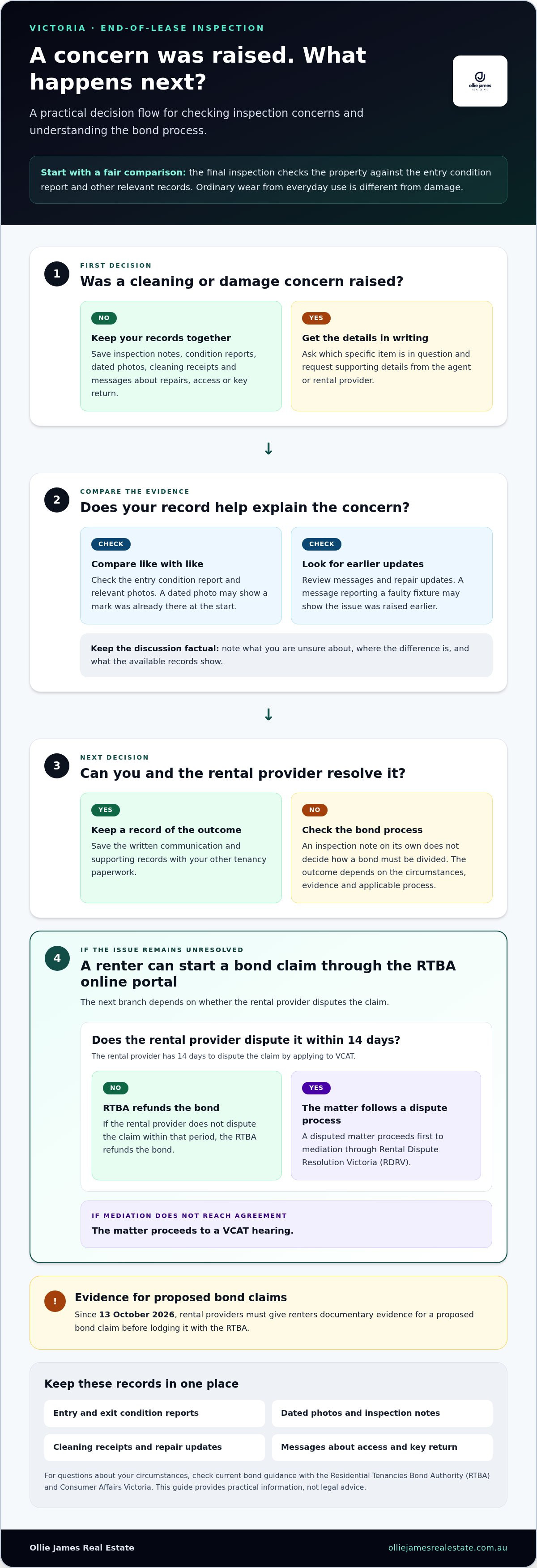
After handing back the property, keep the paperwork in one place. Save the inspection notes, entry and exit condition reports, dated photos, cleaning receipts and messages about repairs, access or key return. A complete record makes it easier to understand follow-up concerns and respond accurately.
If the agent or rental provider raises a cleaning or damage concern, ask for the specific item and supporting details in writing. Compare it with the entry report and your own records. For example, check whether a mark appears in an original photo or whether you previously reported a maintenance issue. Keep your reply factual and focused on the information available.
If you disagree with an inspection finding
An inspection note on its own doesn’t decide how a bond must be divided. The outcome depends on the circumstances, the evidence and the applicable process. If you and the rental provider can’t resolve the issue, check current bond guidance with the Residential Tenancies Bond Authority (RTBA) and Consumer Affairs Victoria. In Victoria, a renter can start a bond claim through the RTBA online portal. The rental provider then has 14 days to dispute it by applying to VCAT; if they don’t, the RTBA refunds the bond. A disputed matter proceeds first to mediation through Rental Dispute Resolution Victoria (RDRV), before a VCAT hearing if there’s no agreement.
Since 13 October 2026, rental providers must give renters documentary evidence for a proposed bond claim before lodging it with the RTBA. This end of lease inspection guide Victoria provides practical information, not legal advice. Refer to official Victorian guidance for questions about your circumstances.
For a broader look at communication in a rental relationship, read the Rental Property Management in Bendigo guide. Ollie James Real Estate offers local Rental Inspections and property management, with personalised support across Central Victoria.
Take your next step with confidence
Moving out is also a chance to make your next tenancy easier to manage. Keep a digital folder for rental paperwork and save important messages and property photos as you go. A consistent record can make future conversations clearer and less stressful.
This end of lease inspection guide Victoria is designed to help you approach the process with preparation, not pressure. If you’re looking for locally informed rental support, Ollie James Real Estate provides Rental Inspections and property management across Central Victoria.
Explore local rental support or contact Ollie James Real Estate on 0480 322 896 or at [email protected].
Frequently Asked Questions
Do I have to attend the final rental inspection in Victoria?
Tenants Victoria says renters can attend the final inspection. Having the right to be there is different from being legally required to attend. If you can’t make it, tell the agent in writing and ask how any observations or follow-up will be shared. Check current Consumer Affairs Victoria guidance for a definitive answer about your obligations in your circumstances.
What should I clean before an end-of-lease inspection in Victoria?
Start with the entry report and current Consumer Affairs Victoria cleaning guidance. Don’t assume one checklist suits every home. Practical areas to review may include kitchen benches, appliance interiors, bathroom mirrors, taps and shower screens, along with rubbish removal. Focus on items recorded at move-in and any cleaning agreed in writing. Keep dated photos or receipts as a record, not as proof of a guaranteed outcome.
Can a landlord keep my bond after an end-of-lease inspection?
An inspection alone doesn’t determine the bond outcome. Findings may be considered alongside condition reports, photos, invoices and other evidence. The RTBA administers bond claims, so check its current process before agreeing to a proposed division. If you dispute a claim, follow the formal steps and timeframes in current Victorian guidance.
What happens if I disagree with the final inspection report?
If you disagree with a finding, reply in writing, identify the item and refer to a relevant record, such as an entry photo or repair email. Keep messages factual and save the exchange. For options, consult current Consumer Affairs Victoria or Tenants Victoria guidance. This end of lease inspection guide Victoria is relevant to renters in Bendigo, Kangaroo Flat, Junortoun, Epsom, Eaglehawk, Strathfieldsaye, Strathdale, Kennington, Golden Square, California Gully, Maiden Gully and Marong.


