

Selling a shared family home is easier to manage when everyone speaks openly about what matters and makes decisions together. The emotional stages of selling a home may include excitement, nerves before inspections, anxiety while waiting for feedback and relief when an offer arrives. A sale can take longer than four weeks, so agreeing on priorities and allowing for delays can help prevent disagreements from becoming personal.
It’s understandable to feel protective of a home filled with family memories, even when selling is the right next step. This guide explains how to navigate differing opinions, honour what the home means to you and prepare for the emotions that can arise along the way. You’ll also find practical ways to communicate clearly and make the transition more manageable.
Key Takeaways
- Talk openly about each family member’s priorities and agree on how you’ll make key decisions together.
- Sort belongings gradually, keeping meaningful mementos while preparing the home for buyers to picture themselves there.
- Expect feelings to shift from excitement to nerves or uncertainty as the sale progresses; buyer feedback isn’t a personal judgement.
- Allow room for delays and make time for practical support, routines and activities that help ease selling-related stress.
1. How do you manage family disagreements when selling a shared home?
Start with a family conversation before preparing the property. Ask each homeowner to share their priorities, concerns and preferred moving timeline. Then agree on how you’ll make decisions about presentation, offers and what comes next. For example, someone planning to downsize may prefer a quicker transition, while another family member may feel attached to the home. Making those differences clear keeps discussions focused on practical choices rather than blame.
Allow time for the emotional journey. A sale may not be completed within four weeks, and delays can test family patience. If a buyer withdraws or a bank valuation slows progress, treat it as part of the process, not as a personal rejection. Buyers have their own needs, so their feedback is not a verdict on the home or the memories made there.
For another perspective on family communication and attachment, watch HIDDEN Challenges Of Selling Your Family Home by Savvy Home Seller™:
During negotiations, write down your shared priorities before considering an offer. If an inspection report brings criticism, wait 24 hours before responding, then separate repair questions from emotional reactions. An experienced agent can also act as a buffer, managing selling pressures and relaying buyer feedback clearly—an approach championed by estate agencies like Let's Get You Moving to keep transactions constructive and calm.
How can sellers manage stress during open inspections and negotiations? Set a 15-minute tidy routine, then leave the property during inspections if that feels easier. Make space for exercise, hobbies or a conversation with supportive friends or family. If panic, disrupted sleep or stress affecting daily life persists for more than a couple of weeks, consider professional support.
2. Acknowledging a home's memories and personal meaning
A family home holds memories in everyday details: the kitchen table where birthdays were celebrated or the doorway marking a child’s growth. Those moments can make letting go difficult, even when selling supports a positive change. Before preparing each space for buyers, consider what it represents to your family. Naming the feeling can help distinguish the home’s personal meaning from the practical decisions involved in selling it.
How can homeowners cope with attachment to their home when selling? Sort belongings gradually, deciding what to keep, pass on or photograph instead of clearing everything at once. This leaves room to reflect on meaningful items and choose what should come with you. A small memento, such as a favourite ornament, can carry a memory forward without keeping every object.
Looking ahead can coexist with sadness. Write down what the move could make possible, such as less maintenance, living closer to family or finding a home better suited to your lifestyle. If negotiations or preparing for buyers bring mixed feelings, revisit the list. You can welcome a new chapter without dismissing the importance of the home you’re leaving.
Before closing, take photos of favourite spaces and arrange a final walk-through. These simple actions create a chance to say goodbye on your own terms. Removing personal items and minimising décor can also help buyers imagine their own lives there, while keeping distinctive features that give the property character. For practical support with the sale, explore local residential property sales guidance as you plan your next steps.
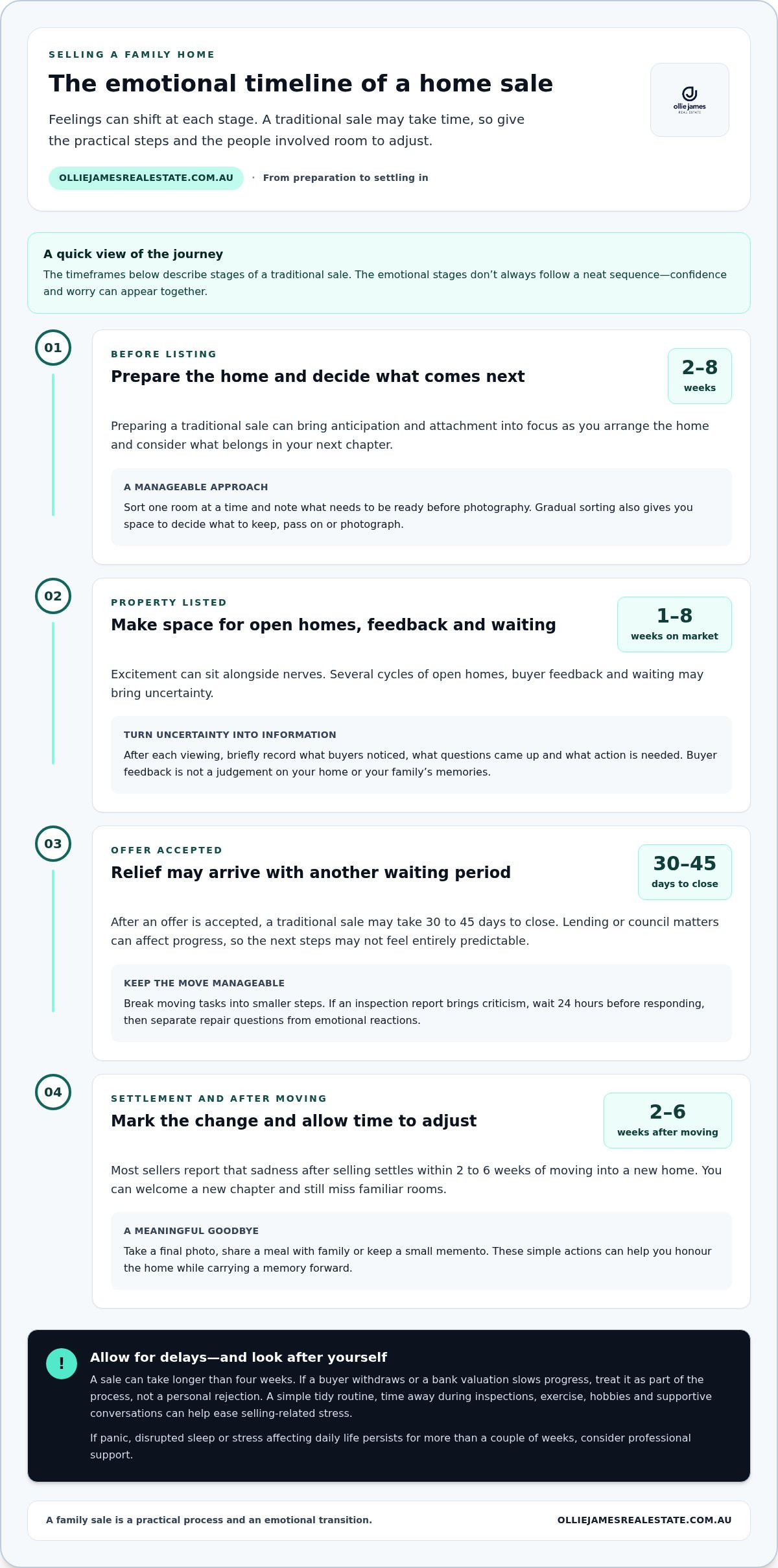
3. Emotional stages across the home-selling timeline
Before listing, preparing a traditional sale can add 2 to 8 weeks. This stage may bring anticipation and attachment into focus: you’re arranging an estate for buyers while deciding what belongs in your next chapter. Make a simple routine, such as sorting one room at a time, and note what must be ready before photography. Knowing the practical steps can make the selling process feel less like one overwhelming decision.
Once the property is listed, excitement can sit alongside nerves. A traditional home may spend 1 to 8 weeks on the market, so sellers can experience several cycles of open homes, feedback and waiting. Keep a brief record after each viewing: what buyers noticed, what questions came up and what action is needed. That turns uncertainty into specific information, rather than a judgement about your home or identity.
Accepting an offer can bring relief, but it also begins another waiting period. A traditional sale may take 30 to 45 days to close after an offer is accepted. Use that time to organise moving tasks in manageable steps, while remembering that lending or council matters can affect progress. The emotional stages of selling a home don’t always follow a neat sequence; confidence and worry may appear together.
At settlement and after moving, allow yourself to mark the change. Take a final photo, share a meal with family or keep a small memento from the home. Most sellers report that sadness after selling settles within 2 to 6 weeks of moving into a new home. If you’re preparing to list and want guidance on the timeline, discuss your residential sale plans.
Ollie James Real Estate: Residential Property Sales
Ollie James Real Estate provides residential property sales support when you’re ready to turn family decisions into a clear selling plan. If differing views on timing, presentation or offers make the next step difficult, a property appraisal can help focus the discussion on the home’s current market value and your practical options.
Start with a free, no-obligation appraisal to understand your property’s value and consider how it fits your plans. You can then discuss the sale process and decide what feels right for your household while keeping the home’s memories in mind. Personal guidance can add structure to decisions as you prepare for the transition.
If you’re considering selling, contact Ollie James Real Estate to discuss your next step.
Move forward at a pace that feels right
Selling a family home can bring mixed feelings, and the emotional stages of selling a home don’t always unfold in a straight line. You can be ready for change and still miss familiar rooms. Give family members space to adjust, and make each next decision together rather than expecting every feeling to resolve at once.
When you’re ready to turn your plans into practical next steps, residential property sales support can bring structure to the process. Ollie James Real Estate can discuss your selling plans and help you consider a way forward that respects your family’s priorities and the home’s significance.
Contact Ollie James Real Estate to talk through your next step. A thoughtful start can help your family approach this new chapter with greater clarity and confidence.
Frequently Asked Questions
How do you manage family disagreements when selling a shared home?
Agree on a decision-making process before disagreements escalate. Each owner can identify non-negotiables, such as a preferred moving date, and flexible preferences, such as which furniture stays. Decide who will gather information and how you’ll compare offers. If discussion gets heated, pause and return to the priorities later rather than making a major choice during an argument.
When should you get extra support during a house sale?
Bring in extra support when the demands of the sale affect everyday responsibilities or family relationships. A trusted friend might help sort belongings, while a family member could take on practical tasks during a busy week. If distress disrupts daily life, or panic and sleep problems persist for more than a couple of weeks, consider professional support as well.
What are the emotional stages of selling a home?
Common feelings include anticipation before listing, nerves during inspections, uncertainty while considering feedback, and relief or doubt after an offer. They don’t always arrive in order. You might be pleased with an offer and still grieve the move. Treat these stages as possible reactions, not a timetable you have to follow.
Why can selling a home feel stressful or emotional?
A sale brings practical demands alongside a major personal change. Homeowners may be organising a move while making decisions about an asset, responding to buyer interest and adjusting household routines. In Bendigo and across Central Victoria, a new job or changing family circumstances can add pressure. The emotional weight often reflects what the move represents, not just the transaction.
What emotions are common when preparing a home for sale?
Preparing the home can bring pride, vulnerability, frustration or sadness. You might feel pleased with a freshly presented living room yet uneasy when family photos are packed away. Children and other household members may respond differently, too. Agree on one room to prepare first so the task feels manageable and everyone has room to adjust.


