

A renter disputes a bond claim or repair, and you’re left wondering what to do next. The right first step may not be a VCAT application: some residential tenancy disputes go through Rental Dispute Resolution Victoria (RDRV) first, while possession applications go directly to VCAT. This VCAT for landlords guide helps clarify which path may apply and what to prepare.
It’s understandable to feel unsure about the process, especially when you need to present a clear case and don’t know what happens after applying. This guide explains VCAT’s role in residential tenancy disputes, the records to organise, and what landlords can expect at each stage, from the dispute pathway to a hearing and the next steps after an order. You’ll also know where to find current official guidance as you prepare.
Key Takeaways
- Use this VCAT for landlords guide to understand why the right pathway depends on the type of rental dispute.
- Clarify the outcome you’re seeking before applying, then follow the current instructions for that dispute.
- Sort tenancy documents, payment records, maintenance history and dated communications by issue to make your case easier to follow.
- After applying, monitor VCAT communications and keep to the directions and deadlines set for your case.
What VCAT handles in Victorian rental disputes, and when landlords may apply
A rental disagreement doesn’t automatically belong at VCAT. The Victorian Civil and Administrative Tribunal (VCAT) hears relevant residential tenancy disputes under the Residential Tenancies Act 1997 (Vic). It’s a tribunal, not a court, but it can make orders that are legally binding. The Victorian Civil and Administrative Tribunal (VCAT) Wikipedia overview also explains its wider role and jurisdiction.
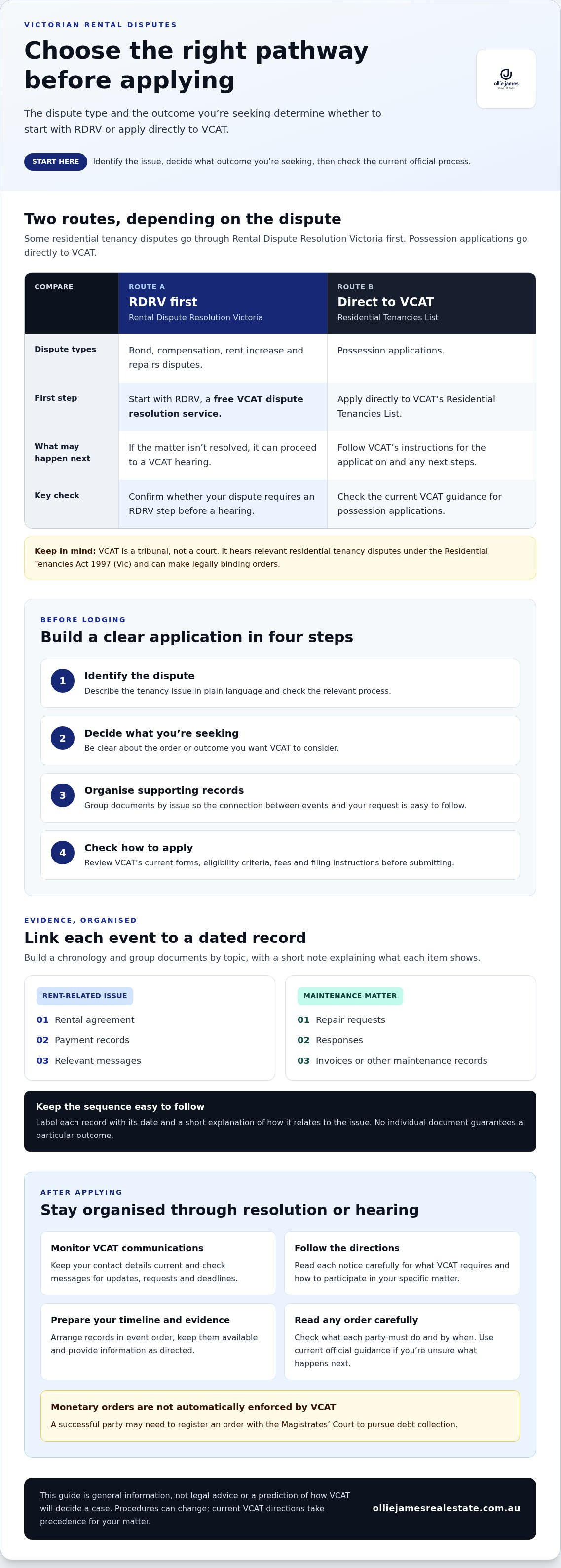
The first step depends on the issue and the outcome you’re seeking. For example, bond, compensation, rent increase and repairs disputes must first go to Rental Dispute Resolution Victoria (RDRV), a free VCAT dispute resolution service. If the matter isn’t resolved, it can proceed to a VCAT hearing. Possession applications go directly to VCAT’s Residential Tenancies List. Checking the pathway before applying can help you avoid starting in the wrong place.
For a helpful overview of what attending a hearing can involve, watch this video from Tenants Victoria:
How can a landlord identify the right VCAT pathway?
Start with VCAT’s current guidance for the dispute type, then match the process to the problem. Ask yourself: what happened, what outcome are you asking for, and does that issue require an RDRV step before a hearing? A bond claim, for instance, follows a different route from seeking possession. The VCAT for landlords guide is general information, not legal advice or a prediction of how VCAT will decide your case. Procedures can change, so use current official guidance when deciding what to do next.
How landlords can prepare and apply for a residential tenancy dispute
A clear application starts with a specific issue and a practical outcome in mind. Before lodging anything, work through these steps:
- Identify the dispute. Describe the tenancy issue in plain language and check the relevant process.
- Decide what you’re seeking. Be clear about the order or outcome you want VCAT to consider.
- Organise supporting records. Group documents by issue so the connection between events and your request is easy to follow.
- Check how to apply. Review VCAT’s current forms, eligibility criteria, fees and filing instructions before submitting.
The Official VCAT Website is the place to check current application guidance. Requirements can depend on the dispute type, so don’t rely on an old form or assume the same filing process applies to every matter. This VCAT for landlords guide offers general information, not legal advice.
What records should landlords organise before applying?
Build a dated chronology that links each key event to a supporting record. For a rent-related issue, this might include the rental agreement, payment records and relevant messages. For a maintenance matter, gather repair requests, responses, invoices or other maintenance records that relate to the issue. Keep documents grouped by topic, with dates and a short note explaining what each one shows. This helps you present the sequence clearly, but no individual document guarantees a particular outcome.
Good record-keeping can also support routine rental administration, including rent collection, financial reporting and maintenance coordination. For landlords who want practical support managing these tasks in Central Victoria, explore property management services.
What happens after a VCAT application and how landlords can prepare
Once an application is lodged, the next steps depend on the dispute and VCAT’s directions. The matter may involve a resolution step or proceed to a hearing; check each notice carefully for what VCAT requires, how to participate and any deadlines. Keep contact details current and monitor messages so you don’t miss an update or request.
If a hearing is listed, read the current guidance on the VCAT website and follow the instructions for your specific matter. Keep your records available and share or provide information as directed. The VCAT for landlords guide can help you understand the broad process, but VCAT’s directions take precedence for your case.
How can landlords stay organised through a hearing or resolution?
Prepare a concise timeline of events and arrange your evidence in the same order. Label each item with its date and a short explanation of how it relates to the issue, such as a repair request, response or payment entry. This makes it easier to refer to records clearly. Attend or participate in the way VCAT directs, and keep notes of any steps or dates you’re asked to follow.
Read any order carefully, including what each party must do and by when. If you’re unsure about its effect or what happens next, use VCAT’s current official guidance rather than relying on assumptions. VCAT doesn’t automatically enforce its monetary orders; a successful party may need to register an order with the Magistrates’ Court to pursue debt collection. For day-to-day rental administration that helps keep records in order, see this Bendigo rental property management guide.
Build confidence for the next stage of ownership
A rental dispute can be stressful, but it can also prompt a useful pause: are your day-to-day property arrangements giving you the clarity and confidence you want as a landlord? The next step might be reviewing how your rental is managed, whether you’re handling it yourself or considering more support. This VCAT for landlords guide is a starting point, not a substitute for current official guidance or legal advice when you need it.
For landlords across Central Victoria, local knowledge and personalised support can make ongoing property management feel more manageable. Explore property management support across Central Victoria and consider what approach best suits you and your rental property.
With the right support and a steady plan, you can move forward with greater confidence.
Frequently Asked Questions
Is VCAT a court?
No. VCAT is Victoria’s tribunal for matters within its jurisdiction, not a court. In residential tenancy cases, it can hear relevant disputes and make decisions the parties must follow. The process depends on the issue, so check VCAT’s current residential tenancy guidance for the pathway that applies. If you need advice about your particular circumstances, seek independent legal advice.
Can a landlord apply to VCAT without a lawyer?
VCAT provides application guidance for residential tenancy disputes, but whether to get legal assistance depends on your situation and how complex the matter is. This VCAT for landlords guide is general information, not legal advice. If you manage rentals in Bendigo, Kangaroo Flat, Junortoun, Epsom, Eaglehawk, Strathfieldsaye, Strathdale, Kennington, Golden Square, California Gully, Maiden Gully or Marong, check current VCAT guidance and seek independent advice if you’re unsure of your rights or options.
How long does a VCAT residential tenancy dispute take?
There’s no single timeframe for every residential tenancy dispute. The timing can vary with the type of matter, the process VCAT sets and what happens after an application. For example, a case may involve further steps before a hearing. Check current information for your matter, note any dates in VCAT’s communications and avoid treating general time estimates as a promise about when your case will be resolved.
What should a landlord do if a renter doesn’t attend a VCAT hearing?
Follow VCAT’s hearing instructions and any directions given for your matter. Don’t assume the hearing will automatically proceed in a particular way or that a decision will favour you because the renter is absent. Keep your evidence accessible, note what happens and wait for VCAT’s direction. If you’re uncertain how to respond or what a decision means, check current VCAT guidance or seek independent legal advice.


