

A strong offer is only part of a successful sale; how it is handled can shape the outcome. Effective real estate negotiation tactics for sellers include setting your preferred price and terms in advance, weighing each offer as a whole, and having your agent manage counteroffers and buyer communication. A measured counteroffer can keep discussions moving, while a clear minimum helps you stay focused.
It’s understandable to feel pressure when a buyer is waiting for an answer or negotiations become tense. A representative can keep discussions professional, listen for which terms may be flexible, and bring each proposal back to your priorities. This guide explains how an agent can prepare for different responses, how to encourage stronger offers without exceeding your limit, and why keeping communication through representatives can help you make decisions with greater clarity.
Key Takeaways
- Use comparable sales to assess the asking price, and agree on a practical response if buyer feedback points lower.
- Consider the full offer, including settlement timing and inclusions, before deciding whether a price adjustment is worthwhile.
- Keep buyer discussions professional and routed through your representative, who can listen for flexibility and relay questions clearly.
- If negotiations stall, reassess the offer and your priorities with your agent before choosing whether to continue or step away.
1. Hiring a real estate agent to negotiate and handle counteroffers
A capable real estate agent grounds your negotiating position in local market evidence. Ask for comparable sales involving properties with similar size, condition, location and features. The agent can also consider market trends, your property’s characteristics and buyers’ likely negotiation strategies. Together, these details help you judge an offer against the home’s strengths.
Compare the agent’s price estimate with recent sales instead of relying on a headline figure. Ask what the plan is if buyer feedback is lower than expected. An optimistic estimate can be unrealistic, so request clear evidence and a practical adjustment strategy before choosing an agent.
For a useful perspective on weighing price against contract terms, watch this video about multiple offers:
Before responding to a counteroffer, agree on your preferred price and terms, as well as the point at which you would walk away. Your agent can suggest a considered change, prepare for unexpected replies, and advise when an agreement seems unlikely. Reject an offer if it falls outside your limits or its conditions do not suit your priorities.
Common risks include treating one offer as your only chance, rushing because a buyer wants an immediate answer, or accepting a high price with unsuitable terms. Ask your agent to explain each condition and the buyer’s reasoning before you decide.
Keep the relationship with your agent professional and friendly; regular, clear communication can help keep discussions moving. Buyers’ agents also negotiate for buyers, so expect them to assess comparable sales and terms. If buyers repeatedly miss out, they may consider another market or engage a professional buyers’ agent, which can shape the offers your agent receives.
2. Increasing offers gradually without exceeding your limit
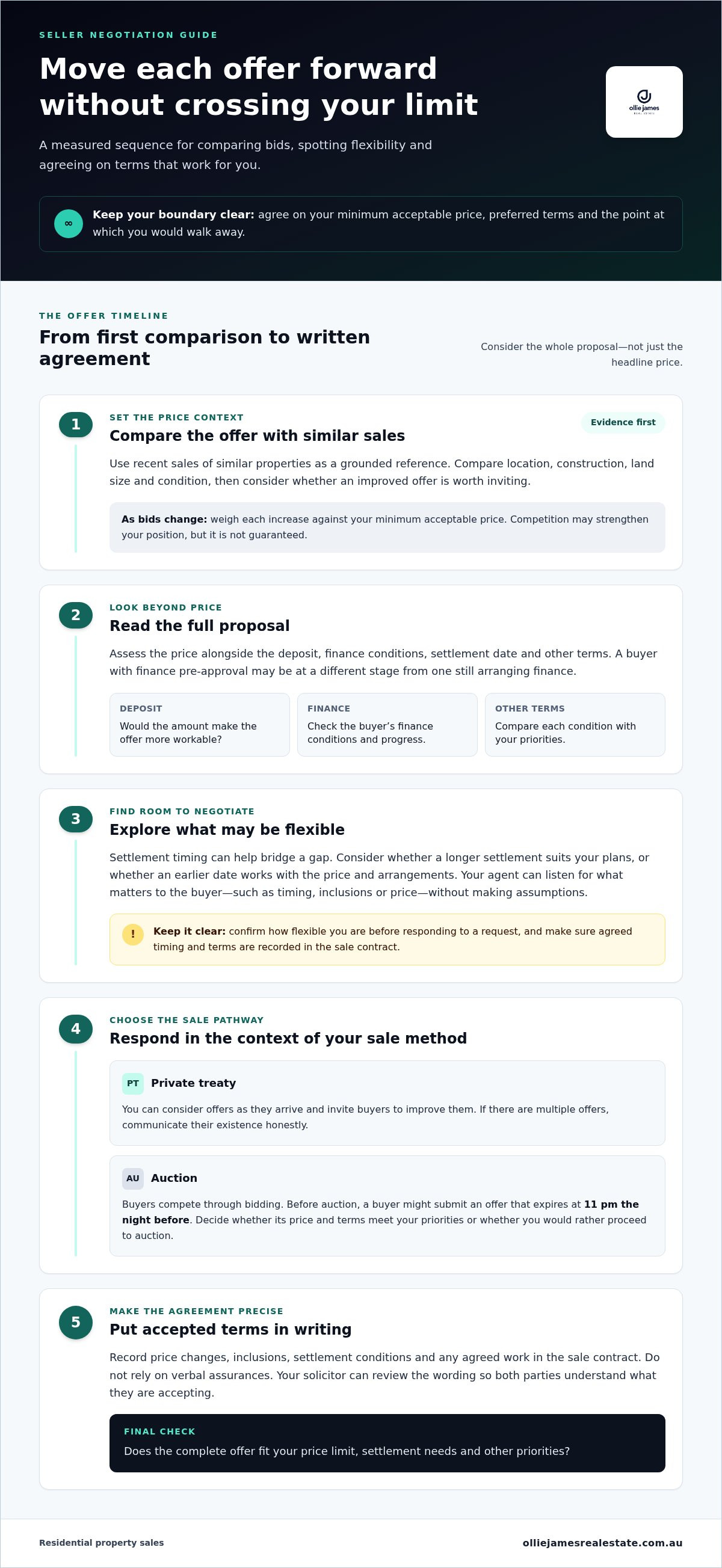
Compare each offer with recent sales of similar properties, considering location, construction, land size and condition. This gives you a grounded basis for assessing the price and deciding whether to invite an improved offer. If buyers revise their bids, weigh each increase against your minimum acceptable price. Competition can strengthen your position, but it is not guaranteed.
Price is only one part of an offer. Compare the deposit, finance conditions, settlement date and other terms against your priorities. A buyer with finance pre-approval may be at a different stage from one still arranging finance. A larger deposit or suitable settlement timing may also make an offer more workable. Assess the complete proposal rather than ranking offers by price alone.
Flexibility on settlement can help bridge a gap. If a buyer prefers a longer settlement, consider whether the timing suits your plans. An earlier date may also work if the price and arrangements meet your needs. Make sure agreed terms are included in the sale contract rather than relying on verbal assurances.
With a private treaty sale, you can consider offers as they arrive and invite buyers to improve them. Multiple offers may create competition, but communicate their existence honestly. At auction, buyers compete through bidding; before auction, a buyer might submit an offer that expires at 11pm the night before. Decide whether its price and terms meet your priorities or whether you’d rather proceed to auction.
For a locally informed view of your selling options, explore property sale guidance before setting your negotiation boundaries.
3. Keeping buyer-seller communication through representatives
Keeping conversations through your agent or solicitor gives each party a clear point of contact. Your representative can relay a buyer’s question, clarify your response and keep negotiation details consistent. For example, if a buyer asks to change the settlement date, your agent can establish how flexible you are before replying. This helps prevent casual conversations from creating conflicting expectations.
Active listening matters as much as presenting your position. An agent can ask open questions and note whether a buyer prioritises settlement timing, inclusions or price. If a buyer says a particular date is essential, that may open a discussion about another term. These real estate negotiation tactics for sellers help identify what matters to each party without making assumptions or adding pressure.
Route practical questions through your representative, and record important answers in writing. If a buyer asks about an appliance or repair, give clear details rather than relying on memory or an informal promise. Put price changes, inclusions, settlement conditions and agreed work in the contract. Your solicitor can review the wording so both parties understand what they are accepting.
A successful negotiation doesn’t require direct contact or personal pressure. Avoid insulting a buyer over a low offer; ask your agent to explain the gap and carry back a considered response. If a conversation becomes heated, pause and let the representative restate the proposal calmly. Good real estate negotiation tactics for sellers keep communication respectful and focused. To discuss a considered approach to managing your property sale, keep your priorities and preferred communication process clear from the outset.
Ollie James Real Estate: Residential Property Sales
Ollie James Real Estate provides Residential Property Sales support for owners preparing to sell or weighing buyer offers. If you are unsure how an offer compares with your property’s value, a free, no-obligation appraisal can help you assess its position before negotiations progress. You can then set priorities for price, settlement and other terms, and approach counteroffers with a considered plan.
When buyers make different proposals or discussions feel difficult to manage, having local guidance can help you assess the options and keep decisions focused on your goals. The right approach depends on the offer details and your circumstances, so take time to understand the terms before agreeing.
For support with selling your property, visit olliejamesrealestate.com.au.
Set your next move with clarity
Apply these real estate negotiation tactics for sellers by deciding what a successful outcome means beyond the final price. Your next step might be accepting an offer, continuing discussions or preparing the property differently before returning to market. Weigh the decision against your plans, not just the pressure to respond quickly. Clear priorities give you a steadier basis for action.
Ollie James Real Estate provides Residential Property Sales and Land Sales. Property Management may suit owners retaining an investment property. If you are considering a sale and want local guidance tailored to your circumstances, get in touch to discuss your next step.
Contact Ollie James Real Estate to explore your options and move forward with greater confidence.
Frequently Asked Questions
What negotiation tactics help sellers get the best price for a property in Australia?
Make the property’s strongest features easy for buyers to recognise, such as a recent renovation, appealing outlook or established garden. Share relevant market information and be straightforward about your reasons for selling. These details can build trust and give buyers a clearer basis for making an offer, without relying on pressure or unsupported claims.
How should Australian sellers set a realistic asking price and reserve price?
Use comparable sales for similar homes, considering location, land size, condition and features. Treat the asking price as a guide for attracting buyers, then set an auction reserve at the lowest sale outcome you would accept. Keep that minimum aligned with your plans and financial needs, and rely on evidence rather than optimistic estimates.
How can sellers negotiate when multiple buyers make offers or there is a bidding war?
Ask your agent to manage offers consistently and explain the process to interested buyers. You can set a clear response deadline and invite buyers to submit their strongest terms, while weighing price alongside conditions and timing. Multiple offers may improve your negotiating position, but assess each proposal on its merits rather than assuming the highest figure is automatically the strongest.
How should sellers negotiate settlement dates, inclusions, and special conditions?
Decide which practical terms matter most before responding. For example, you might accept a later settlement to give yourself time to organise your move, or leave an appliance if that helps secure a suitable offer. Have every agreed change, inclusion, condition or repair written into the contract so there is a clear record.
When should a seller use a real estate agent, conveyancer, or solicitor during negotiations?
Use your real estate agent to communicate offers, manage counteroffers and keep buyer discussions organised. Consult a conveyancer or solicitor when you need contract terms explained, changes reviewed or legal implications considered. Before agreeing to a special condition, for instance, have the wording reviewed so you understand the commitment and its effect on the sale.


