

The Victorian due diligence checklist is compulsory for sellers and estate agents to make available, but buyers aren’t required to complete it. For anyone using a due diligence checklist when buying a house in Vic, that distinction matters: the checklist is a starting point for identifying issues, not a substitute for investigating the property.
Buying a home can feel pressured, especially when you’re weighing up its condition, pest risks and owners corporation rules. You need a clear picture before making an offer, not an important surprise afterwards.
This guide explains when the checklist must be available and what to investigate before you commit. It covers building and pest issues, owners corporation obligations and property documents that may affect how you use a home or land.
Key Takeaways
- Know who must provide Victoria’s due diligence checklist and what it can, and can’t, tell you before making an offer.
- Use building and pest checks to uncover issues that could affect the property, and complete them before bidding at auction.
- Find out whether an owners corporation applies, then review the information that explains its fees, rules and your responsibilities.
- Review the contract and Section 32 statement carefully, as property documents can affect your rights and how you use the land.
Building and pest inspections
Arrange independent building and pest inspections before committing, particularly if the property is going to auction. Ask the inspector to assess structural safety, electrical issues, termites, asbestos and any pool or spa fencing. A report can identify defects that aren’t obvious at an open inspection, but it doesn’t replace reviewing the contract of sale. For an auction purchase, complete these checks before bidding: bids are unconditional, and there’s no cooling-off period.
Compare the property’s fences and buildings with the title plan, and follow up discrepancies before signing. Review permits for building work, including retaining walls, and check insurance for recent renovations or owner-builder work. The Section 32 vendor statement can include building permits and planning approvals from the seven years before sale. Ask a conveyancer to review the document and follow up adverse search results before any contract condition deadline. For rural land, check whether new dwellings are permitted and whether access, services or land restrictions affect your plans.
For a private sale, buyers generally have three clear business days to cool off, subject to exceptions, according to Consumer Affairs Victoria. Cooling-off usually doesn’t apply to publicly advertised auction sales or sales within three clear business days before or after an auction. Subject-to-finance and building or pest protections depend on the conditions in the contract. Any right to end the contract over inspection issues depends on the relevant condition and its stated threshold.
To check planning zones, overlays and proposed developments, review a Planning Property Report and the local planning scheme. These may reveal land-use restrictions or approvals; also investigate nearby exploration, mining or quarrying activity. In growth areas, find out whether infrastructure contributions apply. For recent building work, compare permits and approvals with the work described, then ask your conveyancer to follow up anything unclear before the contract deadline.
Is the property subject to an owners corporation?
A Victorian apartment or home in a subdivision may be part of an owners corporation if the development has common property, such as a shared driveway, garden or entrance. Check the title and sale documents, then review the owners corporation information statement for prospective purchasers and lot owners. It outlines relevant obligations and can help you identify restrictions before committing.
Read the statement for the owners corporation’s rules, fees and responsibilities. Shared building areas or grounds can bring costs and rules that affect how owners use their property. For example, rules may shape the use of common areas or changes to a lot. Ask your conveyancer to explain the documents alongside the contract of sale, including how fees are recorded and whether disclosed charges need attention. Sellers’ disclosures and the Section 32 vendor statement can also clarify title details and outstanding rates or charges.
Review council rates, water charges, land tax and owners corporation fees in the sale documents. Ask your conveyancer how each is handled at settlement: amounts and adjustments depend on the property records and contract. Have them review a current title search, plan and relevant statement to check title details, easements, covenants, caveats and owners corporation information. These checks may reveal restrictions affecting a home or vacant land in Bendigo and surrounding areas.
Conveyancing usually involves reviewing the contract and title documents, arranging required searches, then completing settlement on the contract date. Settlement steps are typically handled online through PEXA, or Property Exchange Australia. The contract sets key deadlines, while conveyancing costs and settlement adjustments are separate items to understand before signing. For local context on a residential purchase, explore residential property sales.
Consumer Affairs Victoria due diligence checklist
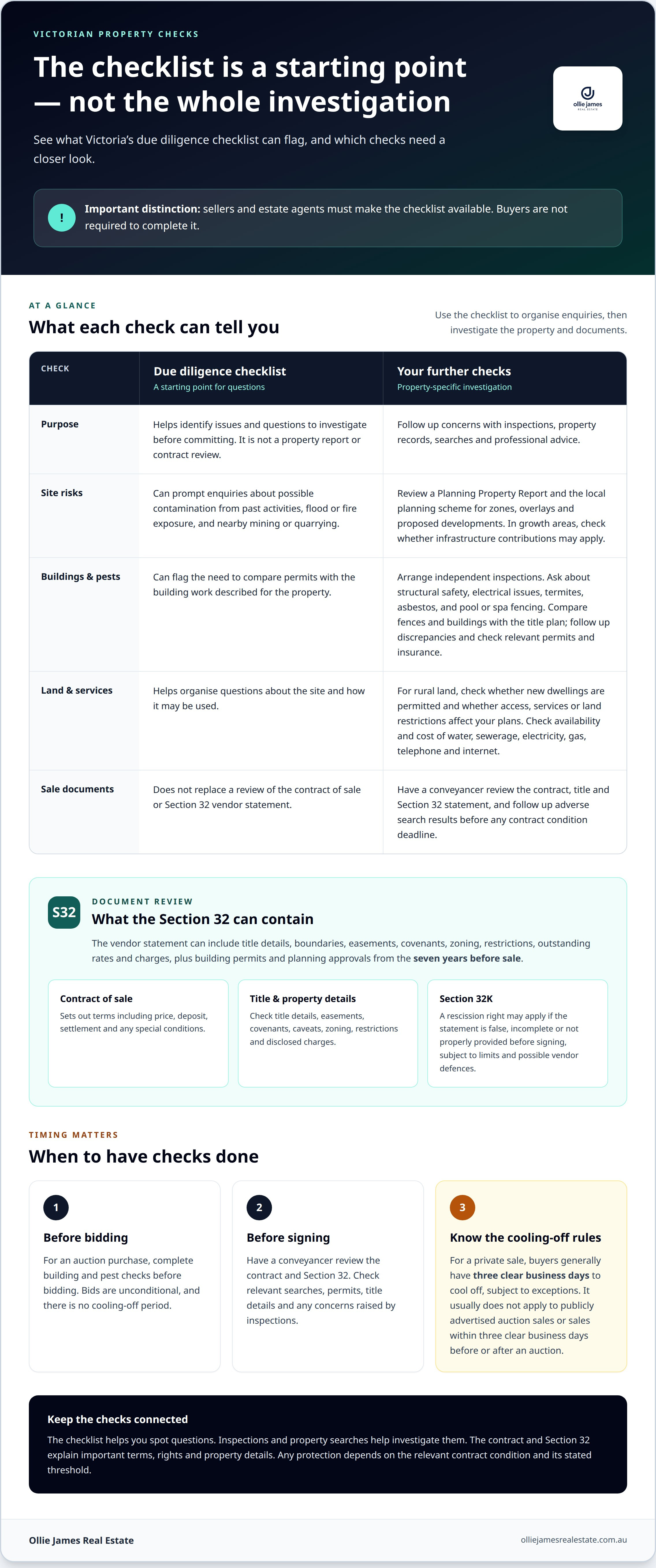
Victoria’s checklist is a starting point, not a property report or contract review. Sellers or estate agents must make it available to prospective buyers at open inspections and online if they maintain a website. This applies to homes and vacant residential land. A due diligence checklist for buying a house in Victoria helps you identify questions to investigate before committing.
Use the checklist to organise property-specific enquiries. Investigate possible contamination from past activities, flood or fire exposure, and nearby mining or quarrying. In growth areas, check whether infrastructure contributions may apply. Compare permits with the building work described for the property. The checklist helps flag issues for attention, but it won’t answer every question about the site.
The contract of sale sets out purchase terms, including the price, deposit, settlement and any special conditions. The Section 32 vendor statement can include title details, boundaries, easements, covenants, zoning, restrictions, outstanding rates and charges, plus building permits and planning approvals from the seven years before sale. Have a conveyancer review both documents before signing. Under Section 32K, Victoria’s Sale of Land Act can give a buyer a rescission right if the vendor statement is false, incomplete or not properly provided before signing, subject to limits and possible vendor defences, according to Victorian Legislation. Use this due diligence checklist when buying a house in Victoria alongside those document checks.
For utilities, find out whether water, sewerage, electricity, gas, telephone and internet services are available and what they cost. Review drainage and sewer information in the property documents, and follow up any mismatch with the site. The contract and permits may also point to compliance questions that need further investigation.
For a clearer view of a property purchase, discuss your property plans.
Ollie James Real Estate
Ollie James Real Estate can help put a property in context as you consider your plans. Whether you’re weighing up a home, land or an investment, the agency’s residential sales, land sales and property management services support different stages of a property journey. Local market insight can help you assess how the location and property type suit your needs, alongside the legal and inspection checks above.
Bring your questions about the property and the next steps you’re considering. For example, a home buyer and an investor may need different perspectives on how a property could suit their plans. For a straightforward conversation about your purchase, contact Ollie James Real Estate.
Make your next move with clarity
Before deciding, turn your research into a clear picture of what matters most: the property’s condition, ongoing responsibilities and fit with your plans. A due diligence checklist for buying a house in Victoria is most useful when it helps you identify issues to address before making a commitment.
Allow time to consider your findings alongside your budget, intended use and comfort with any unanswered questions. If you’re still weighing up your options, a conversation with a local real estate professional can help put the property and your plans in context.
Contact Ollie James Real Estate to discuss your next step. Take the process at a pace that helps you make a considered decision.
Frequently Asked Questions
Is the due diligence checklist compulsory in Victoria?
Yes. Sellers or their estate agents must make the approved checklist available to buyers of homes and vacant residential land. Buyers don’t have to complete it, and ticking its boxes isn’t a legal requirement for making an offer. Use it to prompt further enquiries, including checks relevant to properties in Bendigo and surrounding communities.
What does the agent have to do with the checklist?
An agent selling a property must make the checklist available to prospective buyers at every open inspection. If the agent maintains a website, it must include a link to the checklist webpage or a copy. The checklist must be the version approved by Consumer Affairs Victoria, so buyers can use the correct Victorian resource.
Can I cancel a contract if I was not given the checklist?
Not simply because the checklist was missing: its absence doesn’t itself create a buyer’s right to cancel. A separate issue may arise if the Section 32 vendor statement was false, incomplete or not properly provided before signing. Section 32K of Victoria’s Sale of Land Act can provide a rescission right in those circumstances, subject to limits and possible vendor defences, according to Victorian Legislation.
Does this property experience flooding or bushfire?
The checklist can prompt you to investigate flood and fire risks, but it doesn’t establish whether a particular property has flooded or faces bushfire exposure. Assess the specific parcel and consider possible effects on insurance, land management and building safety. Don’t assume properties in Bendigo, Eaglehawk or Marong share the same risk profile.
Does ticking off the due diligence checklist mean I have done my due diligence?
No. The checklist is a starting point, and some questions need further investigation or professional advice. A completed checklist, for example, doesn’t replace checking property-specific documents, inspection reports or owners corporation information. Before committing, note unanswered questions, identify which documents or searches could resolve them, and consider whether the answers affect your plans for the property.


