

The time you have to build after buying land to build in Central Victoria is usually governed by the requirements of the site’s Planning Permit or Development Approval, which typically includes a condition stating when construction must commence. There isn’t one fixed timeframe that applies to every block, so the relevant permit conditions matter before you commit.
The land price is only one part of the decision. Block features and purchase terms can shape your overall costs and plans. This guide covers size, orientation and slope, what to review in the contract and settlement terms, and the differences between a house-and-land package and arranging a build separately. Use these points to compare options against your plans, budget and timing.
Key Takeaways
- Compare a block’s size, orientation and slope with the home you intend to build, as site features can affect how well your plans fit.
- Look at the contract and settlement terms together so you understand the purchase timeline before committing.
- Weigh a house-and-land package against separate land and building purchases, including how the contracts and payments are structured.
- Factor in the site’s planning requirements when considering when construction needs to begin.
Block size, orientation and slope
When assessing land in Central Victoria, consider usable space, sunlight and ground conditions in relation to the home you plan to build. These factors affect design options and the site preparation the project may need.
Block size
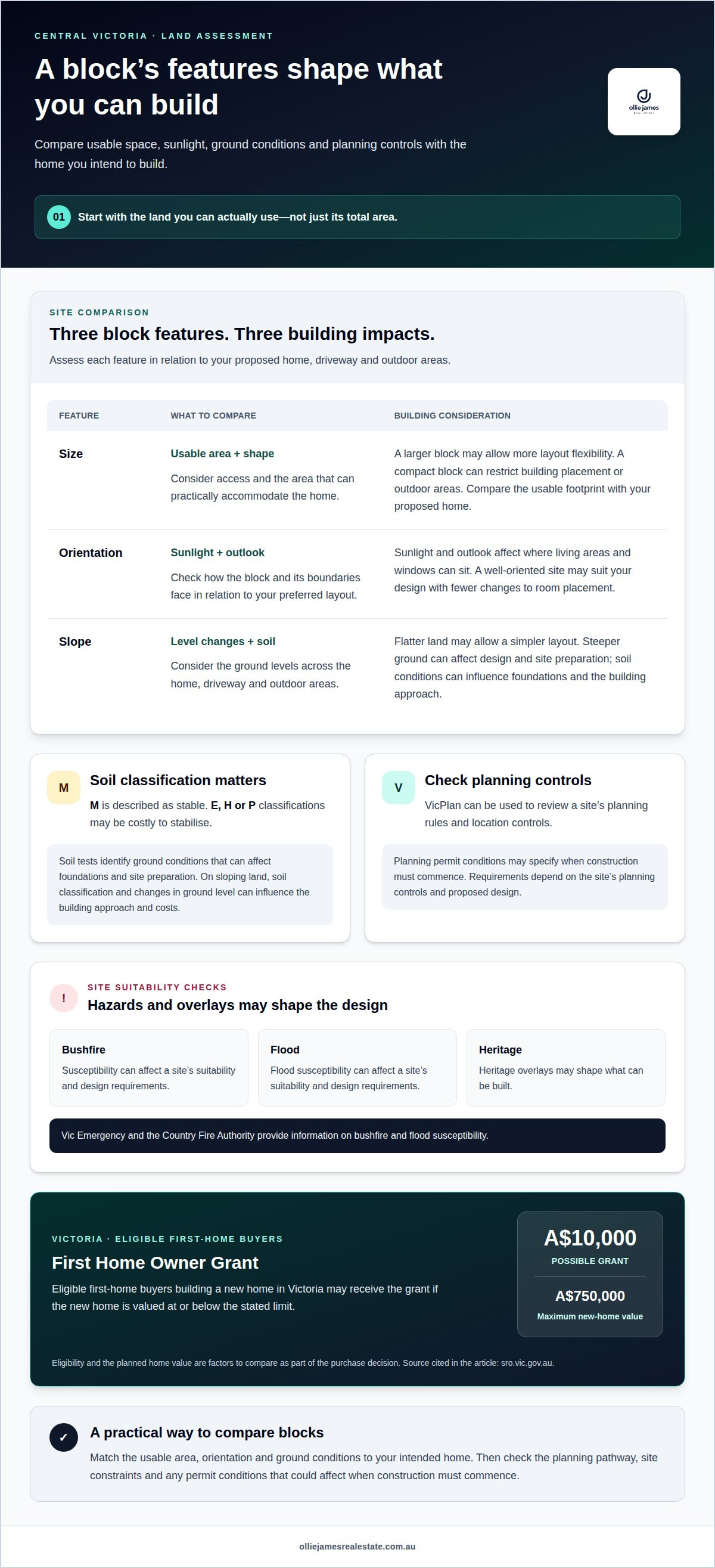
Block size is the total land area, but shape and access determine how much can practically accommodate a home, outdoor space and driveway. A larger block may allow more layout flexibility, while a compact one can restrict building placement or outdoor areas. Compare the usable footprint with your proposed home, rather than relying on total area alone.
Block orientation
Orientation is the direction a block and its boundaries face, and it affects where living areas and windows can be positioned for natural light. Consider the likely sunlight and outlook in relation to your preferred layout. A well-oriented site may suit your design with fewer changes to room placement.
Block slope
A sloping block may need a home design and site preparation suited to changes in ground level. Flatter land may allow a simpler layout, while steeper ground can affect where the home, driveway and outdoor areas fit. Soil classification matters too: M is described as stable, while E, H or P classifications may be costly to stabilise.
A real estate professional can use VicPlan to review the planning rules for a site and its location. These controls help show whether the intended home use and design suit the block.
Planning permit requirements depend on the site’s planning controls and proposed design. Permit conditions may specify when construction must commence, while building approval requirements depend on the project.
Bushfire and flood susceptibility can affect a site’s suitability and design requirements, while heritage overlays may shape what can be built. Vic Emergency and the Country Fire Authority provide information on bushfire and flood susceptibility.
Soil tests identify ground conditions that can affect foundations and site preparation. On sloping land, the soil classification and changes in ground level together can influence the building approach and costs.
| Block feature | Compare | Building consideration |
|---|---|---|
| Size | Usable area and shape | Home layout and outdoor space |
| Orientation | Sunlight and outlook | Room and window placement |
| Slope | Level changes and soil | Design and site preparation |
Eligible first-home buyers building a new home in Victoria may receive an A$10,000 First Home Owner Grant, according to sro.vic.gov.au. The new home must be valued at A$750,000 or less, according to sro.vic.gov.au. Compare eligibility and the home’s planned value as part of your purchase decision.
Choose a block whose usable area, orientation and ground conditions suit your intended home and planning pathway.
Contract of sale and settlement terms
In Victoria, the contract of sale for land is referred to as section 32. Read it alongside the sale contract so you understand the property details, conditions and timing before committing. For people buying land to build in Central Victoria, those documents are central to understanding what the purchase involves.
The settlement period is usually stated in the contract and can range from a few weeks to a few months. It determines when you must complete the purchase and coordinate your next steps. Check that the proposed date works with your finance arrangements and building plans. If the land is untitled, registration timing may also affect settlement.
Buying land to build in Central Victoria involves costs beyond the agreed purchase price. Stamp duty depends on the land’s dutiable value and any applicable concessions, while conveyancing costs depend on the work required for the transaction. Account for both when working out the funds needed for settlement.
Residential land searches can include Bendigo and nearby Huntly, where Harlowe is situated 12 km from Bendigo. Drummartin, within Greater Bendigo, is another locality to include when comparing regional options. Available blocks and their terms vary between listings.
Risks when buying vacant land can include contract restrictions, title matters, delayed registration and site conditions that affect your intended build. A real estate professional can explain the listing details and sale terms; review the contract and title material carefully to identify issues before committing. Pay close attention to settlement dates, conditions and stated obligations. A block in your preferred location may still have terms that do not suit your purchase timeline.
To compare available residential options in the region, browse residential property listings alongside each block’s contract and settlement details.
House-and-land packages versus separate purchases
A house-and-land package can coordinate the land and build, while separate purchases leave you to make those decisions independently. Compare the contracts, finance, site services and total project before choosing.
Separate land and home purchases
With separate purchases, you buy the block and arrange the build independently. This allows more choice over the builder and design, but means coordinating the land contract, construction contract and finance. In Victoria, a house-and-land package also involves two contracts. If you sign the build contract before land settlement, stamp duty is assessed on the land value, not the full package value.
For a package, the buyer settles on the land, then the builder draws construction-loan funds in stages as work phases are completed. Most lenders require a deposit of 10-20% of the combined land and build value; some may consider 5% with Lenders Mortgage Insurance.
Vacant land prices
There is no single average price for vacant land across Central Victoria. Value varies with location, block size, title status, access to services and development potential. Compare each block’s asking price with these features and the extra costs they may bring to your project.
It shouldn’t be treated as a Central Victorian estimate.
Utilities and road access
Before purchase, a real estate professional can review available property and sale information about water, sewerage, power, internet and road access. These services can affect whether the block suits your planned home and what infrastructure the project may need.
On land without sewerage, wastewater arrangements depend on the site and proposed home. Include the required disposal system and relevant approvals in your feasibility assessment rather than assuming a standard connection.
For an investment purchase, a pre-purchase property assessment can help you weigh the block’s features and terms.
Ollie James Real Estate: Land Sales
Ollie James Real Estate offers Land Sales to help buyers consider residential blocks across Central Victoria. If you’re comparing locations, block features and sale terms, local guidance can help bring those details together before you decide. Its team draws on over 17 years of local industry expertise and provides a personalised, honest experience throughout the property journey.
Turn to the agency when you’re ready to explore land options or want to discuss how a block fits your plans. If your purchase is for investment, an investment property pre-purchase assessment can support your evaluation of the property. For a considered conversation about land in the region, contact Ollie James Real Estate.
Choose a block that fits your next chapter
Before choosing a property, clarify what you need your future home to make possible: room to grow, a manageable build, or an investment to hold over time. This priority can help you weigh trade-offs and avoid choosing a block that looks appealing but does not suit your plans. Your property decisions can also shape your options later if your goals change.
Ollie James Real Estate offers Land Sales, Residential Property Sales and Property Management for different stages of a property journey. If you’re buying land to build in Central Victoria, a conversation about your requirements can help you focus on the options that fit. Take the next step at your pace and contact Ollie James Real Estate to discuss your plans.
Frequently Asked Questions
How Long After Buying Land Do You Have to Build?
There is no single building deadline for every Victorian block. The relevant Planning Permit or Development Approval usually sets when construction must commence. If a permit includes a commencement condition, that condition affects your timeline after purchase. Review the permit requirements alongside the land contract to make sure your intended design and project schedule fit the site’s conditions.
What is Titled vs Untitled Land?
Titled land is registered, while untitled land is generally sold before legal registration, often within a new housing development. Registration status affects your purchase timing: an untitled block may not be ready for settlement until registration is complete. Titled land may allow construction to proceed, but planning and building approvals still apply before work starts.
How do bushfire, flood, and heritage overlays affect building in Central Victoria?
Bushfire and flood susceptibility can affect a site’s suitability and design requirements, while heritage overlays may shape what can be built. Vic Emergency and the Country Fire Authority provide information on bushfire and flood susceptibility.


