

Could a missing detail in your sale paperwork unsettle a deal just as it’s gaining momentum? For Victorian vendors, the section 32 vendor statement victoria buyers receive before signing a contract is an important part of an informed sale. It discloses key details about the property, but it doesn’t replace a buyer’s own checks or professional advice.
It’s understandable to feel unsure about what belongs in the statement or who’s responsible for getting it right. This guide explains what a Section 32 is for, what information it may contain and how vendors can get organised. It also explains how a sales agent can help coordinate paperwork within the sale timeline, without taking the place of legal advice. Starting early gives you time to provide requested information and ask your conveyancer or solicitor about anything unclear.
Key Takeaways
- A section 32 vendor statement victoria helps buyers understand key property disclosures, but it isn’t a guarantee of the property’s condition.
- Start preparing early by asking a Victorian conveyancer or solicitor what property information they need.
- Your agent can help coordinate disclosure preparation within the sale timeline, while legal advice and document review remain with qualified professionals.
- Before signing, buyers should have their own adviser review the statement and contract, and raise any unclear details or property-specific questions.
What is a Section 32 vendor statement in Victoria, and why does it matter?
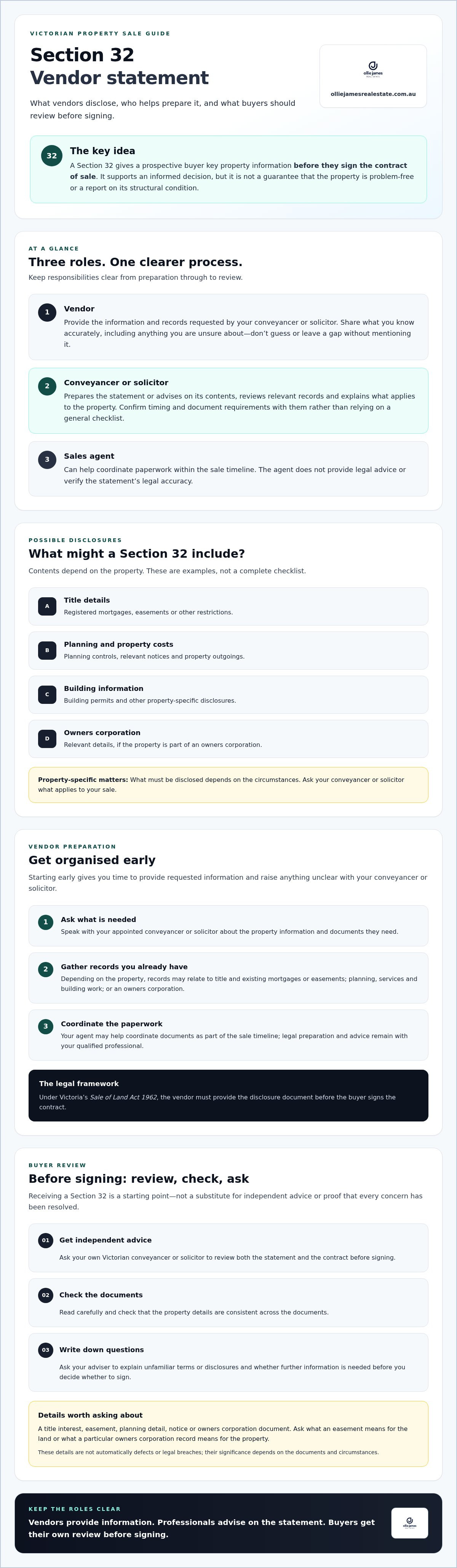
A Section 32 statement gives a prospective buyer key information about a property before they sign the contract of sale. Under Victoria’s Sale of Land Act 1962, the vendor must provide this disclosure document before the buyer signs. In plain terms, a section 32 vendor statement victoria is the seller’s formal disclosure of relevant property details, prepared with professional guidance so the buyer can make a more informed decision.
It isn’t a guarantee that the property is free from problems, and it doesn’t report on the building’s structural condition. Buyers may need separate inspections and advice from their own conveyancer or solicitor. For sellers, providing clear and accurate information gives both parties a sounder basis for contract discussions.
What information may a Victorian Section 32 statement contain?
The contents depend on the property. The statement may include information about:
- title details, including registered mortgages, easements or other restrictions
- planning controls, relevant notices and property outgoings
- building permits and other property-specific disclosures
- owners corporation details, if the property is part of one.
This is a guide, not a complete checklist. A property’s circumstances affect what must be disclosed, so ask your conveyancer or solicitor what applies to your sale. They can review relevant records and advise on the statement’s contents. Your agent may help coordinate paperwork within the sale timeline, but doesn’t provide legal advice or verify the statement’s legal accuracy.
How should vendors prepare a Section 32 statement in Victoria?
Start early and keep the roles clear. Your conveyancer or solicitor prepares the statement or advises you on its contents. You provide the information they request, and your agent can help coordinate paperwork as part of the sale timeline. The agent doesn’t provide legal advice or verify the statement’s legal accuracy.
Confirm timing and document requirements with your appointed conveyancer before relying on a general checklist. Each property is different, so a general guide can’t confirm what your Section 32 needs to include. The Consumer Affairs Victoria guide to vendor statements offers further official guidance.
What should sellers gather before speaking with a conveyancer?
Gather records you already have, then ask your conveyancer what else is needed. Depending on the property, useful documents may relate to:
- title and any existing mortgage or easement information
- planning, services and building work
- an owners corporation, if the property is part of one.
Share what you know accurately, including details you’re unsure about. Don’t guess or leave a gap without mentioning it. Your conveyancer can advise what’s relevant and whether further records are needed. For broader sale preparation, read our Bendigo vendor sale guide; it covers the selling process, not legal advice about your statement.
Getting the paperwork underway can help you coordinate disclosure with the wider sale plan. If you’re preparing to sell in Bendigo or Central Victoria, explore local residential property sales guidance from Ollie James Real Estate. Refer questions about the Section 32 itself to your conveyancer or solicitor.
How can buyers review a Victorian Section 32 before signing?
Receiving a Section 32 is a starting point, not a substitute for independent advice or proof that every concern has been resolved. Before signing, ask your own Victorian conveyancer or solicitor to review both the statement and the contract. They can explain what the documents say in the context of the property and help you work out what questions to raise.
Read the material carefully and note anything you don’t understand. Check that the property details are consistent across the documents, and ask your adviser to explain unfamiliar terms or disclosures before you decide whether to sign. For background on the document’s role in a sale, Consumer Affairs Victoria outlines preparing a Section 32 statement. Your adviser can help you assess the specific statement you receive.
What should raise a question during a buyer’s review?
Ask your adviser about anything unfamiliar or unclear, such as a title interest, easement, planning detail, notice or owners corporation document. For example, ask how an easement affects the land or what a particular owners corporation record means for the property. These details aren’t automatically defects or legal breaches; their significance depends on the documents and circumstances.
Write down your questions and ask your adviser whether you need further information before deciding whether to sign. A section 32 vendor statement victoria supports informed consideration, but it can’t replace tailored legal advice. If you’re seeking guidance about a residential sale in Bendigo or Central Victoria, find residential sale guidance from Ollie James Real Estate. For advice on the statement or contract, speak with a qualified conveyancer or solicitor.
Take your next property sale step with confidence
A clear Section 32 helps buyers consider key property information, but it isn’t a guarantee about the property. If you’re selling, speak with a Victorian conveyancer or solicitor early about preparing and reviewing the statement. Buyers should also get independent advice on the statement and contract before signing.
Understanding the section 32 vendor statement victoria process can make a sale feel more manageable when legal preparation and sales coordination are handled by the right professionals. Ollie James Real Estate is an independent, family-owned agency serving Bendigo and Central Victoria, with more than 17 years of local industry experience. The team can guide you through the residential sales process while your conveyancer or solicitor advises on the legal documents.
For local guidance as you plan your sale, contact Ollie James Real Estate about your property sale. The agency serves Bendigo, Kangaroo Flat, Junortoun, Epsom, Eaglehawk, Strathfieldsaye, Strathdale, Kennington, Golden Square, California Gully, Maiden Gully and Marong.
Frequently Asked Questions
What is a Section 32 vendor statement in Victoria?
The phrase “section 32 vendor statement victoria” refers to a disclosure document used in a Victorian property sale. It gives the prospective buyer relevant information about the property before they sign the contract, with contents depending on the property. It isn’t a building-condition report or a guarantee. Ask a Victorian conveyancer to confirm the required disclosures and explain the statement’s legal effect.
Who prepares a Section 32 statement in Victoria?
The vendor provides the requested information, while a conveyancer or solicitor usually prepares the statement or advises on it. A sales agent may coordinate paperwork and sale timing, but doesn’t prepare or legally verify the document. Across Bendigo, Kangaroo Flat, Junortoun, Epsom, Eaglehawk, Strathfieldsaye, Strathdale, Kennington, Golden Square, California Gully, Maiden Gully and Marong, Ollie James Real Estate supports residential sales.
When does a buyer receive the Section 32 statement?
A buyer receives the Section 32 statement before signing the contract of sale. This gives them an opportunity to consider the disclosures and seek independent advice before committing. The timing and process can depend on the sale circumstances and current requirements, so vendors and buyers should confirm these details with a Victorian conveyancer rather than rely on a general checklist.
Can a buyer withdraw after signing if the Section 32 statement is incomplete?
Possibly, but a buyer’s rights depend on the circumstances, the documents and the law that applies at the time. Don’t assume an incomplete or inaccurate statement automatically allows withdrawal. If you’re concerned after signing, contact a Victorian property lawyer or conveyancer promptly, share the contract and statement, and ask for advice specific to your situation before taking action.


