

A warrant for possession can be postponed in Victoria: VCAT may delay issuing it when the hardship a renter would face without postponement would exceed the rental provider’s hardship. Understanding the Residential Tenancies Act in Victoria means knowing how its rules shape rent, bonds, bills and condition reports, as well as what applies when a rental provider plans to move in. For notices issued on or after 25 November 2025, that move-in notice generally requires at least 90 days.
It’s understandable to feel unsettled when a notice or tenancy decision affects your home. This guide explains what the Residential Tenancies Act Victoria covers, how key rental responsibilities work and what to understand about notice periods, so you can approach your next step with greater clarity.
Key Takeaways
- Understand which rental situations Victoria’s tenancy laws cover and how the Act sets responsibilities for renters and rental providers.
- Learn how rent, bonds and household bills fit into a tenancy, and why clear records can help prevent misunderstandings.
- See how condition reports document a property’s state at the start of a tenancy and can inform discussions when it ends.
- Recognise what makes a rental-provider move-in notice valid, and how the rules may affect a renter’s options.
No-fault notice periods for a rental provider moving in
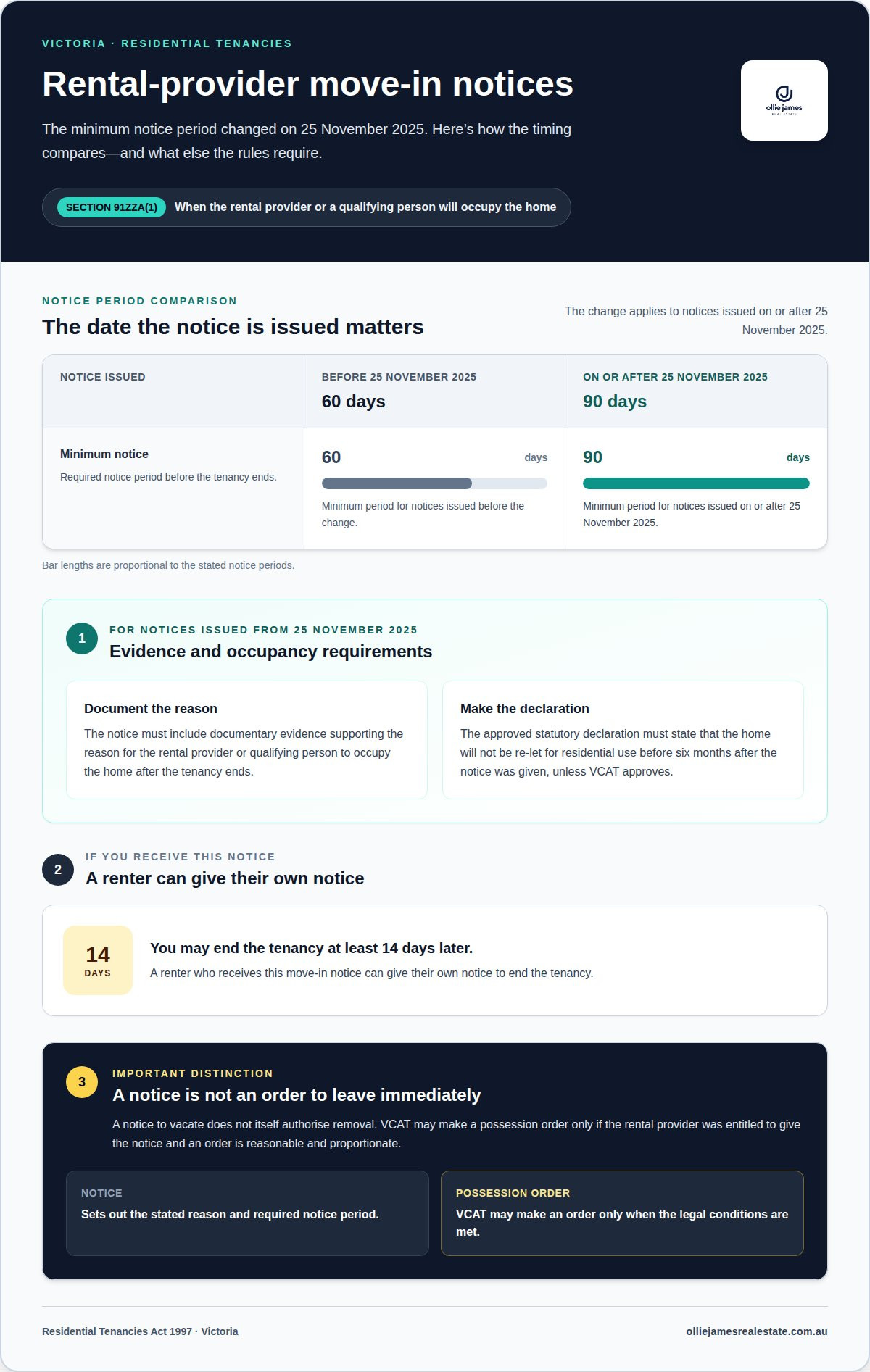
Under section 91ZZA(1), a rental provider can give notice when they or a qualifying person will occupy the home after the tenancy ends. Major reforms to Victoria’s Residential Tenancies Act took effect on 25 November 2025, according to Consumer Affairs Victoria. For notices issued on or after that date, the minimum notice period is 90 days; before then, it was 60 days. The notice must include documentary evidence supporting the reason.
The approved statutory declaration must state that the home won’t be re-let for residential use before six months after the notice was given, unless VCAT approves. A renter who receives this notice can give their own notice, ending the tenancy at least 14 days later. These requirements help distinguish a genuine move-in from a notice without supporting grounds.
Rental providers must take all reasonable steps to protect renters’ quiet enjoyment under section 67. The Act doesn’t provide a standalone privacy right, but disregarding privacy when entering may make that entry unreasonable. For pets or property changes, the rental agreement and applicable tenancy rules matter; get any agreed arrangements recorded clearly.
Tenants Victoria describes discrimination as unfair treatment based on characteristics such as race, gender, age, religion or disability. A notice to vacate doesn’t itself authorise removal: VCAT may make a possession order only when the provider was entitled to give notice and an order is reasonable and proportionate. Rental agreements set out responsibilities; the Residential Tenancies Regulations 2021 detail standards and compliance requirements. When starting or changing an agreement, make sure the written terms reflect the parties’ responsibilities, including rent and property care. Rental providers must meet minimum standards and keep the property in good repair; renters must leave it reasonably clean.
Rent, bonds, bills and condition reports
A rental agreement records practical arrangements, while the Act sets responsibilities for renters and rental providers. Keeping clear payment records, condition details and repair reports can help resolve disagreements.
Rent payments and regulation
Rent regulation covers how rent is set, paid and changed during a residential tenancy. The agreement records payment arrangements, and rent increases must follow the applicable tenancy rules. For renters, understanding the written terms helps clarify what is due and when; for rental providers, consistent records make payment history easier to follow. If financial hardship makes rent difficult, Tenants Victoria describes hardship as difficulty meeting living costs, including rent. Raising the issue early and in writing can help make the circumstances clear.
Bonds and rental disputes
A bond is security held during a tenancy, and a dispute can arise over proposed deductions at its end. From 13 October 2026, rental providers must notify renters in advance of bond claims and provide supporting evidence to VCAT. Keep relevant records, such as payment history and communications, together. For rent or bond disagreements, clear documents help explain each party’s position during a dispute process involving VCAT.
Bills and condition reports
Bills and condition reports help clarify responsibility for costs and record the property’s condition. The agreement and applicable rules inform responsibility for household bills; the condition report documents the property at the start of the tenancy. Describe issues specifically, such as a damaged cupboard or faulty appliance, to create a useful record for later discussions. Rental providers must keep the property in good repair and reasonably fit for occupation.
For rental providers setting up an application process, tenant selection and vetting can support a consistent approach to prospective renters.
Purpose and scope of Victoria's Residential Tenancies Act
Understanding the Residential Tenancies Act in Victoria starts with its central role: setting rights and responsibilities across the state’s residential rental market. The Act is numbered 109/1997 and applies alongside regulations that provide more detailed requirements. It gives renters, rental providers and owners a framework for understanding how their responsibilities relate during a tenancy.
Its reach extends beyond houses and flats. The Residential Tenancies Act 1997 covers renters and residents, rental providers, owners of rented premises, rooming houses, caravan parks and residential parks. That distinction matters because the rules relevant to someone in a rooming house may differ from those applying to a renter in a standalone home.
The Residential Tenancies Regulations 2021 add practical requirements, including forms, compliance matters and rental minimum standards. Other laws can also intersect with tenancy matters. For example, the Rooming House Operators Act 2016 relates directly to rooming-house operators, while the Victorian Civil and Administrative Tribunal Act 1998 governs aspects of tribunal procedure. Understanding the Residential Tenancies Act in Victoria therefore means identifying both the type of premises and the issue involved.
Legislation also changes over time. Version 115 of the Residential Tenancies Act 1997 is in force from 13 Oct 2026. For a renter in a caravan park, for instance, relevant rules may include the Residential Tenancies (Caravan Parks and Movable Dwellings Registration and Standards) Regulations 2024. The practical takeaway is to identify the accommodation first, then consider the Act and regulations that apply to that setting.
Ollie James Real Estate: Residential Property Sales
Ollie James Real Estate provides property management for rental providers, helping organise the practical responsibilities involved in a residential tenancy. If you’re considering renting out a property, professional management can help keep agreements, renter communication and property matters organised. Tenant selection and vetting is also available to help landlords choose a suitable renter.
If you’re weighing up an investment property, a pre-purchase assessment can help inform your decision before you buy. If you’re considering selling instead, Ollie James Real Estate provides residential property sales. These services don’t replace legal advice, but they can support property decisions and day-to-day management alongside tenancy obligations.
Contact Ollie James Real Estate to discuss property management or your next residential property decision.
Take your next property step with clarity
Understanding the Residential Tenancies Act in Victoria can help you make informed decisions, but your property plans may involve more than tenancy matters. If you’re considering a change, think about the outcome you want next, whether that’s managing a rental, selling a home or exploring land sales. The right support can help you approach that decision with a clearer sense of your options.
Ollie James Real Estate offers Property Management, Residential Property Sales and Land Sales. Contact Ollie James Real Estate to discuss the property decision ahead and find a considered way forward.
Frequently Asked Questions
Is there discretion to postpone a warrant for possession?
Yes. VCAT may postpone issuing a warrant for possession if the renter’s hardship without postponement would exceed the rental provider’s hardship. The comparison considers the impact of delaying or proceeding for both parties. If a warrant is approaching, explain the circumstances and provide relevant details about the renter’s hardship when seeking postponement.
What can I do if they have not complied with the breach notice?
If a party hasn’t remedied a tenancy breach, the other party can apply to VCAT for a compliance or compensation order under section 209 of the Residential Tenancies Act 1997. Set out what remains unresolved and any loss or damage caused. VCAT may order the person to remedy the breach, pay compensation or avoid a similar breach.
What duties do tenants have to the landlord?
Tenants must meet their rental agreement responsibilities, keep the property reasonably clean and avoid interfering with neighbours’ reasonable peace, comfort and privacy under section 60(2). For example, repeated disruptive noise could raise concerns about neighbours’ quiet enjoyment. A tenant’s obligations sit alongside the rental provider’s duties, so each party should address issues through the agreement and tenancy rules.
What is “immediate” occupation?
For an occupation notice under section 91ZZA(1), the premises must be intended for occupation immediately after the tenancy ends by the rental provider or a qualifying person. “Immediate” concerns the intended sequence after termination, not simply a stated intention to move in at some later point. VCAT has found repair work taking between 4 and 6 weeks before move-in could still satisfy this requirement.
What kind of orders can the tribunal make?
VCAT can order a person who breached a tenancy duty to remedy the breach, pay compensation or refrain from a similar breach. It may also make a possession order if the rental provider was entitled to give the notice and possession is reasonable and proportionate. Separately, VCAT can postpone issuing a warrant where the hardship test favours the renter.


