

A quick application is not the same as a reliable tenancy. To learn how to avoid bad tenants in Bendigo, use a consistent screening process: review rental history, income and employment details, and follow up with references before deciding. Don’t let pressure to fill a vacancy replace these checks.
It’s understandable to want confidence that your property will be cared for and rent paid as agreed. A thorough assessment helps you weigh each application, spot gaps or inconsistencies, and make a considered choice rather than relying on first impressions. Review rental and employment details, assess references, and keep your selection process structured and fair, even when vacancy timing is a concern.
Key Takeaways
- Choose a property manager with a consistent screening process and relevant experience managing similar homes in the local area.
- Look beyond an application’s headline details: compare rental history, income and references, and follow up on gaps or inconsistencies.
- Balance the cost of a vacancy against the value of completing checks before you decide; a rushed choice can create avoidable risks.
- Use the same clear assessment steps for each applicant to make a more considered, evidence-based decision.
1. Choosing a property manager with structured screening processes
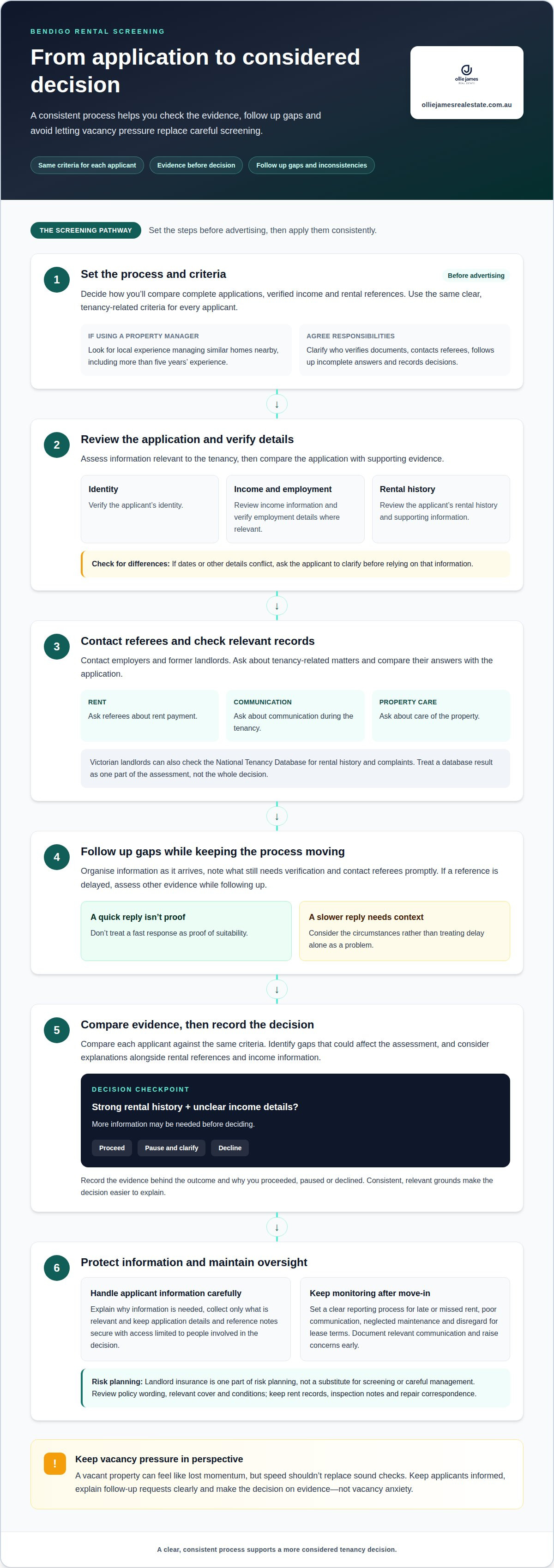
A structured process helps landlords assess applicants against consistent criteria, not instinct. Choose a local property manager with more than five years’ experience managing similar homes nearby. Ask them to outline screening, from application review to reference checks and the final decision. This makes it easier to see whether every applicant receives the same careful consideration.
Before signing a management agreement, discuss who verifies documents, contacts referees and follows up incomplete answers. Agree how the manager will report concerns, seek instructions and record decisions. For example, if an application gives conflicting employment dates, the manager should resolve the discrepancy before relying on that information. Clear expectations also make discussions between landlords and property managers more productive.
Good oversight continues after move-in. Late or missed rent, poor communication, neglected maintenance and disregard for lease terms can signal emerging tenancy problems. Set a clear reporting process so the manager can raise concerns early, document relevant communication and discuss an appropriate response. If a tenant reports damage or a repair issue, prompt follow-up helps clarify responsibility and prevents the issue from being overlooked.
Landlord insurance is one part of risk planning, not a substitute for screening or careful management. Review the policy wording for relevant cover, such as lost rental income and property damage, and understand its conditions before a claim arises. Ask the property manager how rent records, inspection notes and repair correspondence are maintained. These steps support clearer decisions and earlier action when concerns arise.
2. Checking rental history and employment
For landlords asking how to avoid bad tenants in Bendigo, reviewing rental history and references is a practical starting point. Victorian landlords can assess an applicant’s identity, income, rental history and references. They can also check the National Tenancy Database for rental history and complaints. Compare the application with supporting information, then follow up any gaps before deciding.
For privacy-conscious screening, request information relevant to assessing the tenancy and explain why you need it. Keep application details and reference notes secure, with access limited to people involved in the decision. A clear process helps applicants understand what information is being considered and avoids collecting unnecessary personal details.
Property managers in Bendigo can verify identity and income, review rental history, and contact employers and former landlords. Ask referees about tenancy-related matters, such as rent payment, communication and care of the property. Compare their answers with the application. If details conflict, ask the applicant to clarify before weighing the information.
A database result is one part of an assessment, not the whole decision. Consider the applicant’s explanation and other evidence, including rental references and income information. An important part of learning how to avoid bad tenants in Bendigo is applying the same tenancy-related criteria to every application. Record the evidence behind your decision: inconsistent or irrelevant grounds can lead you to reject a suitable renter and make the decision harder to explain.
3. Balancing vacancy time with careful screening
A vacant Bendigo property can feel like lost momentum, but speed shouldn’t replace sound checks. Set your screening steps before advertising, then follow them consistently as applications arrive. This helps prevent pressure to fill the property from leading to a rushed decision. For example, decide in advance how you’ll compare complete applications, verified income and rental references.
Keep the process moving by organising application information as it arrives. Note which details still need verification, contact referees promptly and tell applicants what information is outstanding. If a reference is delayed, assess the other evidence while following up. Don’t treat a quick response as proof of suitability, or a slower reply as a problem without considering the circumstances.
Set a clear decision point: compare each applicant against the same tenancy-related criteria, then identify any gaps that could affect your assessment. An applicant with a strong rental history but unclear income details may need to provide more information before you decide. Record why you proceeded, paused or declined, so your decision rests on evidence rather than vacancy anxiety.
Respectful communication also helps keep applicants informed during the process. Acknowledge applications, explain any follow-up request clearly and provide an update when your decision is made. If you’re reviewing how your process balances speed with thorough checks, review your applicant-screening approach before the next vacancy.
Ollie James Real Estate: Residential Property Sales
Ollie James Real Estate provides Property Management and Tenant Selection and Vetting for landlords seeking support to assess prospective renters. If you’d prefer professional help applying a careful selection process to your Bendigo rental, discuss how these services could support your needs.
Tenant selection is useful when you’re weighing applications and want a considered basis for choosing a renter. Property Management can also support landlords with the wider responsibilities of managing a residential rental. Together, these services connect screening with the practical decisions involved in preparing a tenancy.
If you’re considering support with a Bendigo rental, contact Ollie James Real Estate to discuss your property management needs.
Set up your next tenancy with confidence
A reliable tenancy begins before the keys change hands, with a clear plan for communication and responsibilities. Decide how you’ll keep records, handle maintenance concerns and maintain respectful contact throughout the tenancy. This preparation gives you a practical foundation beyond the application itself and helps you manage the relationship steadily once a renter moves in.
If you’re considering how to avoid bad tenants in Bendigo, make your next step a conversation about the support your property needs. Ollie James Real Estate offers Property Management, alongside Residential Property Sales and Land Sales for different property decisions. Contact Ollie James Real Estate to discuss your property management needs and take the next step with a clearer plan. A considered start can make the tenancy feel more manageable.
Frequently Asked Questions
What Makes a “Bad Tenant”?
A problematic tenancy may involve repeated late or missed rent, poor communication, property neglect or disregard for lease terms. One isolated issue doesn’t tell the whole story: consider its context, whether the renter responds constructively and whether the issue continues. In Victoria, tenants are expected to pay rent on time and take reasonable care of the property.
How to screen rental applicants in Bendigo, Victoria?
Use the same tenancy-related criteria for every Bendigo application, then assess the evidence as a whole. For example, compare stated rental dates with referees’ accounts and note unanswered questions before deciding. Keep the process moving by telling applicants what information you need and when you expect to decide. A consistent approach makes decisions easier to explain.
Can landlords in Victoria check rental history and references?
Yes. Landlords can review an applicant’s rental history and contact former landlords or other referees. Ask questions relevant to the tenancy, such as whether rent was paid as agreed and how communication and property care were handled. If a referee’s account conflicts with the application, give the applicant a chance to clarify before relying on the discrepancy.
What are the Victorian rules for checking a tenant’s income and employment?
Landlords can verify applicants’ income and employment when assessing a rental application. Keep questions relevant to the tenancy, and consider the information alongside rental history and references rather than treating a job title as proof of suitability. Clarify inconsistent employment details before deciding, and handle personal application information carefully.
Can a landlord in Victoria use a tenant database or blacklist?
Landlords can check the National Tenancy Database for an applicant’s rental history and recorded complaints. Treat a result as one piece of information, not an automatic decision: consider the circumstances and other application evidence. If an entry appears inaccurate or the applicant provides an explanation, take that into account before deciding whether the tenancy is suitable.


