

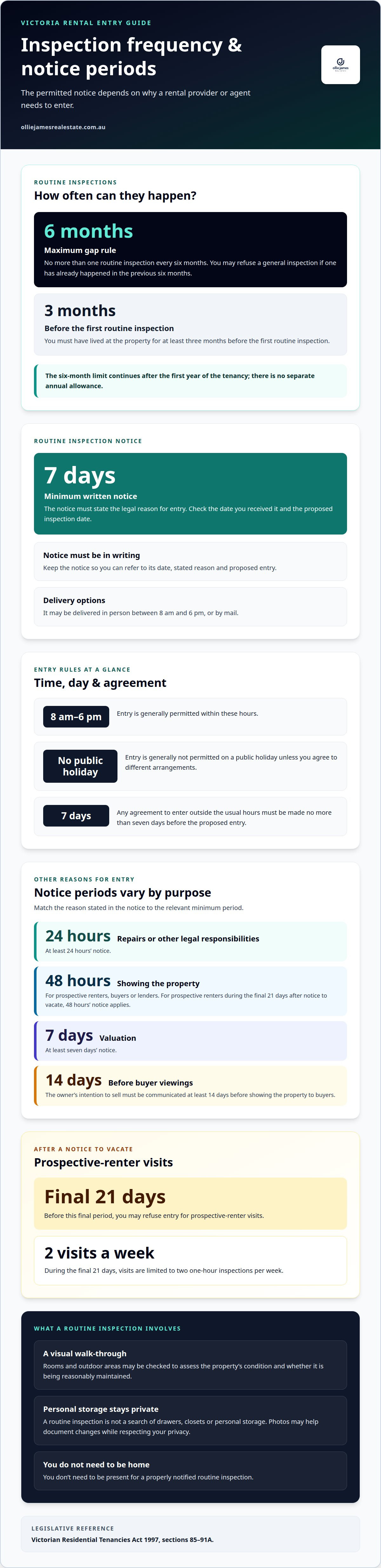
In Victoria, a landlord can generally carry out a routine inspection no more than once every six months, and not until you’ve lived at the property for at least three months. If you’re wondering how often a landlord can inspect a property in VIC, that is the key limit for a general inspection.
It’s reasonable to want clarity about visits to your home, even when an inspection is part of managing a rental property. Inspections are intended to assess the property’s condition and whether it is being reasonably maintained, not to take away your right to privacy.
This guide explains why routine inspections happen, how much written notice is required and when a rental provider or agent can enter for other reasons. Knowing the difference can help you assess an inspection request and understand what to expect.
Key Takeaways
- A routine inspection needs at least 7 days’ written notice, and the notice must state the legal reason for entry.
- Entry is generally limited to between 8 am and 6 pm, and not on a public holiday, unless you agree to different arrangements.
- Notice periods vary with the reason for entry: repairs and property viewings have different requirements.
- You don’t need to be home for a properly notified routine inspection, and the visit should respect your privacy.
Why Do Routine Inspections Happen?
In Victoria, a landlord or agent can conduct a routine inspection no more than once every six months. The renter must have lived at the property for at least 3 months before the first routine inspection. These limits answer how often a landlord can inspect a rental property in Victoria: six-monthly at most, not whenever requested.
After the first year, the limit remains the same: no more than one routine inspection every six months. A renter may refuse a general inspection if one has already taken place in the previous six months. The rules do not provide a separate annual allowance after the tenancy’s first year.
Routine inspections allow the rental provider to assess the property’s overall condition and whether it is being reasonably maintained. They involve a visual walk-through of rooms and outdoor areas, not a search of drawers, closets or personal storage. An inspection report can note maintenance needs or other concerns for follow-up. Photos may help document changes while respecting the renter’s privacy.
Other permitted reasons for entry include carrying out repairs or meeting legal responsibilities, and investigating a suspected breach of renter obligations. Entry may also be for selling the property, showing it to prospective renters, buyers or lenders, arranging a valuation, or attending VCAT family violence proceedings. Each reason has its own notice requirements.
The entry rules appear in the Victorian Residential Tenancies Act 1997, sections 85-91A. For a complaint, keep the notice, dates and details of entry, then raise the issue through Victoria’s rental dispute resolution process. If inspections exceed the frequency limit or proper notice wasn’t given, record what happened and challenge the entry with the rental provider. A renter can refuse a general inspection held within six months of the last one.
Written notice requirements
For a routine inspection in Victoria, written notice must arrive at least 7 days beforehand. The notice also needs to state the legal reason for entry, so you can understand what visit is proposed.
Notice periods for routine inspections
The minimum notice period for a routine inspection is 7 days. That gives you time to prepare and consider the planned entry alongside your other commitments. Check the date you received the notice and the proposed inspection date, rather than relying on when the agent says it was sent. The notice period supports your rights while allowing the rental provider to arrange a property visit.
Delivering written notice
A notice of entry must be in writing and identify the legal reason for entry. In Victoria, it may be delivered in person between 8 am and 6 pm, or by mail. These delivery rules help make the timing and purpose clear. Keep the notice so you can refer to its date, stated reason and proposed entry if questions arise.
The Residential Tenancies Act 1997 sets out the entry framework in sections 85-91A. If a notice is unclear, note what needs clarification and raise it with the rental provider before the visit. Keep any written feedback and the notice together; this creates a clear record of what was communicated. A notice for a routine visit should not be confused with notices for other reasons, such as repairs or showing a property. Those entry reasons have their own notice periods, so the stated purpose matters. Clear written communication helps both parties understand what will happen and supports respectful arrangements during renting.
When rental providers can enter a property
In Victoria, entry rules depend on the purpose of the visit, the notice given and the proposed time. Check these details to distinguish permitted entry from a request you may be able to challenge.
Permitted inspection times and days
A rental provider or agent may generally enter between 8 am and 6 pm, but not on a public holiday, unless you agree otherwise. This limit applies to property entry, including inspections, and helps protect your use of the home. Any agreement to enter outside those hours must be made no more than 7 days before the proposed entry. Check both the visit time and day against the notice.
Refusing or rescheduling an inspection
You may refuse a general inspection if one has already occurred within the previous 6 months. If the proposed time doesn’t suit, contact the rental provider promptly to discuss another time; keep the arrangement in writing. For prospective-renter visits, if you’ve received a notice to vacate, you may refuse entry before the final 21 days of the rental agreement. During those final 21 days, visits are limited to two one-hour inspections per week.
Entry for repairs, valuation, sale or viewings
Notice depends on why the rental provider is entering. Repairs or other legal responsibilities require at least 24 hours’ notice; a valuation requires 7 days. Showing the property to buyers, renters or lenders requires 48 hours’ notice, and the owner’s intention to sell must be communicated at least 14 days before buyer viewings. For prospective renters during the final 21 days after notice to vacate, 48 hours’ notice applies. These distinctions matter: match the stated reason to the notice period before responding. For support with rental property matters, explore property guidance.
Ollie James Real Estate: Residential Property Sales
Ollie James Real Estate provides property management for owners who want support overseeing a rental property and tenancy. If inspection notices, entry arrangements or maintenance follow-up are becoming difficult to manage, professional property management can bring these responsibilities together.
If you’re considering selling instead of continuing to rent out your property, residential property sales may be a better fit. The right option depends on your plans and whether you intend to keep the property as a rental or prepare it for sale.
To discuss your property plans, contact Ollie James Real Estate.
Make your next property decision with clarity
Understanding how often a landlord can inspect a property in VIC helps renters and owners approach tenancy conversations with clearer expectations. For owners, inspection arrangements are just one part of deciding what to do with a property. You may be weighing ongoing rental management against selling, or considering land as a separate investment. Keep your broader goals in view when deciding what support would be useful.
Ollie James Real Estate provides property management, residential property sales and land sales. If you’re considering a change, discuss which option best fits your plans and circumstances. A straightforward conversation can help you identify a practical next step.
Contact Ollie James Real Estate to talk through your property plans. Take the next step at a pace that feels right for you.
Frequently Asked Questions
How Often and When Do Inspections Occur?
Routine inspections can happen no more than once every six months, after you’ve lived at the property for at least three months. Entry is generally permitted between 8 am and 6 pm, not on a public holiday, unless you agree otherwise. These Victorian limits apply whether your rental is in Bendigo, Eaglehawk or elsewhere in the state.
What notice must a Victorian landlord give before a routine inspection?
Your rental provider must give at least 7 days’ written notice before a routine inspection. The notice must state the legal reason for entry, so you can distinguish an inspection from a visit for repairs or another purpose. For example, note the date you received it and the proposed visit date, then keep the notice with any related messages.
How many routine inspections can a Victorian landlord conduct in the first year of a tenancy?
A landlord can generally carry out up to two routine inspections in the first year, provided the first is no earlier than three months after you move in and the inspections are at least six months apart. For example, inspections around months three and nine could meet those limits. The dates must also meet the notice requirements.


