

What should you do when a renter asks to keep a pet: refuse, or consider the request? It’s reasonable to think about property care, cleanliness and the effect on neighbours. But if you’re searching for “pets in rental properties Victoria landlord” guidance, the starting point is clear: Victorian landlords can’t unreasonably refuse a pet request.
Renters use Consumer Affairs Victoria’s Pet Request Form for each pet. From the day you receive it, you have 14 days to approve the request or apply to VCAT for an order to refuse it. If you don’t respond within that period, consent is considered granted. This guide covers the request process, practical communication about property care and the rules around refusals and pet bonds. A calm, consistent approach helps keep pet-related conversations clear for landlords and renters across Bendigo and Central Victoria.
Key Takeaways
- For a pets in rental properties Victoria landlord, understanding the formal request process helps you respond fairly and avoid decisions based on assumptions.
- Consider each request in the context of the pet and the property, and keep your communication clear and respectful.
- Record the request, your response and related communication so there’s a clear account of how the conversation was handled.
- Set practical expectations around cleanliness, damage and neighbours while recognising that every property and tenancy is different.
Pets in rentals in Victoria: what landlords need to know
A pet request can raise practical questions for landlords and renters alike. You may be considering the property’s layout, possible wear and tear or the effect on neighbours, while the renter may be hoping to keep an important companion. For landlords searching “pets in rental properties Victoria landlord”, the first step is to follow Victoria’s formal request process rather than make an immediate decision.
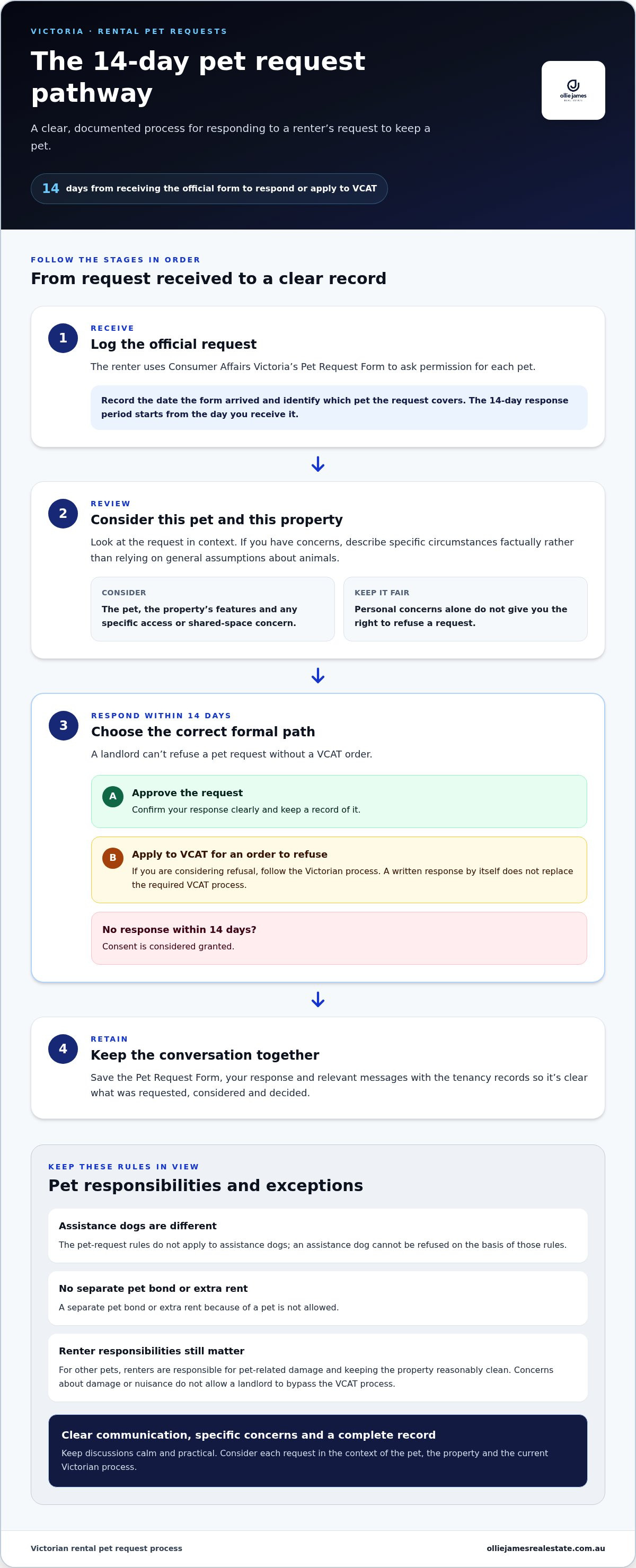
Consumer Affairs Victoria’s guidance says renters should use its Pet Request Form to ask permission for each pet. From the day you receive the form, you have 14 days to approve the request or apply to the Victorian Civil and Administrative Tribunal (VCAT) for an order to refuse it. If you don’t respond within that period, consent is considered granted. A landlord can’t refuse a request without a VCAT order.
What does Victorian rental guidance say about pets?
Assistance dogs are treated differently from pets: the pet-request rules don’t apply, and an assistance dog can’t be refused on the basis of those rules. For other pets, renters are responsible for pet-related damage and keeping the property reasonably clean. A separate pet bond or extra rent because of a pet isn’t allowed. Concerns about damage or nuisance don’t give you the right to reject a request without following the VCAT process.
After receiving a request, take these practical steps:
- Record when the official form arrived and identify which pet the renter is asking to keep.
- Consider the request in relation to the pet and the property. If you have specific concerns, describe the circumstances factually rather than relying on general assumptions.
- Within 14 days, approve the request or apply to VCAT for an order to refuse it. Keep a record of the form, your response and related communication.
This gives you a consistent process and helps keep the conversation respectful. For guidance about a particular legal situation, refer to Consumer Affairs Victoria or seek appropriate advice.
How Bendigo landlords can respond to a pet request fairly
A consistent process can prevent a pet request from turning into a tense exchange. For a Bendigo landlord researching “pets in rental properties Victoria landlord” guidance, a practical approach is to acknowledge the renter, consider the request on its merits and keep a clear record. Consumer Affairs Victoria’s guidance gives landlords 14 days from receiving the official form to respond or apply to VCAT to refuse the request. Check the current guidance when acting, as legal requirements can change.
Work through these steps in order:
- Receive: Record when the official Pet Request Form arrived and which pet it covers.
- Review: Consider the pet and the property’s features. For example, note a specific access or shared-space concern rather than relying on a general assumption about animals.
- Respond: Acknowledge the request promptly. If you’re considering refusal, follow the current Victorian process. Personal concerns alone aren’t a legal right to refuse.
- Retain: Keep the form, your decision and relevant messages together so the record is easy to follow.
Timely written communication gives both parties a clear record of what was requested, considered and decided. Keep the tone calm and practical. Don’t add pet conditions or extra charges unless they’re permitted under current rules.
What should a landlord include in a response?
Confirm that you’ve received the request, identify the pet and explain the next step or decision plainly. Keep any discussion of practical concerns specific and respectful, and save the exchange with the tenancy records. If you intend to refuse, the grounds and process must align with current official Victorian guidance; a written response alone doesn’t replace the required process. A clear record also makes it easier to refer back to what was discussed during the tenancy.
For local context on property management support in Central Victoria, clear communication remains useful well beyond the initial request.
Managing pet-friendly rentals in Bendigo with clear expectations
A pet request is only the beginning of the conversation. During the tenancy, clear and consistent communication helps renters understand their responsibilities and gives landlords a practical way to address concerns. This matters across Bendigo, where a rental might be a house with outdoor space, a unit with shared areas or a property with other features to consider. Not every home or tenancy is the same.
Keep expectations focused on the tenancy and the property. Make sure both parties know how to raise maintenance requests, report damage and discuss cleanliness or concerns affecting neighbours. If an issue arises, describe what you’ve observed and invite a straightforward discussion instead of relying on assumptions about the pet. Any action should remain consistent with Victorian tenancy requirements. Clear communication doesn’t create extra conditions or override a renter’s rights.
For a landlord managing pets in rental properties Victoria, the aim is to make everyday responsibilities clear without treating every pet or property alike. Keep written records of relevant conversations so both parties can refer back to what was discussed.
How can local property management support clear pet discussions?
Property management can help organise communication between landlords and renters, along with rental inspections and maintenance requests, so pet-related concerns are considered as part of the tenancy. Ollie James Real Estate provides personalised property management across Central Victoria. Its Rental Inspections and Maintenance Request Form services support practical communication about the property and its upkeep. This support is not legal representation; Victorian rules still guide the process.
If you’d value a local point of contact for ongoing rental management, explore local rental property support from Ollie James Real Estate.
Make your next rental conversation clearer
A pet enquiry can be an opportunity to build a constructive working relationship, not simply a decision about an animal. For a pets in rental properties Victoria landlord, setting a calm, consistent tone from the first conversation can make later discussions about the home and tenancy easier. Carry that clarity into routine management so renters know where to raise questions and landlords can respond with confidence.
Ollie James Real Estate supports landlords and tenants across Central Victoria with local market knowledge, personalised service and honest communication. For local support with the ongoing management of your rental, explore local rental property support, or call 0480 322 896 or email [email protected].
A considered conversation today can help set a positive tone for the tenancy ahead.
Frequently Asked Questions
Can a landlord refuse a pet in a rental property in Victoria?
If you searched “pets in rental properties Victoria landlord”, the key point is that a landlord can’t unreasonably refuse a renter’s request. To refuse, the landlord must apply to VCAT and obtain an order that the refusal is reasonable. A concern about possible damage or neighbour disturbance doesn’t, by itself, give a landlord permission to reject a request outside that process.
How long does a Victorian landlord have to respond to a pet request?
A landlord has 14 days from receiving the official Consumer Affairs Victoria Pet Request Form to approve the request or apply to VCAT to refuse it. If there’s no response within that period, consent is considered granted. Renters can keep a copy of the completed form and note when it was submitted, so there’s a clear record of the request.
Can a landlord charge a pet bond in Victoria?
No. Victorian landlords can’t require a separate pet bond or charge extra rent specifically because a renter has a pet. The standard rental bond may be used to address pet-related damage beyond normal wear and tear, in line with the usual bond process. Renters should keep records of the property’s condition and promptly raise any damage or maintenance concerns.
What should a renter do if a Bendigo rental property does not allow pets?
Before applying, ask the agent or landlord whether your pet can be considered, and give clear details about the animal. If you’re already renting, use the official request process rather than relying only on a listing’s wording. This applies whether you’re looking in Bendigo, Kangaroo Flat, Junortoun, Epsom, Eaglehawk, Strathfieldsaye, Strathdale, Kennington, Golden Square, California Gully, Maiden Gully or Marong. Consumer Affairs Victoria explains the current rules.


