

Settlement day is when the buyer’s funds are transferred, ownership is recorded and possession passes, unless another arrangement applies. If you’re wondering what happens on settlement day in Victoria, the process is usually completed electronically by the parties’ legal representatives or conveyancers and lenders. Keys are usually handed over within 1-2 hours after settlement is complete.
It’s understandable to feel the pressure of a major financial and personal milestone, especially when moving arrangements still need attention. The key point is that you don’t usually need to attend electronic settlement yourself when your representatives are handling it.
This guide explains how electronic settlement works, what changes when it is complete, and when buyers can collect the keys, so you can plan the handover with a clearer picture of the day.
Key Takeaways
- Expect the transfer to be handled electronically by the parties’ legal representatives or conveyancers and lenders, rather than as an in-person exchange.
- Plan to collect the keys after settlement is complete; in Victoria, handover usually happens within 1-2 hours.
- Allow time for the final inspection before settlement, and understand that the Transfer of Land Act in Victoria is the Transfer of Land Act 1958, according to Victorian Legislation.
- For guidance with buying or selling a home, Ollie James Real Estate offers Residential Property Sales across Bendigo and Central Victoria.
When do buyers get the keys after settlement?
In Victoria, keys are usually handed over within 1-2 hours after settlement is complete. The transfer of ownership is recorded as part of settlement, and the Transfer of Land Act in Victoria is the Transfer of Land Act 1958, according to Victorian Legislation. Buyers generally don’t need to attend settlement if their representatives manage the documents and financial arrangements.
The final inspection gives the buyer a chance to check the property’s condition before settlement. In Victoria, it should be completed within 7 days of settlement. Compare the property with its condition when you agreed to buy it, and raise any concerns with your conveyancer before settlement. This helps avoid discovering an issue only after collecting the keys.
Use these practical checklist points to prepare for handover:
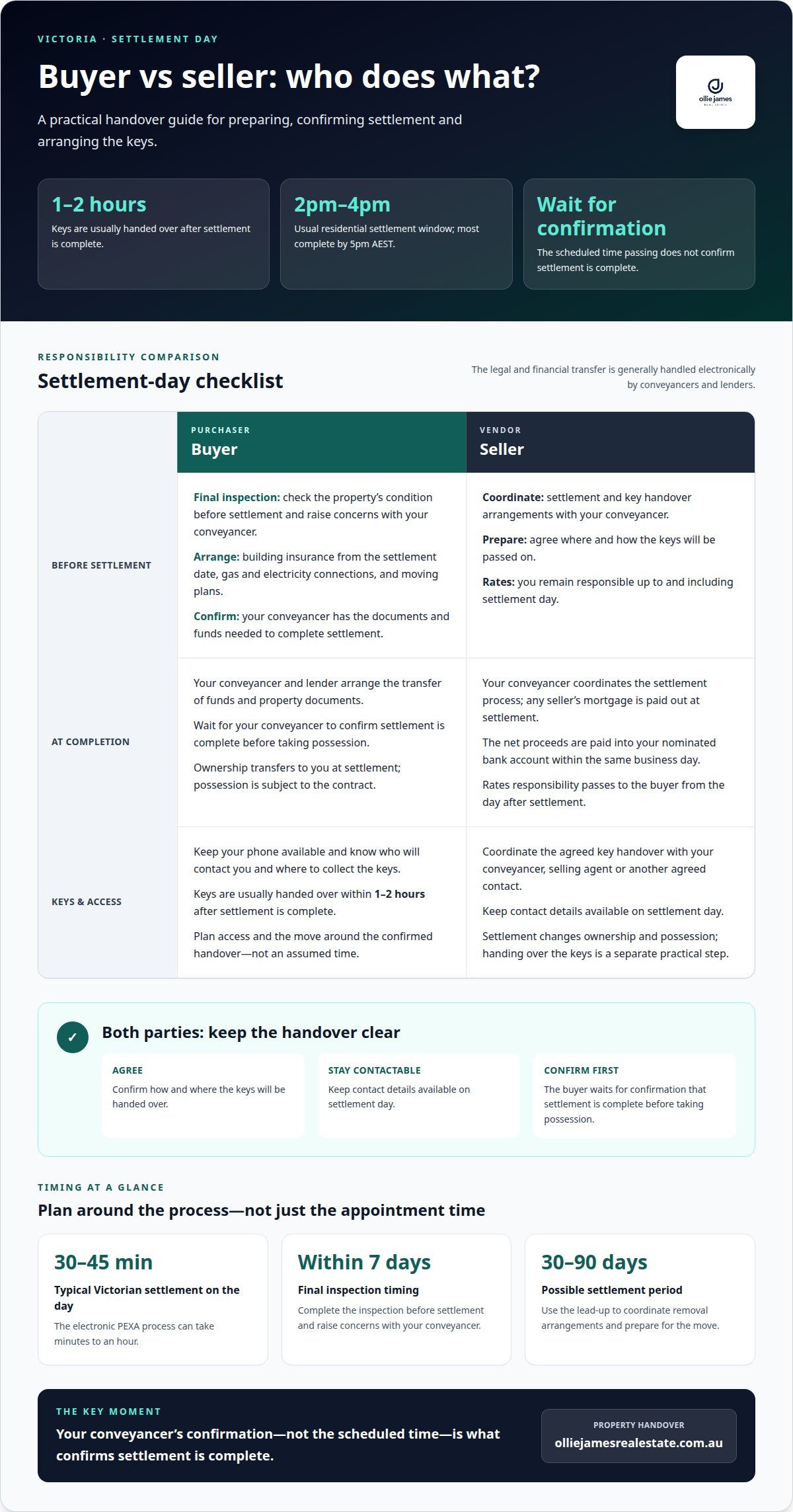
- Buyer: arrange building insurance from the settlement date, plan the final inspection, and organise gas and electricity connections. Confirm your conveyancer has the documents and funds needed to complete settlement.
- Seller: coordinate with your conveyancer about settlement and key handover. The seller remains responsible for rates up to and including settlement day; the buyer takes responsibility from the following day.
- Both parties: agree how the keys will be handed over and keep contact details available on settlement day. The buyer should wait for confirmation that settlement is complete before taking possession.
Once settlement is financially complete, responsibility for rates and utilities passes to the buyer, with rates responsibility beginning the following day. This distinction matters when arranging services and planning your move. Organising these details in advance can make the transition to taking possession clearer, even when representatives handle settlement.
Possession and collection of keys
Settlement changes ownership and possession, but key handover is a separate practical step. Confirm the agreed arrangements before planning your move.
Taking possession
Possession means the buyer can occupy and use the property after settlement, unless the contract provides otherwise. Settlement generally marks the point when the buyer can take possession, subject to the arrangements in the contract. Timing matters: moving in before settlement is complete may conflict with the agreed possession arrangements. If settlement is delayed, for example, access may have to wait until completion is confirmed.
Collecting the keys
Key collection gives the buyer practical access to the property. Once settlement is complete, the conveyancer can confirm this, allowing the agreed handover to proceed. The seller, selling agent or another agreed contact may coordinate where and how the keys are passed on. Keep your phone available and know who will contact you and where to collect the keys.
Moving into the property
Moving in means arranging access and belongings around the confirmed handover, rather than assuming access begins at a particular time. A settlement period can range from 30 to 90 days, so buyers can use the lead-up to coordinate removal arrangements and prepare for the move. If a lender is involved, the conveyancer and lender handle settlement transfers; wait for completion confirmation before setting off with a moving van.
If you’re buying or selling and want local guidance on the property process, explore residential property sales guidance.
How settlement is completed electronically in Victoria
Residential settlements usually occur between 2pm and 4pm, and most complete by 5pm AEST. Your conveyancer confirms completion, so wait for their notification before treating the property transfer as final.
Electronic settlement process
Electronic settlement is the formal transfer of funds and property documents through an electronic conveyancing process. It allows the buyer, seller, conveyancers and lenders to coordinate transfers without meeting in person. In Victoria, PEXA settlements can take minutes to an hour. The buyer’s settlement agent works with the buyer and lender to arrange payment to the seller, and any seller’s mortgage is paid out at settlement. The process is governed by the Electronic Conveyancing National Law (Victoria).
Settlement timing
Settlement timing is the scheduled period when the parties’ representatives complete the financial and ownership transfers. A Victorian property settlement usually takes 30 to 45 minutes on the day, although the electronic PEXA process can take minutes to an hour. House settlements usually occur between 2pm and 4pm, and most residential settlements are completed by 5pm AEST. These times help buyers plan their day, but don’t treat the scheduled time as confirmation that completion has occurred.
Confirming settlement completion
Settlement is complete when your conveyancer confirms it, not simply when the scheduled time passes. Contact your conveyancer for an update; they can confirm that the purchase funds and documents have been processed. Once complete, ownership transfers to the buyer, while the seller receives the net proceeds in their nominated bank account within the same business day. Use your conveyancer’s confirmation to coordinate any remaining handover arrangements.
Ollie James Real Estate: Residential Property Sales
Ollie James Real Estate supports buyers and sellers through residential property sales, including understanding the sale process and planning the next move. If you’re considering an investment property, an investment property pre-purchase assessment can help you assess it before committing. Sellers can request a free property value update for a current view of their property’s value as they plan a sale. Conveyancers and lenders manage the legal and financial settlement; local real estate guidance can help clarify the wider property journey.
For a personalised conversation about buying or selling, contact Ollie James Real Estate.
Take your next property step with confidence
Understanding what happens on settlement day in Victoria can help you plan your next steps, but the right support also depends on your goals. Whether you’re preparing to sell, searching for a home or considering an investment, local real estate guidance can help you make informed decisions. Your conveyancer and lender handle the legal and financial transfer; property advice can support the buying, selling and ownership decisions around it.
Ollie James Real Estate offers Residential Property Sales, Property Management and Land Sales. If one of these services suits your plans, get in touch to discuss a practical next step.
Contact Ollie James Real Estate to talk through your property goals. A considered next step can help you move forward with confidence.
Frequently Asked Questions
What happens on settlement day?
In Victoria, the buyer’s conveyancer, seller’s representative and any lenders coordinate the financial and document transfers. Once they are complete, the buyer’s conveyancer confirms settlement, and the parties can proceed with their agreed handover. If you’re asking what happens on settlement day in Victoria, wait for that confirmation before arranging access or treating the purchase as complete.
What is property settlement?
Property settlement is the formal completion of a property purchase, when the buyer’s payment and ownership transfer are processed. It’s different from signing the contract, which sets out the agreed terms and settlement date. For example, a buyer can sign a contract weeks before settlement, while the transfer of ownership and payment happen on the scheduled completion date.
After Settlement: What’s Next?
After settlement, keep the completion notification and settlement documents with your property records. Refer to them when updating your address, arranging services and organising property paperwork. If you’re moving within Bendigo, Kangaroo Flat, Junortoun, Epsom, Eaglehawk, Strathfieldsaye, Strathdale, Kennington, Golden Square, California Gully, Maiden Gully or Marong, plan access and transport around your confirmed handover.
Can You Move in on Settlement Day?
You can move in on settlement day once settlement is complete and the contract allows you to take possession. The timing depends on when completion is confirmed and when you receive access. If you’ve booked a removalist or delivery, arrange for it to arrive after you receive confirmation, rather than relying on the scheduled settlement time alone.
Does a 30 Day Settlement Include Weekends?
Weekends can fall within the agreed 30-day settlement period; they aren’t automatically extra days added to the term. Use the settlement date written in your contract to plan your move, rather than counting forward and assuming a weekend extends the deadline. If that date falls on a weekend, your conveyancer can explain the completion arrangements for your transaction.


