

In 2026, transitioning from a property owner to a "rental provider" is no longer just a financial choice; it's a high-stakes commitment to a complex legal framework. You've worked hard to secure your investment in Bendigo or Central Victoria, so it's natural to feel anxious about the recent ban on "no-reason" evictions or the strict safety checks mandated since October 2026. Learning how to become a landlord in Victoria involves more than just finding a tenant. It requires shifting from an emotional connection to a professional, compliance-focused mindset that prioritises safety and transparency.
We know the fear of VCAT disputes or choosing the wrong renter can be heavy. This guide provides a clear compliance checklist and explains the new standardised application forms to protect your asset. We'll share local insights on finding a reliable tenant so you can manage your property with total peace of mind and professional certainty.
Key Takeaways
- Learn why the legal transition from "landlord" to "rental provider" matters and master the essential steps for how to become a landlord in Victoria under the latest 2026 regulations.
- Identify the 14 mandatory Minimum Standards your property must meet before any renter moves in to stay compliant and avoid potential VCAT disputes.
- Understand your obligations regarding biennial gas and electrical safety checks and the new evidence required for bond claims as of late 2026.
- Gain peace of mind by exploring how professional property management can help you navigate complex changes like the ban on no-fault evictions and rental bidding.
Understanding Your Legal Obligations as a Victorian Rental Provider
In Victoria, the legal landscape has shifted significantly. If you're researching how to become a landlord in Victoria, you'll quickly notice that the term "landlord" has been formally replaced by "rental provider" under the Residential Tenancies Act. This isn't just a linguistic change; it reflects a move toward treating property leasing as a professional, regulated service. Understanding this context within the wider Australian residential rental market is vital for anyone looking to secure their financial future while respecting regional standards.
To better understand this concept, watch this helpful video:
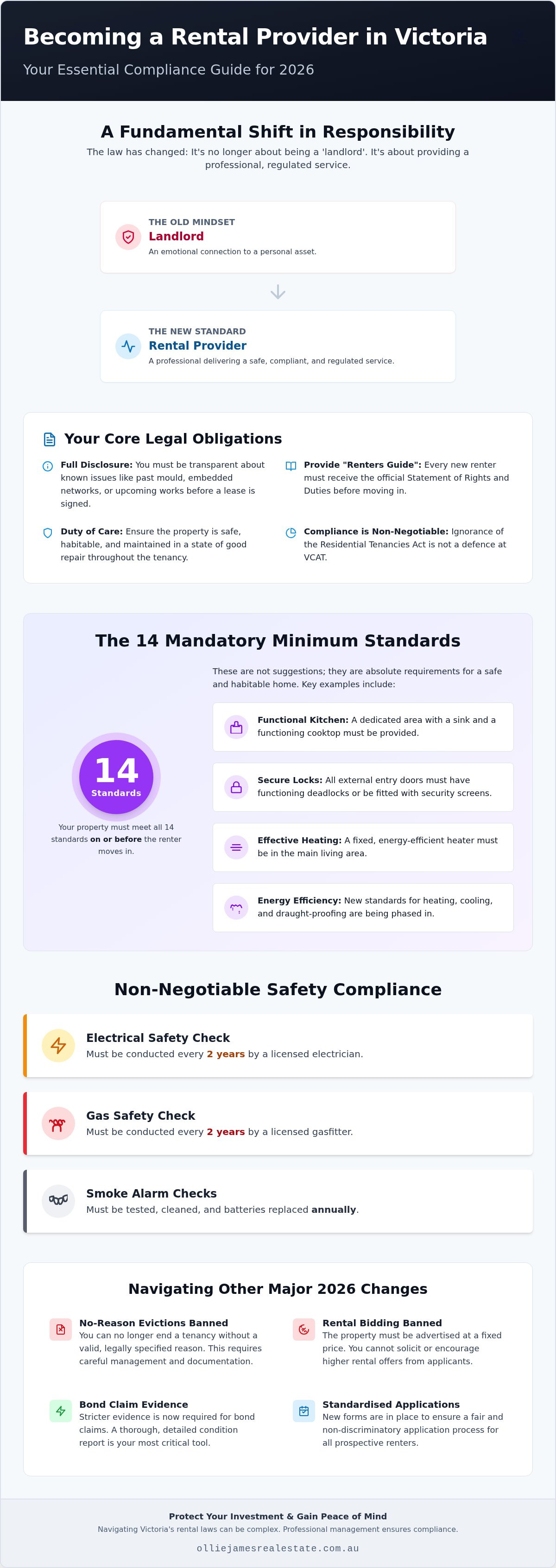
Before a lease is even signed, you're now required to meet strict disclosure requirements. You must be transparent about any known issues, such as past mould, embedded network costs, or upcoming building works that might affect the tenancy. Additionally, every new renter must receive a "Renters Guide" (Statement of Rights and Duties) before they move in. This ensures everyone starts on the same page, reducing the anxiety of future misunderstandings and establishing a professional tone from day one.
The Residential Tenancies Act: Your Compliance Framework
The Act serves as a balancing force, ensuring both providers and renters have clear, enforceable rights. As a provider, you hold a fundamental duty of care to ensure the property is safe, habitable, and maintained in a state of good repair throughout the tenancy. This isn't a suggestion; it's a legal mandate that protects both your investment and the person living in it. It's a high-pressure environment, but staying informed is your best protection. Remember, claiming ignorance of these laws is never a valid defence at the Victorian Civil and Administrative Tribunal (VCAT). Consistent compliance is the only way to achieve long-term peace of mind when learning how to become a landlord in Victoria.
The Essential Checklist: Preparing Your Property for Lease
Once you understand the legal framework, the next step is physical compliance. If you're learning how to become a landlord in Victoria, your property must meet 14 specific "Minimum Standards" on or before the day a renter moves in. These aren't suggestions; they're absolute requirements to ensure the home is safe and habitable. Following Consumer Affairs Victoria's renting guide is a reliable way to cross-reference your property against these rules before you advertise.
Safety is a non-negotiable priority. You must arrange for mandatory gas and electrical safety checks to be conducted every two years by licensed tradespeople. These checks, alongside the annual smoke alarm inspection, provide the documentation needed to prove you've met your duty of care. To stay ahead of potential issues, many owners choose to organise a professional appraisal to identify any compliance gaps before the first open home.
Minimum Standards and Energy Efficiency in 2026
Your checklist must include a functional kitchen with a dedicated cooking area, secure locks on all external doors, and effective heating in the main living space. As we move through 2026, new energy efficiency standards are being phased in. These include stricter requirements for heating, cooling, and draught-proofing, designed to lower utility costs for renters. We recommend a "best practice" approach: pre-empting repairs now is far more cost-effective than managing urgent maintenance requests during a cold Bendigo winter. Finally, never overlook the condition report. This document is your most vital tool for protecting your investment and supporting bond claims when a tenancy eventually concludes. Taking the time to document every detail now provides the clarity you'll need later.
Setting Up for Success: Management and Tenant Selection
Deciding how to manage your investment is a pivotal decision that impacts your long-term returns. While some owners consider self-management to reduce costs, the legal risks under current Victorian renting laws are now more substantial than ever. When you're learning how to become a landlord in Victoria, you must decide if you have the capacity to handle 2:00 am emergency calls or complex rent negotiations. Success often starts with setting a competitive price based on the current Bendigo real estate market. If you set the rent too high, you risk costly vacancies; set it too low, and you might struggle to cover rising compliance costs.
Rigorous tenant vetting is your most effective insurance policy against future stress. It's about more than a simple credit check. It involves verifying stable employment, checking regional references, and ensuring the renter is a genuine fit for your property. For those discovering how to become a landlord in Victoria, this methodical vetting process significantly reduces the anxiety associated with potential rent arrears or property damage.
The Value of Local Property Management in Central Victoria
Hiring a professional property manager provides a vital buffer between you and the high-pressure world of real estate. Local agents manage the emotional weight of daily operations, from maintenance coordination to staying updated on legislative compliance and the latest VCAT rulings. Because they're deeply rooted in the community, they maintain established relationships with reliable Bendigo tradespeople. This ensures that when a heater fails in the middle of a July cold snap, the repair is handled quickly and at a fair price. Ultimately, this expert regional guidance transforms a source of potential worry into a stable, correctly managed investment.
Empowering Your Future as a Successful Rental Provider
Navigating the path of how to become a landlord in Victoria doesn't have to be a source of constant stress. By prioritising the 2026 compliance standards and ensuring your property meets every safety mandate, you're already ahead of the curve. Success in the regional market relies on a professional mindset, from the initial condition report to the final tenant selection. It's about moving from uncertainty to a state of total confidence in your investment's management.
At Ollie James Real Estate, we bring 17 years of Central Victoria expertise and family-owned integrity to every property we manage. Our rigorous tenant vetting process is designed to give you peace of mind while protecting your financial future. If you're ready to transition from owner to rental provider with certainty, get a free, no-obligation rental appraisal for your Bendigo property today. We're here to provide the honest, personalised support you need to thrive.
Frequently Asked Questions
What is the Portable Rental Bond Scheme starting in 2026?
The Portable Rental Bond Scheme is a 2026 initiative allowing renters to "carry" their bond from one property to another. This streamlines the move-in process and reduces the upfront cash required for tenants. For providers in Central Victoria, the RTBA still guarantees the bond amount. It's an important update to track when researching how to become a landlord in Victoria to ensure your administrative processes remain current.
Can I refuse a tenant who has a pet in Victoria?
In Victoria, you generally cannot refuse a renter's request to keep a pet without a specific order from VCAT. You must prove that the property is genuinely unsuitable or that the pet would cause an unreasonable risk to health and safety. Most providers find that being "pet-friendly" actually broadens their pool of high-quality applicants in the competitive Bendigo rental market.
How much rent can I ask for in advance in Victoria?
For properties with a weekly rent of $950 or less, the maximum rent you can request in advance is one month. This is a standard legal cap across the state. If you're leasing a premium home in Eaglehawk or Strathdale that exceeds this threshold, different rules may apply. We always recommend checking the specific lease terms to avoid any compliance issues during the initial sign-up phase.
What happens if my property does not meet the minimum standards by the lease start date?
If your property isn't compliant with the 14 minimum standards by the move-in date, the renter can legally cancel the agreement or demand urgent repairs. This can leave you with an unexpected vacancy and potential legal costs at VCAT. Ensuring every lock, heater, and window covering is secure before advertising is the best way to protect your investment and maintain your professional reputation.


