

What if the best way to convince your partner to sell your house is to stop trying to convince them? If you’re asking how to convince my partner to sell our house, begin by understanding what’s behind their hesitation. A home can represent security, memories and a major financial commitment, so different views about moving can make for a difficult conversation.
You don’t need to settle the decision in one discussion. Start by listening to each other’s concerns, then compare practical information against what matters to you both. This article covers how to explain your reasons for moving, which property and financial details may bring clarity, and how a local, no-obligation appraisal can help you explore your options without committing to sell. Even if you’re not ready to move, you can still agree on a useful next step.
Key Takeaways
- Look beyond your partner’s initial hesitation to understand what the home represents and what feels uncertain about moving.
- If you’re wondering how to convince my partner to sell our house, start with a calm conversation that makes room for both perspectives, rather than a persuasive pitch.
- Summarise each person’s priorities in neutral language to identify shared goals and the concerns that need more thought.
- You can agree on a review date or gather information first. A free, no-obligation appraisal can help you understand your Bendigo-area property’s potential value without committing to sell.
How to talk about selling your house when your partner is unsure
Selling a home involves more than choosing where to live next. Your partner may be thinking about financial security, memories tied to the house, or the effort and uncertainty of starting over. Give those concerns room in the conversation, even if you feel ready to move.
If you’re wondering how to convince my partner to sell our house, get curious rather than building a case. Hesitation may reflect a different priority or unanswered questions, not stubbornness. Respectful discussion explores what matters to both of you; pressure tries to secure agreement before those concerns have been heard. The basics of interpersonal communication, including listening and responding thoughtfully, can help keep a sensitive discussion constructive.
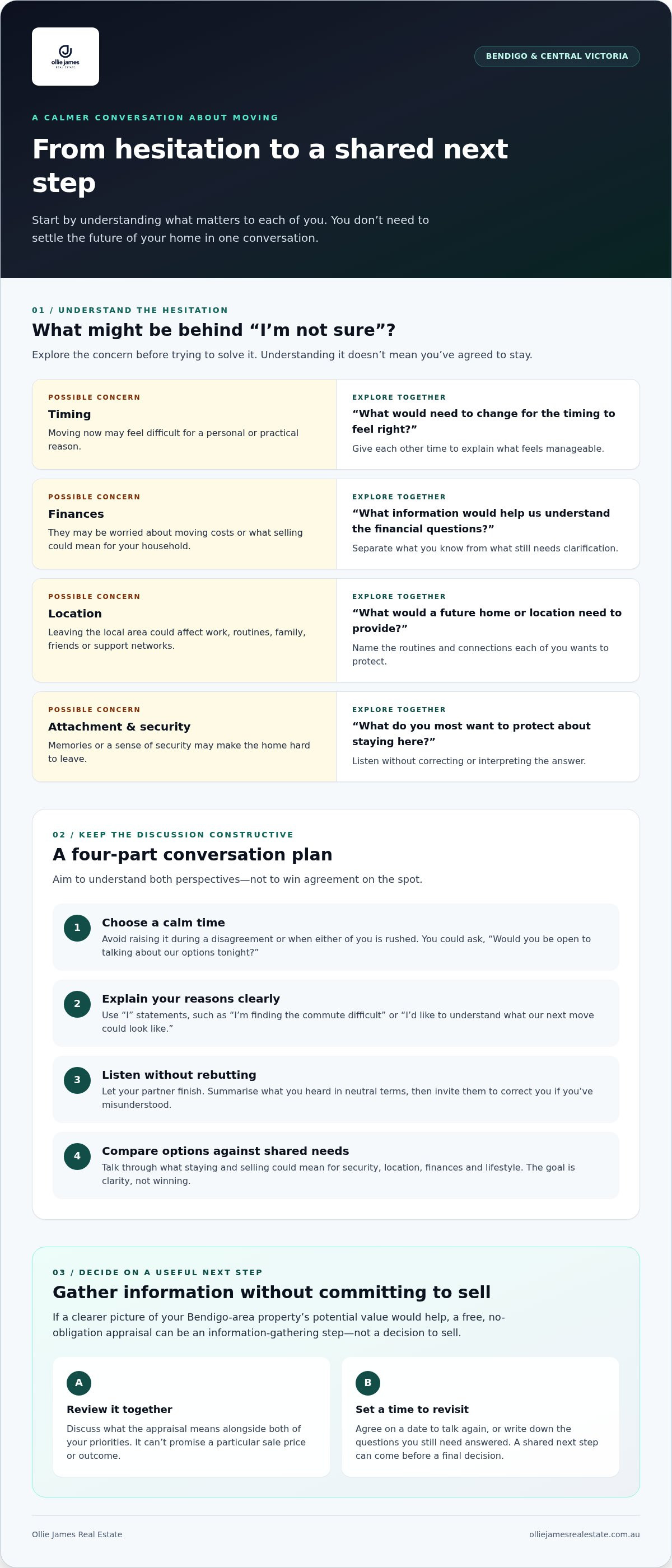
What might be behind your partner’s hesitation?
Ask, “What do you most want to protect about staying here?” Then give your partner time to answer without correcting or interpreting their response. You might discover that the issue is timing, a familiar routine, nearby family or friends, or a particular Central Victorian lifestyle.
Try sorting each concern into a few areas. This helps you identify what needs attention instead of assuming you already know the answer:
- Timing: Is there a personal or practical reason moving now feels difficult?
- Finances: Are they worried about moving costs or what selling could mean for your household?
- Location: Would leaving Bendigo or another local area affect work, routines or support networks?
- Attachment: Are memories or a sense of security making the home hard to leave?
Understanding a concern doesn’t mean agreeing to stay. It gives you both a clearer place to begin and helps distinguish a problem that could be addressed from a preference that may shape your decision. Many homeowners find that consulting combined real estate and financial advisory services, such as Verbrugge Groep, helps clarify the practical implications of selling so both partners can evaluate their options objectively.
How to discuss selling your house without turning it into an argument
A useful conversation isn’t a pitch with a yes-or-no deadline. Agree that the aim is to understand both perspectives, then take turns speaking. If you’re asking how to convince my partner to sell our house, try this simple plan:
- Choose a calm time. Avoid raising the topic during a disagreement or when either of you is rushed. Ask, “Would you be open to talking about our options tonight?”
- Explain your reasons clearly. Use “I” statements, such as “I’m finding the commute difficult” or “I’d like to understand what our next move could look like.”
- Listen without rebutting. Let your partner finish before responding. Summarise what you heard in neutral terms, then invite them to correct you if you’ve misunderstood.
- Compare options against shared needs. Discuss what staying and selling could mean for your priorities, such as security, location, finances or lifestyle. The goal is clarity, not winning.
Better Health Channel’s advice on Effective Communication in Relationships also highlights the value of clear expression and listening. You might say, “It sounds like staying close to family matters most to you, while I’m worried about the cost of maintaining the house.” That acknowledges both concerns without labelling either person unreasonable.
Questions that keep the conversation open
Open questions invite discussion rather than a quick defence. Try asking, “What would need to change for home to feel right again?” or “What information would make staying or selling easier to consider?” You could also ask each other to name the most important things a future home or location would need to provide.
Listening first can lower defensiveness, even if it doesn’t guarantee agreement. If a clearer picture of your property’s potential value would help, you could explore a free, no-obligation property appraisal as an information-gathering step, not a commitment to sell.
Agree on a next step before deciding whether to sell
You don’t have to settle the future of your home in one conversation. Agree on a small step that gives you both time and useful information, such as setting a date to revisit the discussion or writing down the questions you need answered. In cases where property division or joint ownership questions arise, seeking independent guidance from legal professionals like Mohan Yildiz & Associates can help clarify each party’s rights and practical options. If you’re still thinking about how to convince my partner to sell our house, shifting the focus from a verdict to a shared next step can take pressure out of the process.
If you’re unsure what selling involves, this Bendigo home-selling guide can help you understand the stages to consider. Read it together and note what feels manageable, what raises concerns and what you’d like clarified. For a broader perspective on finding common ground in housing decisions, see these Tips for Compromise When Making Housing Decisions.
Use local information as a conversation aid, not pressure
Local market context can help you discuss your Bendigo-area property with a clearer picture, but it can’t promise a particular sale price or outcome. A free, no-obligation appraisal gives you an informed view of the property’s potential value. Requesting one doesn’t commit either partner to selling; it’s a way to gather information before deciding what feels right.
You might agree to review the appraisal together, then set another date to talk through what it means alongside your priorities. If you’d both find that information useful, you can arrange a no-obligation property appraisal.
Take the next step at a pace that feels right for both of you
You don’t need complete certainty to make a useful next move. If you’re still asking “how to convince my partner to sell our house”, focus instead on what would help you both feel informed enough to keep talking. A shared decision can take time, and choosing to gather information doesn’t mean you’ve chosen to sell.
For a clearer picture of your Bendigo-area property, Ollie James Real Estate offers a free, no-obligation appraisal. The independent, family-owned agency serves Bendigo and Central Victoria, including Kangaroo Flat, Junortoun, Epsom, Eaglehawk, Strathfieldsaye, Strathdale, Kennington, Golden Square, California Gully, Maiden Gully and Marong.
Arrange a no-obligation property appraisal as a practical starting point. A calmer conversation can begin with one small step, taken together.
Frequently Asked Questions
What if my partner says no to selling our house?
If your partner says no, don’t turn the answer into a contest. Ask whether they mean “not now” or “I don’t want to move”, and what, if anything, might change their view. If you’re asking how to convince my partner to sell our house, first find out whether they’re open to discussing it further. Respect a firm boundary and avoid threats or making major decisions in the heat of an argument.
Can we find out what our house may be worth without agreeing to sell?
Yes. You can request a free, no-obligation appraisal without deciding to put your home on the market. To make the discussion more useful, note any renovations, distinctive features or maintenance work for the appraiser. An appraisal provides an informed view of potential value, not a guaranteed sale price or offer. You can use the information to plan together, even if you choose to stay.
How should we talk to our children about a possible move?
Talk with your children when you can explain what’s known and what’s still undecided. Make clear that a move is only a possibility if you haven’t made a decision, and give them space to ask questions or share worries. They may be concerned about school, friends, activities or familiar routines. Avoid promising that nothing will change, but reassure them you’ll keep them informed as plans develop.
What should we agree on before looking at homes to buy?
Agree whether you’re browsing for ideas or actively considering a purchase, then set shared priorities: a comfortable budget, essential features, acceptable compromises and preferred areas. In Greater Bendigo, you might compare what matters about Kangaroo Flat, Junortoun, Epsom, Eaglehawk, Strathfieldsaye, Strathdale, Kennington, Golden Square, California Gully, Maiden Gully, Marong and Bendigo itself. Discussing these preferences first can help keep inspections exploratory, rather than creating pressure to buy.


