

The safer choice may be to sell first, even if buying first seems like the best way to avoid being left without a home. Buying before your current property sells can mean overlapping repayments and extra pressure if the sale takes longer than planned. So, should I sell my house before buying another? Selling first gives most homeowners more certainty about their available funds. Buying first may suit you if your finance, cash flow and sale plan are firmly worked through.
It’s reasonable to worry about carrying two mortgages or missing out on the right next home. This guide compares the trade-offs, including bridging finance, contract coordination and settlement timing, so you can choose a sequence that fits your finances and comfort with risk. You’ll also find practical questions to raise with your lender and conveyancer, and learn how a local appraisal can help you estimate sale proceeds before committing. A clear plan won’t remove every uncertainty, but it can make the move more manageable.
Key Takeaways
- To decide whether to sell your house before buying another, compare the certainty of selling first with the continuity of buying first, and consider the risks of each.
- Speak with your lender, estimate likely sale proceeds and set a purchase budget that accounts for both selling and buying costs.
- Use a local appraisal as one input when estimating proceeds, not as a guaranteed sale price.
- Write down a timeline for sale preparation, finance approval, your property search and settlement dates to organise your move in Bendigo or Central Victoria.
Should you sell your house before buying another? Compare the risks
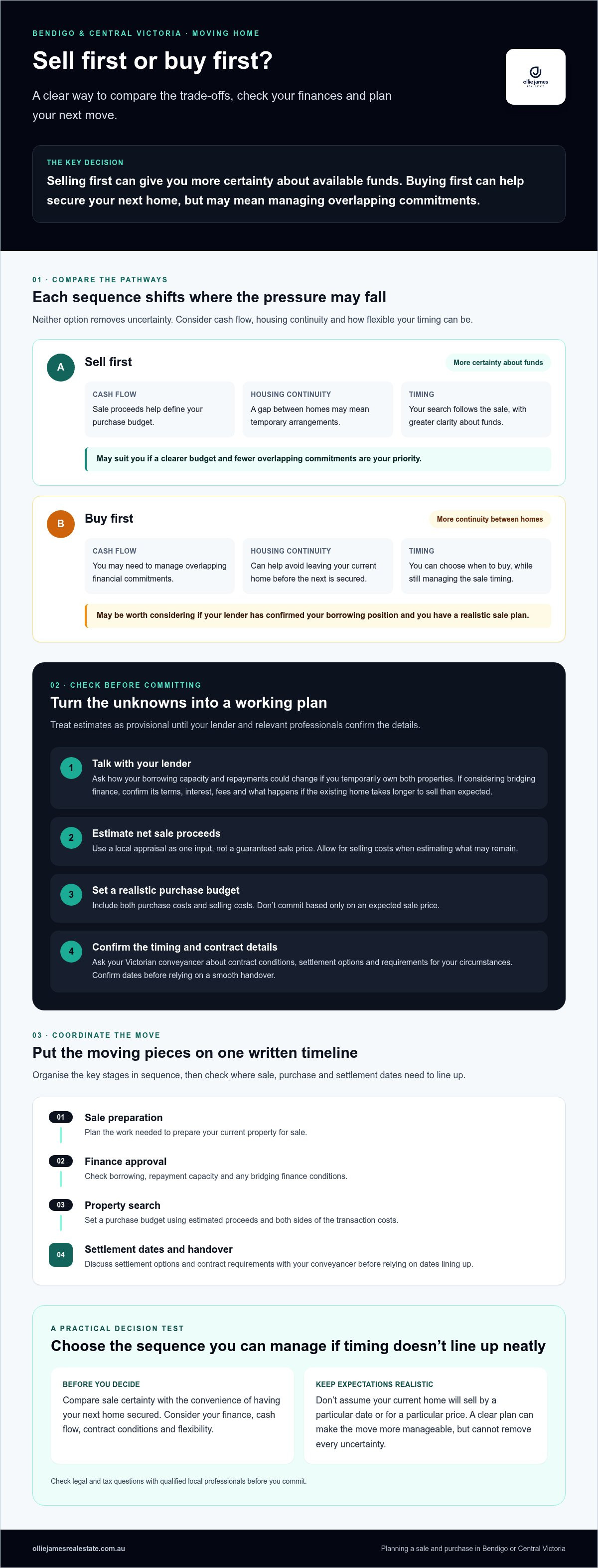
Coordinating a sale, purchase and move can feel like fitting several important pieces together at once. If you’re asking, “should I sell my house before buying another?”, compare the certainty of knowing your sale outcome with the convenience of having your next home secured.
Selling first can clarify your available funds and reduce the risk of overlapping home loan repayments. The trade-off is that you may need temporary accommodation if you don’t find a suitable property in time. Buying first offers more continuity, but you could face extra financial pressure if your current home takes longer to sell than planned.
For another perspective on the sequence, watch this video:
When selling first or buying first may suit your circumstances
Selling first may suit you if having a clearer budget and fewer overlapping commitments is your priority. Buying first may be worth considering if your lender has confirmed your borrowing position and you have a realistic plan for selling your existing home. Neither option removes uncertainty. Each shifts where the pressure may fall.
| Consideration | Sell first | Buy first |
|---|---|---|
| Cash flow | Sale proceeds help define your budget. | You may need to manage overlapping commitments. |
| Housing continuity | A gap between homes may require temporary arrangements. | Can help avoid leaving your current home before the next is secured. |
| Timing flexibility | You have more certainty about funds, but your search follows the sale. | You can choose when to buy, while still needing to manage the sale timing. |
Your finance, contract conditions and flexibility all matter. Ask your lender what you can manage, and discuss contract terms with a conveyancer or solicitor. If you’re buying before selling, understand the risks and costs of a bridge loan before relying on one. Don’t base your decision on the assumption that your current home will sell by a particular date or for a particular price. Choose the sequence you can manage if the timing doesn’t line up neatly.
How to decide: check your finance, sale proceeds and settlement timing
Before deciding whether to sell your house before buying another, turn the unknowns into a working plan. Check what you can borrow, what your current home might sell for and how the settlement dates could fit together. Treat estimates as provisional until your lender and relevant professionals have confirmed the details.
What to confirm before committing to your next property
Work through these steps before setting your budget or making a purchase commitment:
- Speak with your lender. Ask how your borrowing capacity and repayments could change if you temporarily own both properties. If you’re considering bridging finance, confirm its terms, interest, fees and what happens if your existing home takes longer to sell than expected.
- Estimate net sale proceeds. A local appraisal can help inform your expected sale figure, but it isn’t a guaranteed price. Allow for selling costs when estimating what may remain. Ollie James Real Estate offers a free, no-obligation property appraisal.
- Set a realistic purchase budget. Include purchase costs as well as selling costs. Don’t commit based only on the expected sale price.
- Plan the timing. Ask your Victorian conveyancer about contract conditions, settlement options and requirements relevant to your circumstances. Confirm dates before relying on a smooth handover.
For local sale preparation, the Bendigo home-selling guide can help you organise your next steps. A clear budget and confirmed dates can make a move in Bendigo or Central Victoria more manageable. Check legal and tax questions with qualified local professionals before you commit.
Plan your next move in Bendigo with a clear sale-and-purchase pathway
Once you’ve weighed the risks and checked your finances, put the moving pieces on one written timeline. For a move in Bendigo or elsewhere in Central Victoria, this can help you see what needs to happen before you commit to buying, and where you may need room to adjust.
Build a move plan around your home, finances and flexibility
List the key steps in order, then review the dates with your lender and conveyancer:
- Appraisal: Get a local view of your home’s potential sale value to help inform your proceeds estimate.
- Sale preparation: Decide what needs organising before your home is ready to go on the market.
- Finance approval: Confirm your borrowing position and any conditions before making a purchase commitment.
- Purchase search: Set your budget and decide how long you’re prepared to search before reviewing your plan.
- Contracts and settlement: Check dates and conditions with your conveyancer. Work out how you’ll manage if your move-in and move-out dates don’t align.
Think through the household arrangements as well. Would temporary accommodation be manageable? Could you arrange a longer settlement or delay your move if needed? Your answers can help you choose a sequence that fits your family, work and other commitments. If you’re planning a sale, the Bendigo home-selling guide offers a useful place to start.
You don’t need to settle every detail at once. Before making a purchase commitment, discuss a realistic sale plan for your current home with a local agent. If an appraisal would help you plan, you can request a Bendigo property appraisal and talk through your options.
Take your next step with a clearer plan
There’s no single right answer to “should I sell my house before buying another?” The best sequence depends on your borrowing position, expected sale proceeds and tolerance for a possible gap between homes. Before committing, make sure your finance and settlement plan have been checked with the right professionals.
A local appraisal can help you estimate what your current home may contribute to your next purchase, though it isn’t a guaranteed sale price. Ollie James Real Estate is an independent, family-owned agency serving Bendigo and Central Victoria, with over 17 years of local industry experience. For a practical first step, request a free, no-obligation Bendigo property appraisal.
A considered plan can make a complex move feel more manageable. Take it one step at a time, and choose the path that gives your household confidence.
Frequently Asked Questions
Is it better to sell your house before buying another?
There’s no single best sequence. Whether you should sell your house before buying another depends on your finances, risk tolerance and how much flexibility your household has. Selling first can give you a clearer idea of your available funds, while buying first may help you secure your next home before leaving your current one. Weigh both options against your lender’s advice and your plan for what to do if the dates don’t align.
Can I buy another house before selling my current one?
You may be able to buy before selling, depending on your borrowing capacity and lender approval. Ask how repayments would work if you temporarily own both properties, and whether bridging finance is an option. Check its costs, conditions and what happens if your current home takes longer to sell than planned. Don’t rely on an assumed sale price or timeframe when setting your budget.
What happens if settlement dates do not line up?
If settlement dates don’t line up, you may need a temporary arrangement, such as short-term accommodation or a later move date, if your contracts and circumstances allow. Discuss possible settlement timing and contract conditions with your conveyancer before signing. Make a backup plan for your belongings, household needs and any extra accommodation arrangements rather than assuming both transactions will settle on dates that suit you.
Should I get my house valued before buying another one?
Getting an appraisal before you buy can help you estimate potential sale proceeds and set a more grounded budget. It’s an informed estimate, not a guaranteed sale price, so allow for selling costs and confirm your borrowing position with your lender. In Bendigo, Kangaroo Flat, Junortoun, Epsom, Eaglehawk, Strathfieldsaye, Strathdale, Kennington, Golden Square, California Gully, Maiden Gully and Marong, a local appraisal can provide relevant context for planning.


