

Imagine checking your phone on a Sunday evening and feeling a familiar knot in your stomach because you've seen a notification from a renter who refuses to cooperate. Whether you are facing persistent late payments or a total breakdown in communication, dealing with difficult tenants Victoria property owners encounter is an emotionally draining experience that can make anyone feel vulnerable. It's completely natural to worry about the legal fallout of a misplaced word or the financial impact of a vacant property. You deserve to feel that your investment is respected and secure.
This 2026 guide will show you how to navigate complex tenancy disputes using professional de-escalation techniques and strict legislative compliance to protect your asset. We'll explore the specific steps required to resolve conflict, restore your steady rental income, and provide the clarity you need to move forward with total confidence.
Key Takeaways
- Understand the critical shift from "Landlord" to "Rental Provider" under the Residential Tenancies Act to ensure every notice and communication remains legally compliant.
- Master the practical steps for dealing with difficult tenants Victoria property owners often face by prioritising a meticulous paper trail over verbal agreements.
- Learn how to maintain professional distance during disputes to de-escalate high-pressure situations and keep the focus on procedural resolutions rather than emotional conflict.
- Discover how professional property management and rigorous vetting act as a legislative buffer, protecting your investment and restoring your peace of mind.
Navigating the Victorian Residential Tenancies Act with Confidence
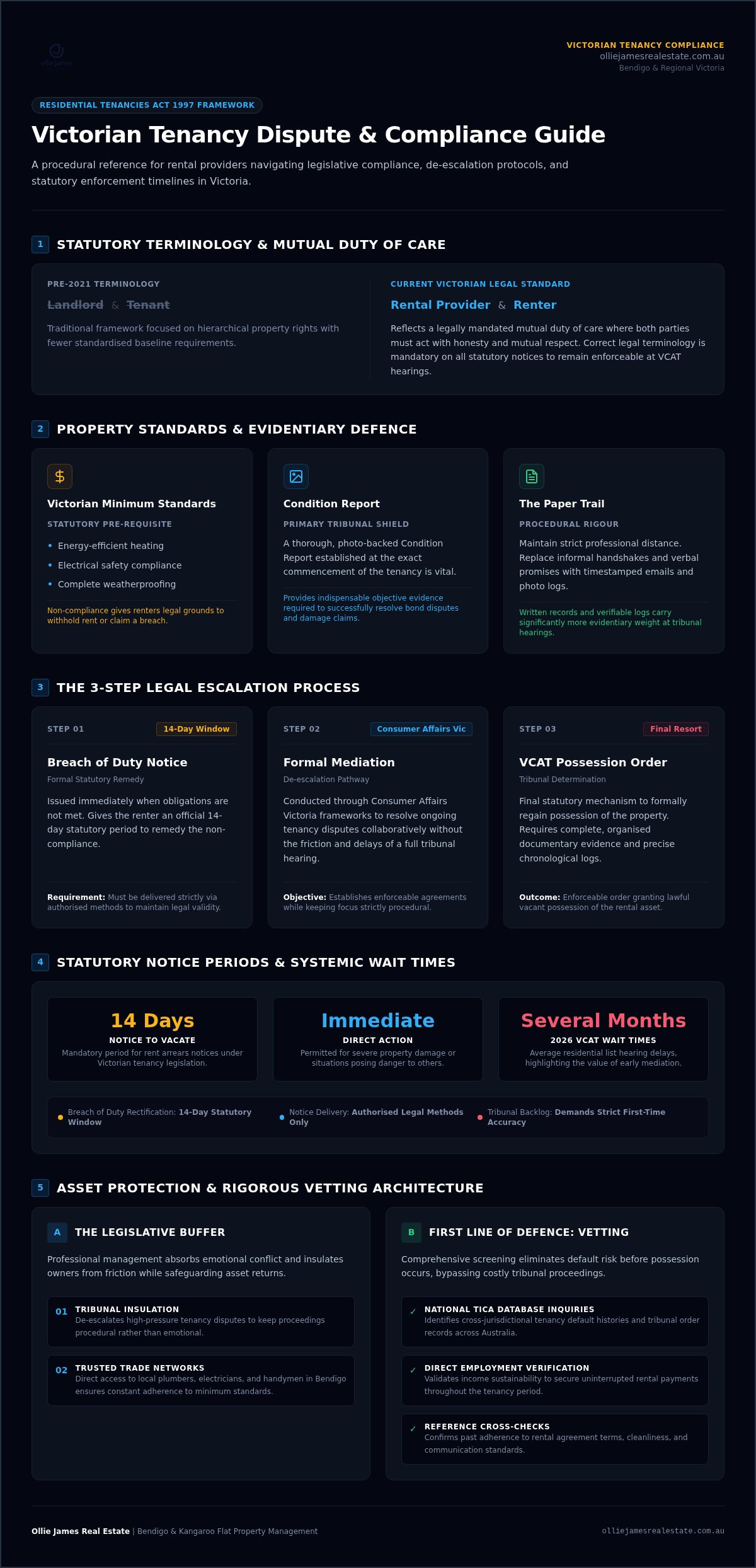
The Residential Tenancies Act 1997 serves as the essential rulebook for every rental property in our state. While the legal jargon can feel overwhelming, understanding this framework is your first step toward clarity when dealing with difficult tenants Victoria property owners encounter. Since the 2021 reforms, the law has shifted toward a more balanced relationship, transitioning from the traditional roles of 'landlord and tenant' to 'rental provider and renter'. This change isn't just about names; it's about a mutual duty of care where both parties are expected to act with honesty and respect throughout the agreement. Ensuring you use the correct terminology in all formal notices is vital for your compliance should you ever need to attend a tribunal hearing.
Critical Legislative Standards for Victorian Rental Providers
To protect your position, you must ensure your property meets the current Victorian minimum standards, covering essentials like energy-efficient heating, electrical safety, and weatherproofing. If these aren't met, a renter may have grounds to withhold rent or claim a breach, which significantly complicates any resolution. When a breach does occur, timing is everything. For example, a Notice to Vacate for rent arrears requires a specific 14-day period, whereas serious property damage or danger to others allows for more immediate action. Your strongest shield in any VCAT dispute is the initial Condition Report. A meticulous, photo-backed report created at the start of the tenancy provides the objective evidence needed to resolve bond disputes or damage claims with professional certainty. Keeping these records organised ensures you aren't left vulnerable if a conflict arises.
A Step-by-Step Approach to Resolving Tenancy Disputes in Bendigo
When dealing with difficult tenants Victoria property owners often find that a calm, procedural approach is more effective than an emotional reaction. It's natural to feel anxious when communication breaks down, but maintaining professional distance is your best defence. Instead of relying on verbal agreements or casual 'handshake' deals, you must document every interaction. A paper trail of emails and timestamped photos carries far more weight at a tribunal than a simple recollection of a phone call. If you're looking for ways to avoid these situations entirely, you might find our guide on rental property management in Bendigo helpful for setting up the right systems from day one.
The Legal Escalation Path: From Breach of Duty to VCAT
If a renter fails to meet their obligations, you should follow a clear escalation path to ensure compliance when dealing with difficult tenants Victoria rental providers encounter:
- Step 1: Issue a formal Breach of Duty notice. This provides a 14-day window for the renter to rectify the issue and must be delivered via authorised methods.
- Step 2: Mediation. The Consumer Affairs Victoria renting guide explains how mediation can resolve disputes without the stress of a full tribunal hearing.
- Step 3: VCAT Possession Order. As a final resort, you can apply for an order to regain possession. Having your evidence organised is vital for a successful outcome.
If you need support navigating these steps, Ollie James Real Estate provides the local expertise to help you move from uncertainty to a clear resolution.
Protecting Your Investment through Professional Management and Vetting
Managing a property shouldn't feel like a second full-time job focused on conflict. A professional property manager acts as your legislative buffer, absorbing the stress of dealing with difficult tenants Victoria presents while ensuring every interaction remains strictly compliant. In Bendigo, local knowledge is your greatest asset. With VCAT wait times for residential lists in 2026 often stretching over several months, having an expert who can resolve issues through mediation or established trade relationships is invaluable. Our team maintains a network of trusted local plumbers, electricians, and handymen who help maintain the property's standard. If you own property nearby, you might explore our property management services in Kangaroo Flat for specialised local support.
Why Rigorous Tenant Vetting is Your Best Defence
Rigorous vetting is the first line of defence when dealing with difficult tenants Victoria property owners hope to avoid. At Ollie James Real Estate, we use a specialised vetting process that includes checking national TICA databases, verifying employment, and cross-referencing previous rental history to find reliable residents. Once a tenancy begins, regular routine inspections allow us to identify subtle red flags early. This proactive approach prevents small misunderstandings from escalating into major property damage or financial loss. You deserve the peace of mind that comes from a family-owned team that prioritises integrity and clear communication. By choosing a dedicated specialist, you move from a state of high-pressure uncertainty to one of expert-led security, knowing your investment is respected and your income is protected.
Restoring Confidence in Your Rental Investment
Owning property should be a source of long-term security rather than a cause for Sunday evening stress. By grounding your approach in the Residential Tenancies Act and maintaining professional distance through clear documentation, you can navigate the hurdles of dealing with difficult tenants Victoria owners often face. Transitioning from high-pressure conflict to procedural certainty is the most effective way to protect your asset and your mental well-being. You deserve to feel that your investment is being respected and that your rental income is secure.
If you're ready to step back from the daily friction of dispute management, let Ollie James Real Estate take the stress out of your investment with professional property management. Our family-owned agency provides over 17 years of local expertise, focusing on rigorous tenant vetting and strict legislative compliance. You'll gain the peace of mind that comes from knowing your investment is in capable, local hands. We're here to support you every step of the way.
Frequently Asked Questions
How much rent must be owed before I can issue a Notice to Vacate in Victoria?
You can issue a Notice to Vacate once the renter is at least 14 days in arrears. It's vital to ensure the notice is served correctly via registered post or a method agreed upon in the lease. If you're dealing with difficult tenants Victoria laws require precise timing; serving the notice even one day early can make it invalid at a tribunal hearing.
What should I do if a tenant refuses to allow an inspection in Bendigo?
If a renter refuses entry despite you providing the required seven days' notice, they are in breach of their legal obligations. You should first attempt a calm conversation to understand their concerns; however, if they remain uncooperative, you can issue a formal Breach of Duty notice. This creates a necessary paper trail for any future VCAT application in the Bendigo region.
Can I evict a tenant in Victoria for "no reason" in 2026?
No, you generally cannot evict a renter for "no reason" under current Victorian legislation. Rental providers must now provide a valid reason specified under the Act, such as the sale of the property, significant renovations, or the owner moving back in. This change emphasises the importance of rigorous tenant vetting to ensure a harmonious long-term relationship from the very start of the agreement.
How long does it typically take to get a VCAT hearing for rent arrears?
Wait times for VCAT hearings can fluctuate based on the current backlog within the residential tenancies list. While rent arrears cases are often prioritised, some industry professionals report that it can still take several weeks or even months to secure a hearing date. When dealing with difficult tenants Victoria property owners find that early mediation often achieves a faster resolution than waiting for a formal tribunal order.


